BABY
Set Your Baby Up to Nap Like a Champ!
Four tips from Dr. Harvey Karp to enhance your baby's daytime sleep.

Skriven av
Happiest Baby Staff
Daytime sleep goes a long way to keeping children healthy and happy. Baby naps boost memory, restore energy and gentle demeanor, build attention skills, reinvigorate the immune system and help reduce stress. And smart parents know to treat a baby’s forty winks as sacred. (Maybe they have seen their baby’s skipped-nap meltdown—and barely lived to tell the tale!)
To get your kid be an all-star napper, try out these simple tips for how to get your baby to nap:
How to Get Baby to Nap: 4 Tips
Baby Nap Tip No. 1: Find Your Rhythm
When your infant reaches 1 month, creating some order to your day promotes good sleep and lets parents plan for downtime. Some healthcare providers recommend scheduling a baby’s day in an ‘eat, play, sleep’ sequence. Their idea is that uncoupling sleeping and feeding will train a baby to snooze again without milk in the middle of the night. This sounds logical … but it actually goes against a baby’s biology. Babies tend to snooze after feeds, no matter how much you prod and play with them. That is why the following cycle makes more sense to me:
- After 1.5 to 2 hours of awake time, feed your child and then put them to sleep.
- If the nap goes over 2 hours, wake them up. (Long naps mean less eating during the day ... and that leads to more hunger at night.)
Check out my guide to wake windows for help knowing how long your baby can stay awake at each age.
Baby Nap Tip No. 2: Put your baby down before they are exhausted.
Most people think a baby is ready to nap when their eyes get lidded and their head slumps against your shoulder. Actually, at that point they are overtired.
As is often said, ‘Sleep begets sleep.’ And that is right ... that is why the cleverest parents put their babies to down to sleep at—or just before—the time they show these early signs of fatigue:
- Reduced activity, smiling and talking (or even increased frowning)
- Yawning
- Staring, blinking, and rubbing the eyes
- Increased fussing
Flexibility is key. So do not aim to put your little bug down at 1.5 hours by the minute. And if they seem wiped out, it is fine to bend the ‘rules.’ And, if they fell asleep in your arms, use the wake and sleep technique when you lay them in their cot or sleeper, to let them float back to sleep on their own.
Baby Nap Tip No. 3: Use sleep cues at naptime.
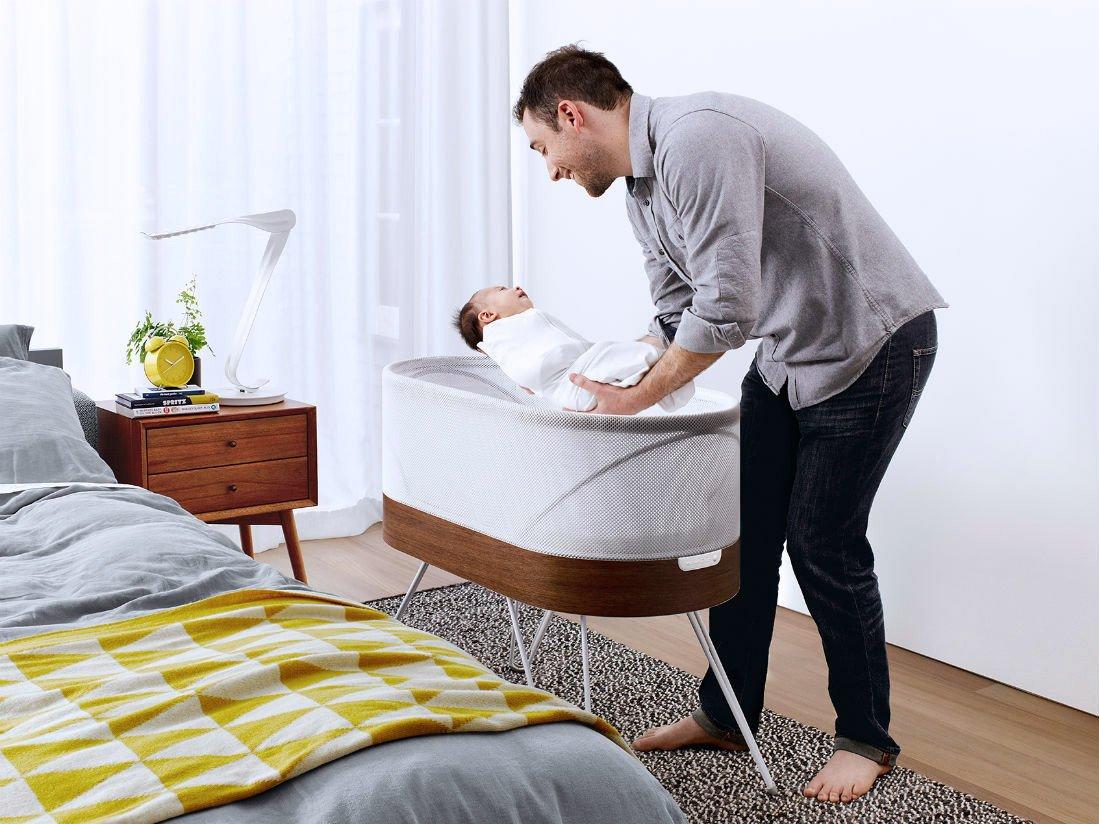
Happiest Baby’s SNOO Smart Sleeper was made to help parents succeed at naptime, with a little help from technology. SNOO helps create the right sleep cues—white noise and gentle womb-like motion—at the right time and in the right amount. One feature parents love about SNOO is that it gradually weans your baby off sound and motion by 6 months. Together SNOO and the wake and sleep technique are a perfect team for establishing healthy sleep habits for years to come.
Baby Nap Tip No. 4: Get ready for change.
One by one, these blissful naps will evaporate as your baby develops and grows. By 3 months your little one usually settles into three predictable naps (mid-morning, mid-afternoon and a short one in early evening.) Sometime within 6 to 12 months, your little one will shift to two naps a day. And between 12 and 24 months, they will drop to just one.
Yet, exactly when each of these naps will disappear is one of the least predictable aspects of your child’s sleep!
How to Get Baby to Nap in Cot
To ease your baby into a nap in their cot, begin by laying them down gently. If your baby starts to fuss, then offer gentle shushing, verbal soothing, or even a tummy rub until they drift off to nap land. Continue this for every 5 to 10 minutes until your baby naps.
How to Put Baby Down for a Nap
Making sure your baby naps is crucial for you and your baby’s health. Here are some steps you can take to help get your baby to nap.
- Set the mood. A predictable sleep environment (darkness, white noise) make it easier for your baby to nap.
- Look for signs. You want to put your baby down for a nap when they are drowsy, but not overtired. Look for eye rubbing, some fussiness, and drooping eyelids. These are telltale signs that your baby is ready for a nap.
- Always be safe. Remember to always place your baby on their back when you put them to nap. Also, make sure the cot is clear of loose toys and blankets.
- Consistency. Try to get your baby to nap at the same time each day. Your baby will get used to napping at this time and it will make it easier for you each time.
How to Get Baby to Nap Longer
Parents often want to know how to extend their baby’s naps. To get your baby to nap longer, you will want to create an environment that promotes naps, and reduces factors that might awaken your baby. Try to keep your baby’s nap area away from loud noises, knocking, and telly screens. This reduces the chances your baby will awaken from a nap. You can even introduce white noise for baby sleep to help promote a healthier sleep environment.
How to Get Baby to Nap Without Being Held
If your baby is not rolling yet, try swaddling your baby to mimic the feeling of being held. Click here to learn how to swaddle your baby. (If you are using SNOO Smart Sleeper, your baby can be safely swaddled for up to 6 months.)
Where Should My Baby Nap During the Day
When your little one is ready for nap time, make sure to clear the cot of all toys and blankets. Gently place your baby on their back while swaddled, and let them drift off into a nap. If your baby is extra fussy, then try using white noise, gentle shushing, or tummy rubs to help soothe them to sleep.
Ansvarsfriskrivning: Informationen på vår webbplats är INTE medicinsk rådgivning för någon specifik person eller tillstånd. Den är endast avsedd som allmän information. Om du har några medicinska frågor och funderingar om ditt barn eller dig själv, vänligen kontakta din vårdgivare. Bröstmjölk är den bästa källan till näring för spädbarn. Det är viktigt att mödrar äter en hälsosam, balanserad kost i förberedelse för och under amning. Kombinerad amning och flaskmatning under de första veckorna i livet kan minska tillgången på en mammas bröstmjölk och det kan vara svårt att ångra beslutet att inte amma. Om du bestämmer dig för att använda modersmjölksersättning bör du noggrant följa instruktionerna.






DELA DENNA ARTIKEL
FÖRÄLDRARS VAL
Bästsäljare