TODDLER
How to Sleep Train Your Toddler With an OK-to-Wake Clock
Nighttime wakeups, time-changes, and early-birds? No problem! Learn how a toddler alarm clock can solve these sleep problems.

Scritto da
Holly Pevzner
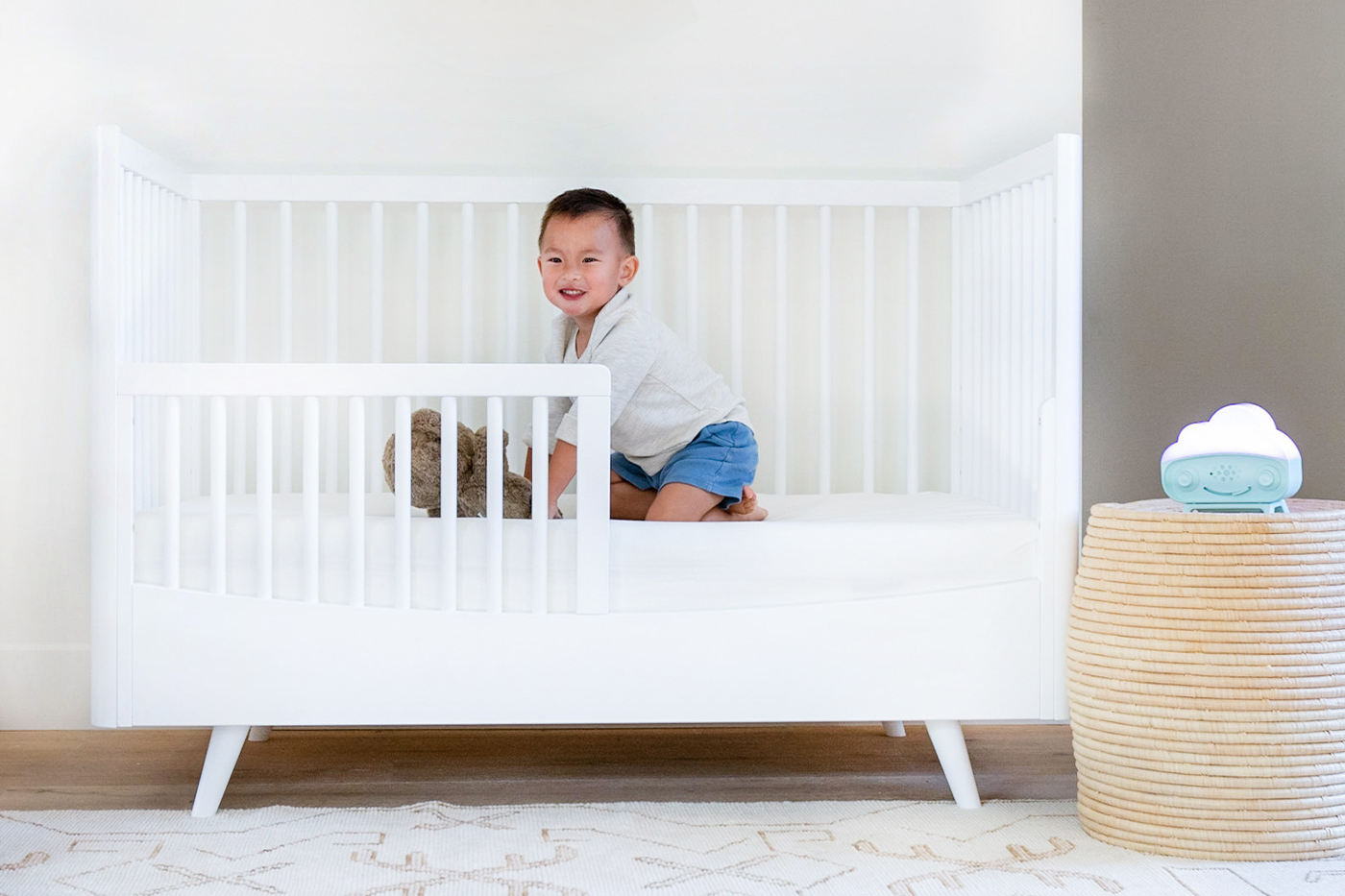
Whether you have a toddler who wakes up at 4am raring to go, one who struggles with night-waking, or a tyke who was thrown for a loop by daylight saving time or a time zone change, an OK-to-wake alarm can rescue you. Learn all about how these handy-dandy toddler alarm clocks can help you sleep train your toddler.
What is an OK-to-wake clock?
Unlike a traditional alarm clock designed to wake your kiddo up, an OK-to-wake clock is a genius tool that gently teaches young children not only when it is time for sleep, but when it is acceptable to start the day. (Spoiler alert: It is not 5am!) The best part? Toddlers and preschoolers can “read” their OK-to-wake clock before they can decipher the time on a standard clock. That is because OK-to-wake clocks use colours and sounds—or both—instead of numbers to signal beddy-bye time and when it is okay to get out of bed in the morning. Sometimes an OK-to-wake clock is called a sleep training clock, a toddler alarm, or a good morning light.
Can an OK-to-wake clock help sleep train my toddler?
Yes. Mind you, sleep training a toddler is a bit different than sleep training a baby! Babies often wake in the middle of night because they need help self-soothing or they are hungry. But toddlers are walking, talking, energetic, and curious bugs who are raring to explore—often at all hours. To sleep train a toddler is to help them learn what is expected of them at bedtime and morning time…and that is where an OK-to-wake clock can help. In fact, using an OK-to-wake clock is one of the gentlest toddler sleep training methods! Toddlers depend on routines and boundaries to feel safe and secure, so using an OK-to-wake clock feeds directly into that innate need. Plus, a sleep training clock is the most reliable indicator of bedtime and wake time, especially with seasonal changes of the sunrise and sunset. Of course, an OK-to-wake sleep training clock works best when coupled with a predictable and calming bedtime routine. (Learn all about Dr. Harvey Karp’s recommended toddler bedtime routine.)
When should I start using a sleep training clock?
Most kiddos are developmentally ready to start using an OK-to-wake clock between the ages of 2 and 3 years old, with the sweet spot being when your nugget is old enough to snooze in their own toddler bed. After all, curious tots are known to bound out of their new big-kid beds bright and early…the very thing OK-to-wake clocks help to prevent! That said, there is no need to wait till toddler-bed age to start using a multipurpose OK-to-wake clock, like the Dr. Harvey Karp-designed SNOObie. SNOObie is also a customizable nightlight, a mindful breathing coach, a sound machine featuring 12 soothing sounds, and more.
How do I use an OK-to-wake clock?
All toddler sleep training clocks are a bit different, but the gist is the same: You program the OK-to-wake clock so that a sound, light, or picture (or a combo of these signals) appears at a designated time to indicate that it is time for your tot to hit the hay…and when it is an appropriate time to start the day. For instance, you can program SNOObie to…
- Play your little one’s favourite lullaby and dim the light for a regularly scheduled 30-minute wind-down before bed.
- Glow green at 6:30am to show your tot it is okay to wake, or…
- Shine yellow at 6am, instructing your kiddo that they can play quietly in bed when the yellow light shines, and then, when it turns green 30 minutes later, it is okay to leave their room.
- Pair each light cue with one of SNOObie’s sounds. For example, you might opt for hearing Train with your yellow light cue and one of our lullabies with your green cue.
Do OK-to-wake clocks really work?
Yes! A toddler alarm gives your child an easy-to-learn visual cue to learn the rules surrounding night-night and wake up time. Plus, toddlers and preschoolers thrive on predictable and comforting bedtime routines, including those that incorporate OK-to-wake clocks. When children know what will happen next, they feel safe and secure. Finally, an OK-to-wake clock helps your child learn what is expected of them, bolstering their confidence and sense of independence. (Learn more ways to boost your toddler’s confidence.)
OK-to-Wake Clock Tips
To set yourself—and your toddler—up for sleep-training success, follow these OK-to-wake tips and tricks:
Make it exciting! An OK-to-wake clock is not punishment! It is a fun gift that your tot is lucky to have. To help get that point across, try wrapping your new SNOObie up as gift and oohing and ahhing with the unboxing. Have your tot help pick where SNOObie will live and tell you which colours and sounds to use.- Learn your colours. With some OK-to-wake clocks, like SNOObie, you can select your time-for-bed and wake-up colours. While it is helpful (and fun!) to let your little one voice which colour works for them, using easy-to-remember word-colour combos can be super helpful, like “Red means bed” and “Green means go.” (PS: Warmer colours, like red and orange, are great at night because it is thought that they boost production of melatonin, the snooze-inducing hormone.)
- Start small. If your tyke is a chronically early riser, ready for the day at the savage time of, say 4:45am, you ca not jump straight to a 6am wake-up. Instead, set their wakeup time for about 15 minutes later than they currently wake up naturally. Once you have achieved success, wait a week, and add another 15 minutes to the clock, and so on.
- Be consistent. Whether it is a weekend, a holiday, or a random day that requires an earlier-than-usual wake time, it is important to stick with your “green means go” routine, adjusting your Ok-to-wake clock accordingly.
- Gossip! When your tot stays in bed till the right time, gossip about it to your partner, your mom, your kiddo’s stuffed toys…anyone! Children are far more likely to believe something they overhear than if they have been told directly. And if your child overhears you say something positive about them, it encourages them to replicate that behaviour. While your toddler is in earshot, cup your hand around your mouth and loud whisper to the dog: “Wow, Sam did such a good job staying in bed this morning. I was so impressed!” And repeat your praise to various other folks so that your kiddo hears. (Learn more about how gossiping works.)
More on toddler sleep
- How to Find the Right Bedtime for Your Toddler
- Why Your Toddler Won’t Sleep
- Find Out Why Toddlers Love Their Loveys!
- What to Do If Your Toddler Won’t Nap
Avvertenza: Le informazioni presenti sul nostro sito NON sono consigli medici per alcuna persona specifica o condizione. Sono solo intese come informazioni generali. Se avete domande o preoccupazioni mediche riguardo vostro figlio o voi stessi, si prega di contattare il vostro fornitore di assistenza sanitaria. Il latte materno è la migliore fonte di nutrizione per i neonati. È importante che, in preparazione e durante l'allattamento al seno, le madri seguano una dieta sana ed equilibrata. L'allattamento misto (seno e biberon) nelle prime settimane di vita può ridurre la produzione di latte materno e la decisione di non allattare al seno può essere difficile da invertire. Se decidete di utilizzare il latte artificiale per neonati, dovreste seguire attentamente le istruzioni.
Principali notizie






CONDIVIDI QUESTO ARTICOLO
SCELTE DEI GENITORI
Bestseller












Di più su Toddler


About Holly Pevzner
Holly Pevzner is Happiest Baby’s Staff Writer. She specializes in creating parenting, pregnancy, health, nutrition, and family travel content. Her work—including essays, columns, reported features, and more—has appeared in outlets such as EatingWell, Family Circle, Parents, Real Simple, and The Bump. Before becoming a full-time writer, Holly held senior staff positions at Prevention, Fitness, and Self magazines, covering medical health and psychology. She was also a contributing editor at Scholastic Parent & Child magazine and a regular kids-health columnist for Prevention and First For Women magazines. Holly lives in Los Angeles with her husband, two boys, and terrier mix.