TODDLER
Clap-Growl Warnings: Get Your Child’s Attention Fast
This technique can serve as a warning…or a gentle consequence to curb annoying toddler behaviour.

Scritto da
Dr. Harvey Karp
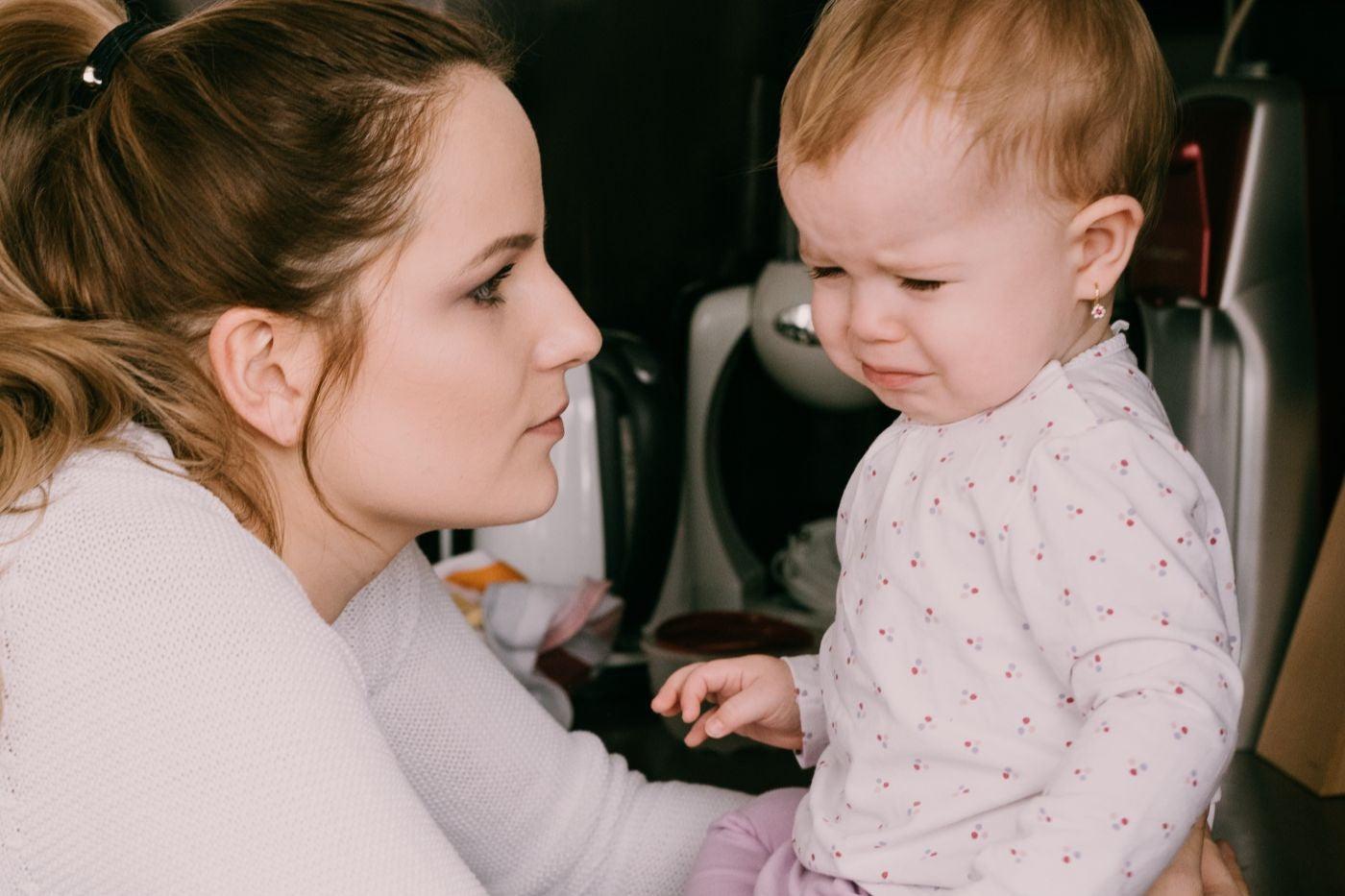
There are lots of toddler shenanigans that are not terrible…just terribly annoying. I call these yellow light behaviours…they include whining, begging, clinging, pouting, dawdling, screeching, and mild defiance—to name a few!
Connecting with respect can go a long way to curb annoying behaviours, but if your toddler continues the annoying behaviour even after you respectfully acknowledge her and offer an option or compromise, try a clap-growl. Even a 1-year-old will get the message that you are out of patience and a real penalty is coming if she does not stop . . . fast.
For example, if your two-year-old threatens to dump spaghetti on her head, what do you think would stop her faster: saying 'No' with a big grin on your face, or frowning, clapping your hands hard, and growling, 'Nooooo!'?
All kids understand that a few hard claps and a low grrrrrrrrrowl mean 'Stop…now…or you will not like what happens next! ' (Bonus: A few hard claps also help us vent a bit of anger, without resorting to spanking or yelling.)
I admit this sounds, well, undignified. But as you know by now, kids who are upset rely on their right brain, which is not good at words but is great at understanding nonverbal communication, including voice, facial expressions, and gestures. Clap-growl warnings can quickly connect with upset toddlers and often stop annoying behaviours in seconds!
How to use the clap-growl technique:
Step 1: Clap.
Clap your hands three to four times, hard and fast. (It is meant to be a little startling.) As you clap, you can stand or kneel, but you must remain a bit above your child’s eye level (to emphasise your authority).
Step 2: Growl.
Put a scowl on your face and make a deep, rumbling growl. If it works and your child stops quickly, immediately do a little Fast-Food Rule + Toddlerese, and then feed the meter a bit (with hugging, attention, play, or playing the boob) to show you appreciate your little one’s cooperation.
Warning: The first time you growl, your child may smile or even growl back! Do not worry. That may mean your growl was too sweet (she thinks it is a game) or she wants you to smile . . . so you will not be mad. Simply answer her growl with a couple of double takes.
Do a double take to show you are serious
A double take is a neat little trick that emphasises to your child that you are not kidding around. Here is how to do it: After a few seconds of clap-growling, raise a finger (as if to indicate 'Wait a second') and look away for two seconds, keeping your finger up the whole time. Then, look back, growl, scowl, and repeat your message. ('No! Stop now!')
I recommend adding a double take to your growl if:
- Your child ignores your clap-growl.
- You and your child are stuck glaring at each other (long glaring often backfires and pushes kids to be more defiant).
- You want to emphasise your frustration and underscore that you are the boss.
A double take can also help if you accidentally smile while growling (even misbehaving toddlers can look so cute!). Bite your lip, hold up a warning finger, and look away for a moment—to regain your composure—then turn back and say in a serious voice, 'I am not happy! I say, No! No putting jelly in your hair.'
I often use clap-growl with young children who ignore my kind requests to stop. I clap my hands hard and g-r-o-w-l a warning deep in my throat. That usually stops them fast…the way we immediately slow down when a police car’s light flashes in our rearview mirror!
As your child matures, you will growl less. But you will probably continue clapping and/or using a silent cue like a frown, raised eyebrow, or straight index finger as a warning that your patience is up.
When your child heeds your warning, reward him right away with a smidge of attention, praise, or play. This teaches him, You be good to me and I will be good to you. However, if his annoying behaviour continues, it is time for a slightly stronger consequence, like kind ignoring.
More Toddler Tips:
For even more tips on living in harmony with your toddler, check out The Happiest Toddler on the Block!
Avvertenza: Le informazioni presenti sul nostro sito NON sono consigli medici per alcuna persona specifica o condizione. Sono solo intese come informazioni generali. Se avete domande o preoccupazioni mediche riguardo vostro figlio o voi stessi, si prega di contattare il vostro fornitore di assistenza sanitaria. Il latte materno è la migliore fonte di nutrizione per i neonati. È importante che, in preparazione e durante l'allattamento al seno, le madri seguano una dieta sana ed equilibrata. L'allattamento misto (seno e biberon) nelle prime settimane di vita può ridurre la produzione di latte materno e la decisione di non allattare al seno può essere difficile da invertire. Se decidete di utilizzare il latte artificiale per neonati, dovreste seguire attentamente le istruzioni.
Principali notizie






CONDIVIDI QUESTO ARTICOLO
SCELTE DEI GENITORI
Bestseller