TODDLER
How to Stop Sibling Fighting
Having two young kids to supervise can make you feel more like a boxing referee than a parent. But there are a few ways to stop sister squabbles and brother brawls…fast!

Escrito por
Dr. Harvey Karp
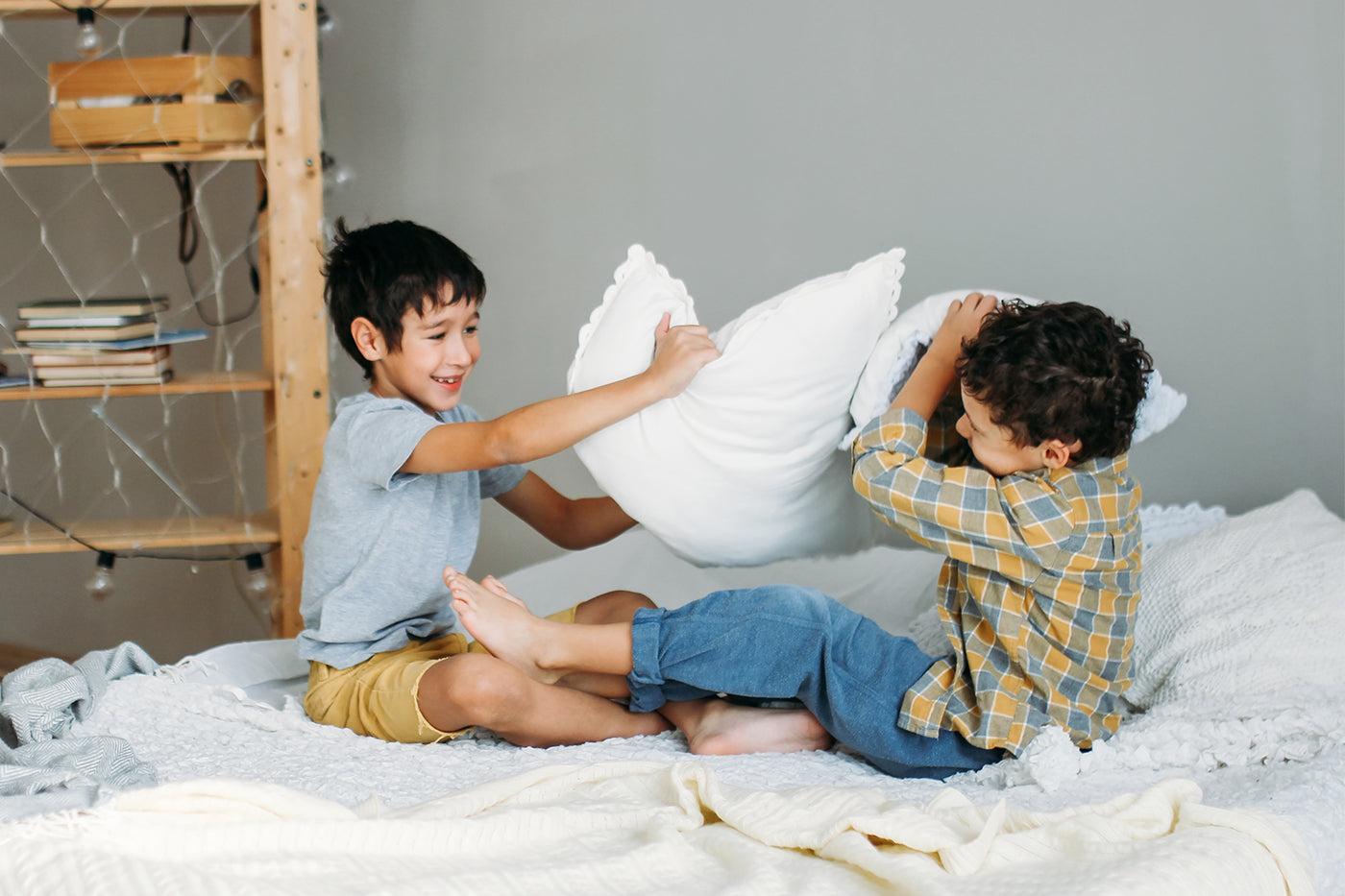
Having two young kids to supervise can make you feel more like a boxing referee than a parent. But there are a few ways to stop and prevent sibling fighting…fast!
Catch your kids being good to prevent sibling fights.
The best way to top sibling fighting is to catch your kids being good. Think of encouraging good behaviour like giving kids little snacks of positive attention (also called a time in…the opposite of a time out). Offer a bit of understated praise when you see your children working together, helping one another, or settling a disagreement without it devolving into fighting (and make that praise extra effective by 'gossiping' about it—that is a super effective Happiest Toddler technique where you praise your kids to someone else (like talking to Grandma on the phone) in a loud whisper allowing them to 'accidentally' overhear).
Use incentives to stop sibling fights.
It is also fun to offer physical incentives like a star chart, to reward respectful sibling behaviour. (This plan is best set up during a weekly family meeting so that your kids know the rules and everyone is aligned on expectations.) For example, give a star, sticker, or a check on the hand every time they set the table together or play nicely or choose your Friday-night movie without squabbling. And, when they earn a certain number of stars—as a team!—they get to share a reward together. The key is to help them see themselves as teammates who share in each other’s success, and not as competitors.
Beef up 'special time' to prevent sibling fights.
One of the most effective incentives for kids is…time with you! So, beefing up 'Special Time!' for each child may help boost cooperation. Special Time is a little gift of 5 to 10 minutes of your undivided attention…that means no texts, emails, or siblings allowed! Special Time builds your child up with a tasty little helping of the 'you-you-you' he is so hungry for. Do it at least twice a day. It is a great way to teach delayed gratification, which your child will need when you are preoccupied with their sibling. If you can, give your toddler Special Time from both parents. Occasionally do a special Special Time—such as an outing for ice cream with no rivals—I mean siblings!
Employ a take-charge consequence to stop sibling fighting.
Of course dangerous sibling fighting (pinching, hitting, biting) needs you to use a take-charge consequence, like a time out or a fine.
When your kids are fighting, it may be obvious to you which one deserves a time-out. But if you are not sure who the chief culprit is, it is often best to discipline both kids. I know that may seem a little unfair, but here is why it can be the right thing to do: First, it is often hard to know who the victim really is (sometimes, the munchkin you thought was innocent actually provoked the fight by teasing or taunting), and second, it teaches that regardless of who started the fight, they both have responsibility for having continued it.
If the kids are tired, hungry, or bored deal with those triggers. But if not, you have to let your older toddler know, 'I guess you are pretty fed up right now and not happy at all. I cannot let you hit each other so you choose, do you want to play quietly or in separate rooms until the dinger rings (perhaps 5-10 minutes).' If this is happening again and again, it is worth trying to find a resolution at your weekly family meeting.
Later in the day, use your other tools (like catching them being good) to encourage anything positive about the fight (like stopping when you said 'Stop!') and to discourage what you disliked (like biting or using hurtful words). Kids who get into lots of fights may need more time to run around outside. They often benefit from attending nursery school to keep them busy and out of mischief.
Step back to let kids resolve sibling fights on their own.
You do not necessarily have to intervene in every slugfest your kids have. Small struggles help kids learn to stand up for themselves and be courageous. Besides, sooner or later, you will want your kids to learn to settle their differences on their own.
So as long as the fight is not aggressive or dangerous (that is, it involves bickering and bellowing, but not bleeding), let the kids struggle a bit before you intervene. When you enter the room, use the Fast-Food Rule and Toddler-ese to show you understand that they are both upset and that you really care. Then excuse yourself and give them another minute to work it out. (If the fighting spins out of control—physically or verbally—it is time to step in and hand out some consequences.)
More Toddler Tips:
- How to Stop—and Prevent!—Toddler Defiance
- How to Expand Your Picky Eater's Palate
- How to Encourage Independent Play
- Advice for Sleep-Training Your Toddler
Descargo de responsabilidad: La información en nuestro sitio NO es un consejo médico para ninguna persona o condición específica. Solo se proporciona como información general. Si tiene alguna pregunta o preocupación médica sobre su hijo o sobre usted mismo, por favor contacte a su proveedor de salud. La leche materna es la mejor fuente de nutrición para los bebés. Es importante que, en preparación para la lactancia y durante la misma, las madres lleven una dieta saludable y equilibrada. La combinación de lactancia materna y alimentación con biberón en las primeras semanas de vida puede reducir la producción de leche materna y es difícil revertir la decisión de no amamantar. Si decide utilizar fórmula infantil, debe seguir las instrucciones cuidadosamente.
Principales noticias






COMPARTIR ESTE ARTÍCULO
ELECCIONES DE LOS PADRES
Más vendidos