BABY
Your Guide to Peaceful Room-Sharing With Baby
You're gaining a roommate...but that doesn't mean you have to lose sleep!

Geschrieben von
Happiest Baby Staff
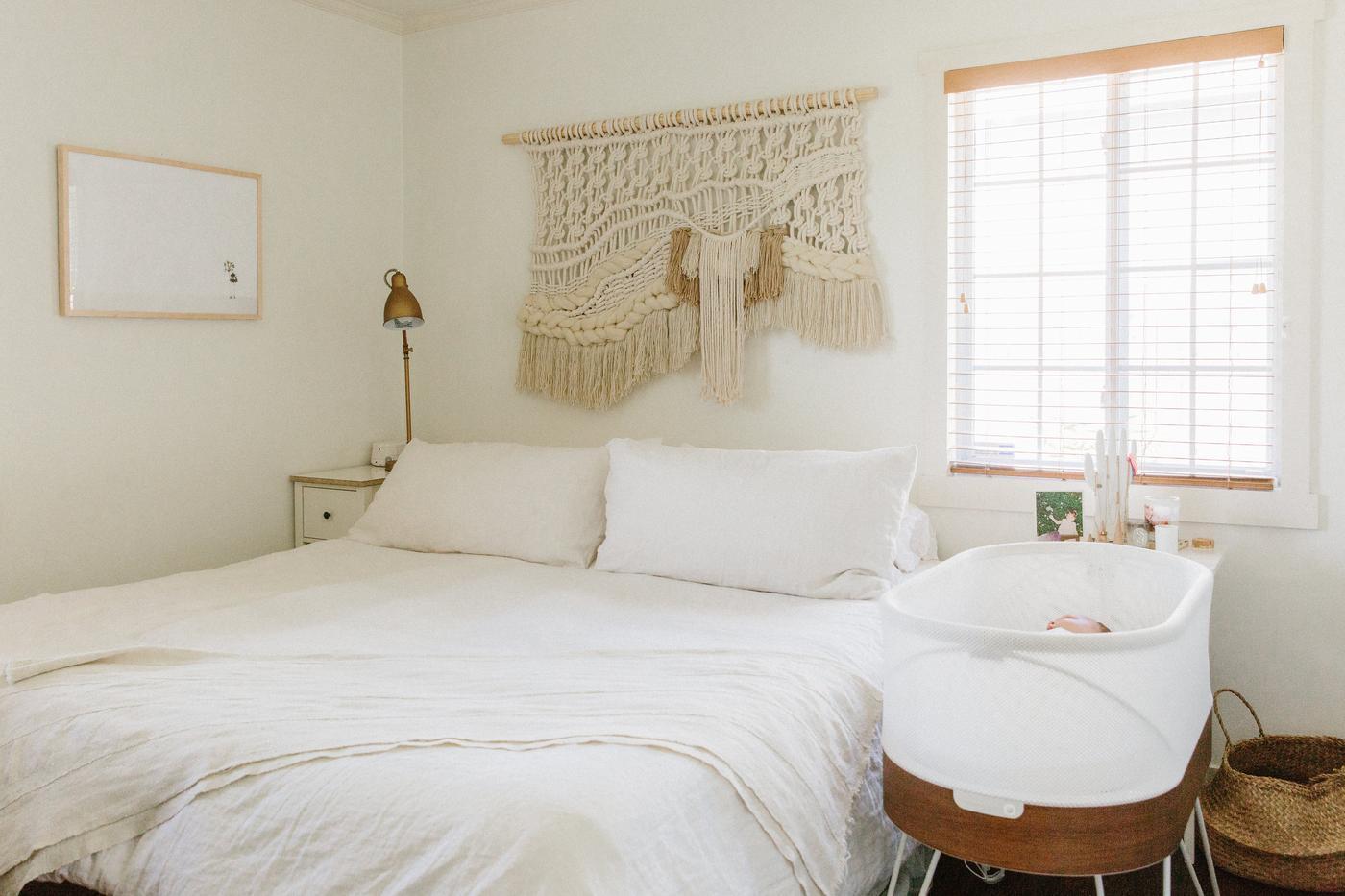
Welcoming a new baby means welcoming a brand-new roommate! To help keep babies safe while they sleep, experts recommend room-sharing (not bed-sharing!) for at least the first six months. This not only lowers the risk of SIDS, but also makes it easier to settle your little one during the night.
But let’s be honest: Even though room-sharing is a safe and sensible choice, it’s not always smooth sailing. Babies and adults often have very different sleep rhythms! If your room’s feeling a little cramped—or your sleep out of sync—we’re here to help. Here are some tried-and-tested tips to help room-sharing work better for you and your baby.
Choose the right bassinet.
While room-sharing is encouraged, bed-sharing with your baby isn’t considered safe. That’s why the first step is to set up a separate sleep space for your baby. When searching for the best bassinet, keep an eye out for:
- A compact footprint that fits comfortably in your bedroom—ideally right next to your bed
- A sleek design that complements your décor
- Safety features, such as a firm mattress and breathable mesh sides
- Smart features to help both you and your baby sleep longer and more soundly
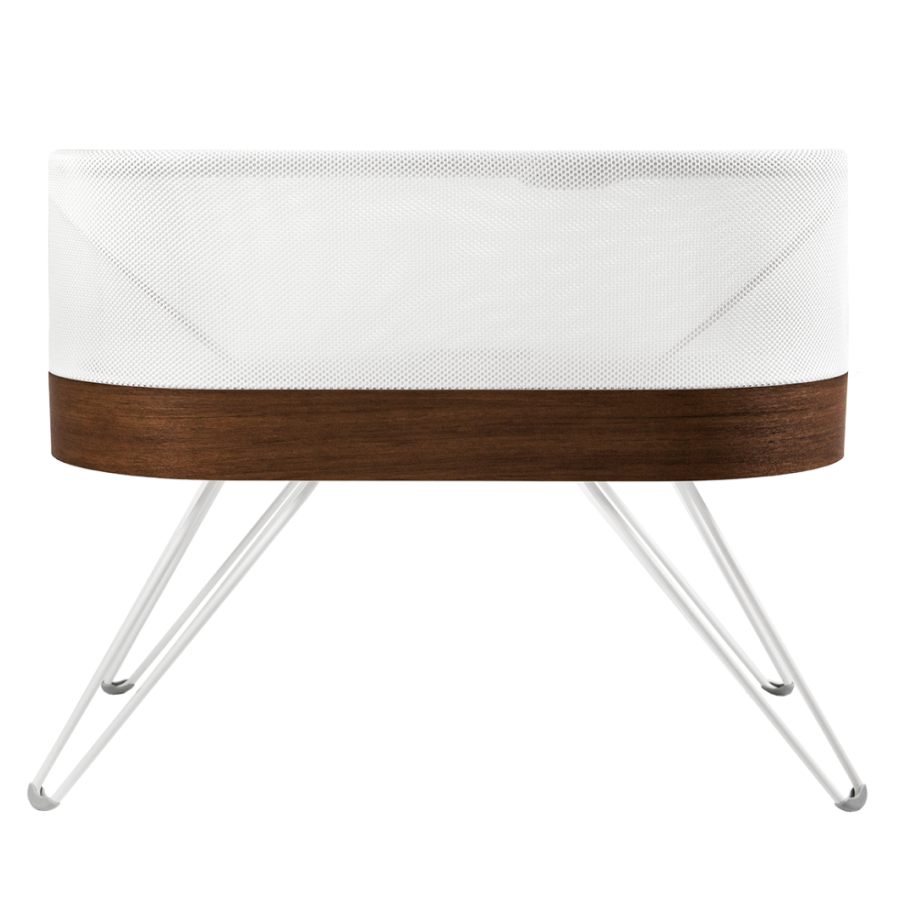
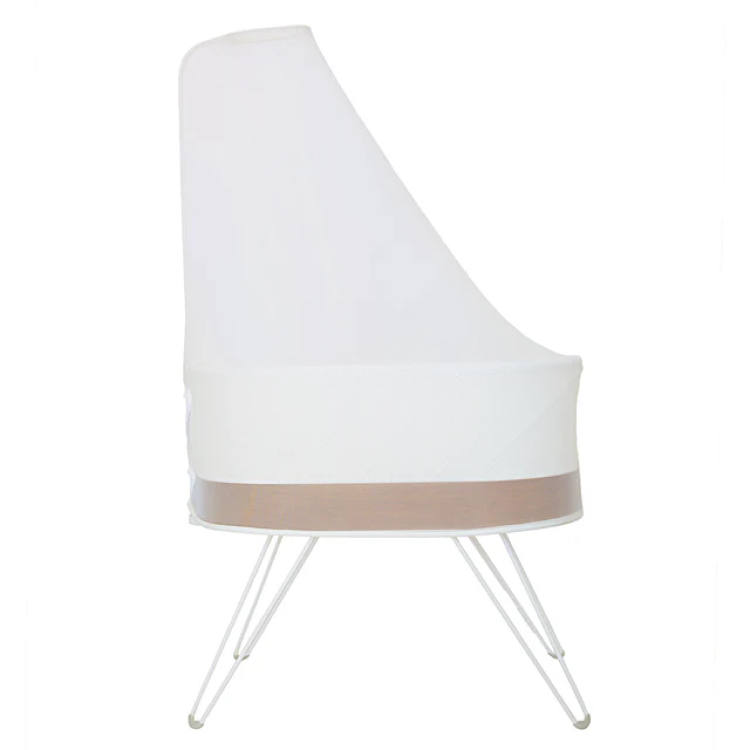
The SNOO Smart Sleeper ticks all the right boxes. Not only is it stylish, it’s also the only bassinet that gently secures babies on their backs. Plus, it automatically responds to your baby’s cries with calming white noise and gentle rocking—often settling them in under a minute!
Keep the room comfortably cool.
Overheating can increase the risk of SIDS, so it’s important to keep your baby’s sleep space comfortable—not too warm. Aim to keep your bedroom between 20 and 22°C. Handy hint: A simple room thermometer can help you maintain the right temperature with ease.
Darken the room.
Babies sleep best in the dark—it mimics the cosy womb and encourages melatonin production (that’s the sleep hormone). Use blackout curtains or blinds to block out light and help your baby sleep more soundly. Bonus: You might catch a few extra winks, too!
Use a gentle nightlight.
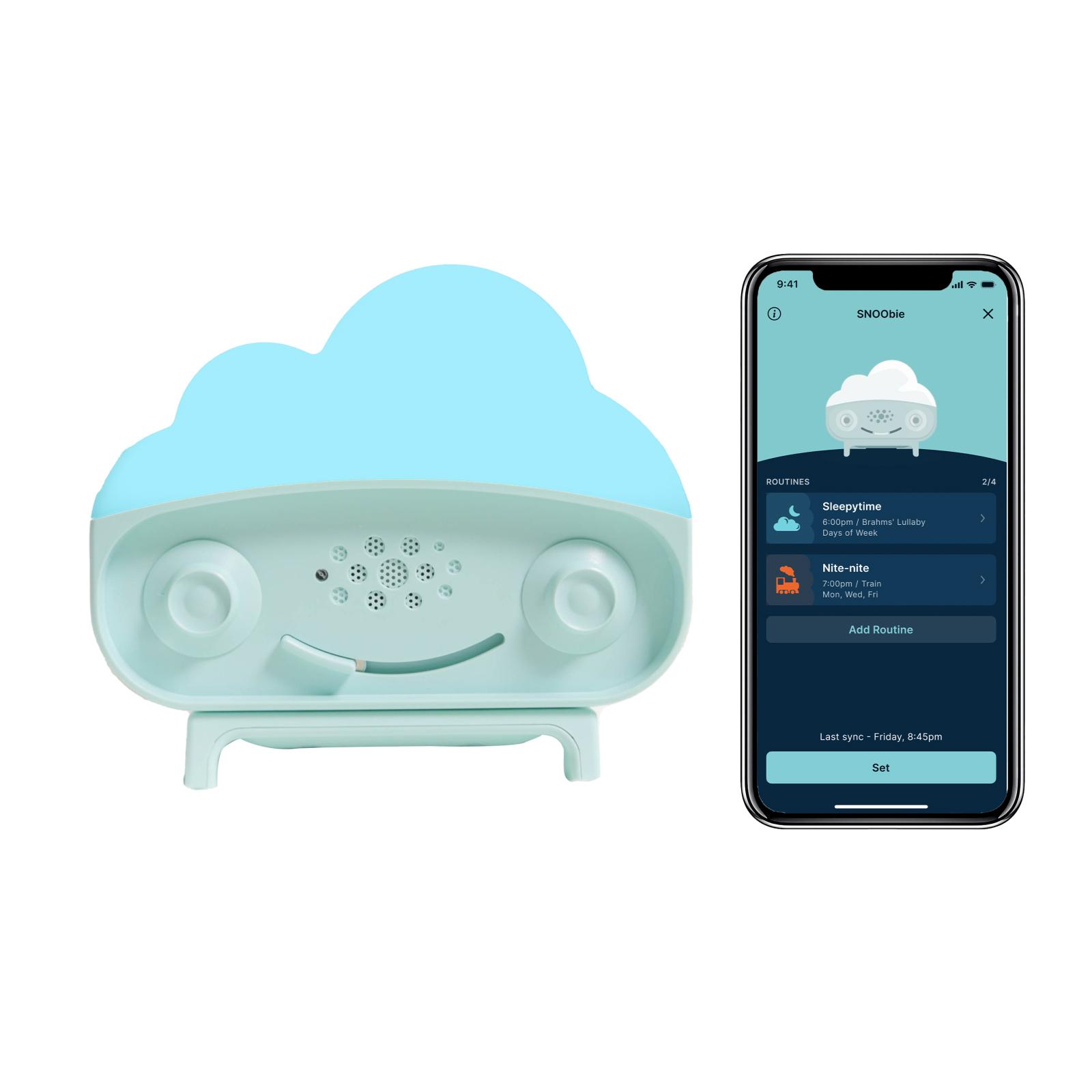
When you’re settling your baby in the early hours—or heading to bed yourself—avoid flipping on the overhead light. A soft, amber-hued nightlight gives you just enough glow for feeds and nappy changes without fully waking anyone. A tap-to-turn-on nightlight like the SNOObie is a great option, and it comes in sleep-friendly shades like orange and red.
Play white noise all night.
White noise isn’t just soothing—it’s backed by science. Dr Harvey Karp, author of The Happiest Baby on the Block, includes white noise in his proven 5 S’s method to calm babies. It mimics the constant sounds of the womb and helps mask household noise (like flushing toilets or squeaky floorboards). For parents, it can muffle your baby’s normal grunts and snuffles so you’re not woken by every tiny sound. Top tip: Choose a steady “shhh” sound over waves or nature tracks—they’re not as effective.
Keep essentials close by.
The less you have to rummage in the dark, the less chance of a fully awake baby! Be ready for middle-of-the-night feeds or nappy emergencies with a small caddy or basket by your bed, stocked with:
- Nappies and wipes
- Burp cloths
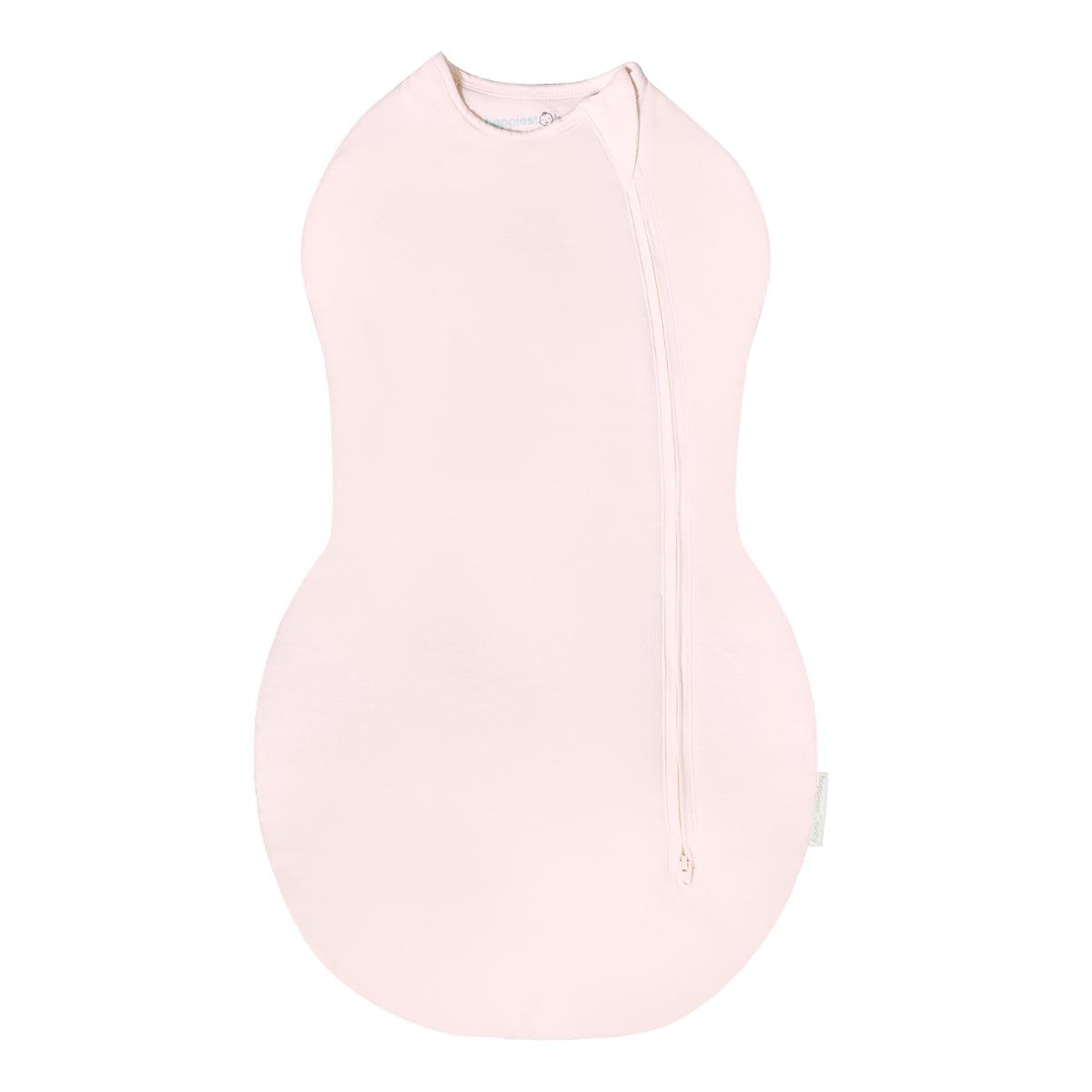
- Extra swaddle or sleep sack
- A drink and snack for you
- Pumping kit, if needed
Create a cosy baby nook.
No nursery? No problem. Even the smallest bedroom can accommodate a dedicated baby space. Try:
- Rearranging furniture to clear space near your bed
- Choosing a mini cot or compact bassinet
- Using a light curtain or screen to section off your baby’s sleep zone
Prioritise your own sleep, too.
Room-sharing means you’ll likely hear every little wiggle and sigh. That’s perfectly normal! But if one partner needs uninterrupted rest (say they’re back at work), consider alternating nights, using earplugs, or taking turns being “on duty.” A well-rested parent is a calmer, happier one.
Get ready to transition baby to their own room.
Room-sharing doesn’t last forever. Around six months, you may feel ready to move your baby to their own sleep space. To ease the transition:
- Start with daytime naps in the nursery
- Gradually move the bassinet further from your bed
- Stick to the same bedtime routine and white noise
- If using SNOO, unsnap the SNOO Sack at the shoulders and try Weaning Mode*
Read more about how to move your baby to their own room smoothly
The Bottom Line
Room-sharing is a brilliant way to stay close to your baby and support safe sleep. With a few thoughtful touches and clever routines, your shared space can become a restful retreat for the whole family.
More Sleep Help for UK Parents:
- Sample Sleep Schedule for Baby’s First Year
- What to Do When Your Baby Only Sleeps on You
- Understanding Wake Windows
- Age-by-Age Guide to Baby Naps
* Some Happiest Baby App features require a Premium subscription
Haftungsausschluss: Die Informationen auf unserer Website sind KEINE medizinischen Ratschläge für eine bestimmte Person oder einen bestimmten Zustand. Sie sind lediglich als allgemeine Informationen gedacht. Wenn Sie medizinische Fragen und Bedenken bezüglich Ihres Kindes oder Ihrer eigenen Gesundheit haben, wenden Sie sich bitte an Ihren Gesundheitsdienstleister. Muttermilch ist die beste Quelle der Ernährung für Babys. Es ist wichtig, dass Mütter in Vorbereitung auf das Stillen und währenddessen eine gesunde, ausgewogene Ernährung zu sich nehmen. Die Kombination von Stillen und Flaschenernährung in den ersten Lebenswochen kann die Muttermilchversorgung verringern und die Entscheidung, nicht zu stillen, ist schwer rückgängig zu machen. Wenn Sie sich entscheiden, Säuglingsnahrung zu verwenden, sollten Sie die Anweisungen sorgfältig befolgen.
Top-Nachrichten






DIESEN ARTIKEL TEILEN
ELTERN WAHL
Bestseller