BABY
7-Week-Old Baby Milestones
Your baby is rounding the corner on their second month of life—and those sleepy newborn days may feel like a distant memory.

Geschrieben von
Dr. Harvey Karp

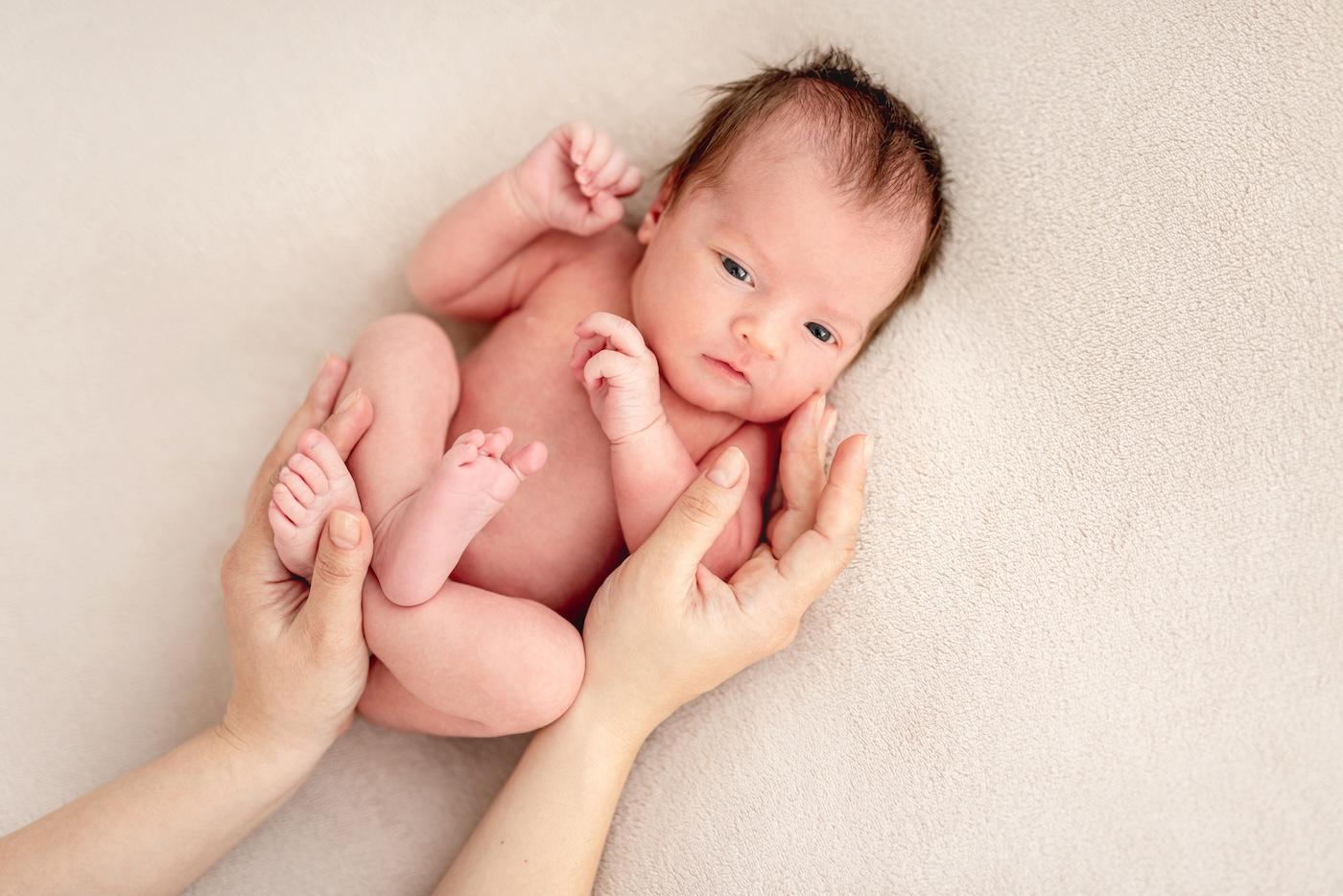
Your baby is rounding the corner on their second month of life—and those sleepy newborn days may feel like a distant memory. By now, your baby is really waking up to—and is fascinated by—the amazing lights, colours, and sounds all around.
You’re really getting a glimpse of what playtime will look like as your baby gets older. There’s still lots of watching everyone coming and going, but also lots more interest in active play. As a result, you’ll notice new skills, like batting at toys, holding the head for longer periods, and having fun grasping small objects, like a rattle.
Feeding Your 7-Week-Old Baby
For a tiny little nugget, your baby may have quite the appetite! Generally, babies gain 0.7 to 0.9 kilograms of body weight per month. Regular feeding—every couple of hours—is still important to keep your baby fueled.
Your 7-Week-Old Baby’s Development
All these feedings give energy for tummy time, but also nourish very active brain growth. Whether your baby consumes breast milk, formula, or a combination of the two, the vitamins, minerals, and nutrients they digest are essential for building the brain’s important pathways. Amazingly, your baby’s brain is adding 250,000 to 500,000 cells every second!
7-Week-Old Baby Sleep
Your 7-week-old baby should be sleeping really well (in SNOO babies often have 5, 6, or even 7-hour stretches of continuous sleep). And all that rest is helping them make the most of their awake periods. In early weeks, babies just wake up and quietly look around, but now your baby spends longer periods actively alert and playful. By watching them track moving objects with their eyes and batting at things with their hands you can see that the senses are starting to come together in ways that build the foundation for major motor skills to come!
As much fun as you two may be having together, it’s important to schedule some mellow downtime. Ideas include taking walks, singing lullabies, doing little massages, and rocking in a rocking chair.
7 Week-Old Baby Sleep Regressions
Some parents notice a sleep regression as their little one approaches 3 months. Regressions are marked by early-morning or middle-of-the-night wakeups and trouble falling asleep that seemingly sneaks up on you (and your baby) out of the blue. When it comes to sleep regressions, the best cure is prevention. I advise continuing to use the 5 S’s (or SNOO), to help soothe your baby to sleep. You might want to consider using a dream feed to top your baby off before bed. And be sure to get outside early in the day—this can help get your baby’s internal clock back on track!
Your 7-Week-Old Baby’s Health
How to Spot a Fever
Fevers aren’t pleasant at any age. For infants younger than 12 weeks, however, any temperature above the normal range is cause to ring up your paediatrician.
- Before 6 months of age, the most reliable ways to check for fever are with rectal, forehead, or under-arm thermometers (not ear thermometers). A fever is a temperature above 38.0° C.
- As well as feeling hot to the touch, symptoms associated with fever include irritability (more than usual and not just at the witching hour), lethargy (very little good alert time, sleepiness to where baby is just not eating what you would expect).
- Viral infections are the most common cause of fevers, but bacterial infections in the babies are common, too, and can worsen quickly.
- If your infant younger than 3 months has a fever, do not treat the fever with medication before seeing a paediatrician. Call to discuss your baby’s condition right away…don’t wait for the morning.
Haftungsausschluss: Die Informationen auf unserer Website sind KEINE medizinischen Ratschläge für eine bestimmte Person oder einen bestimmten Zustand. Sie sind lediglich als allgemeine Informationen gedacht. Wenn Sie medizinische Fragen und Bedenken bezüglich Ihres Kindes oder Ihrer eigenen Gesundheit haben, wenden Sie sich bitte an Ihren Gesundheitsdienstleister. Muttermilch ist die beste Quelle der Ernährung für Babys. Es ist wichtig, dass Mütter in Vorbereitung auf das Stillen und währenddessen eine gesunde, ausgewogene Ernährung zu sich nehmen. Die Kombination von Stillen und Flaschenernährung in den ersten Lebenswochen kann die Muttermilchversorgung verringern und die Entscheidung, nicht zu stillen, ist schwer rückgängig zu machen. Wenn Sie sich entscheiden, Säuglingsnahrung zu verwenden, sollten Sie die Anweisungen sorgfältig befolgen.
Top-Nachrichten






DIESEN ARTIKEL TEILEN
ELTERN WAHL
Bestseller