BABY
Fever in Babies—What Parents Should Know
A few simple fever facts can help you figure out whether you should be concerned about your baby’s temperature…or if you can chill out.

Written by
Dr. Harvey Karp
A fever is not fun for anyone…and when it comes to a baby, a fever can really make Mum and Dad sweat. While a fever can be serious, it is also a normal part of growing up. Fortunately, a few simple fever facts can help you figure out whether you should be concerned about your baby’s temperature…or if you can chill out.
Signs of a Fever in Babies
As parents gain experience, they can often just feel the baby to tell if they are warm. Of course, babies also feel hot and sweaty when they have been in a warm room or are overdressed. But most babies who feel warm—but do not have a fever— have a normal digital temperature.
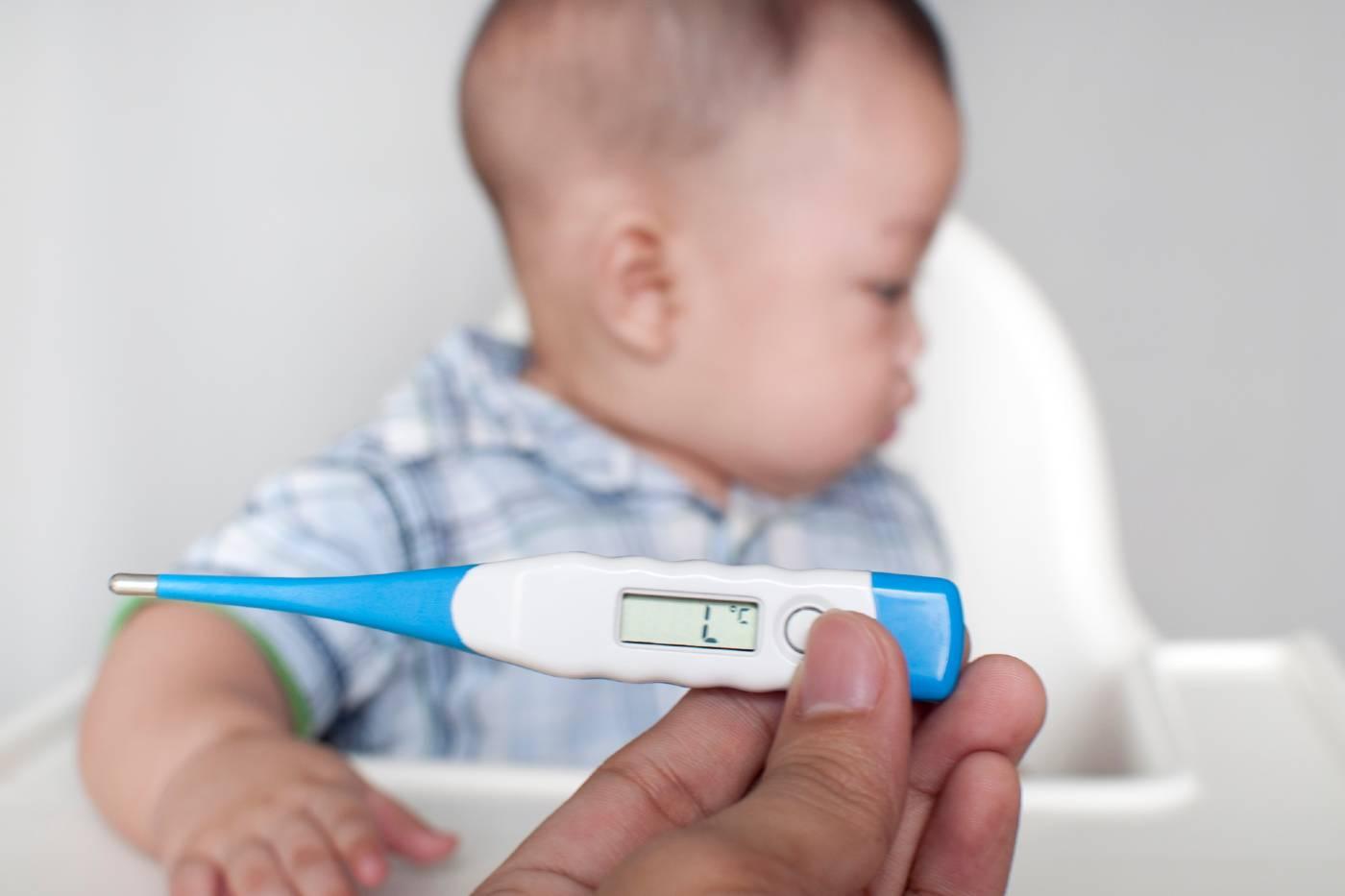
A digital thermometer is a 'must have' in your baby’s first aid kit. Digital thermometers usually have a plastic, flexible probe with a temperature sensor at the tip and an easy-to-read digital display on the other end.
- For babies younger than 3 months: You will get the most reliable reading by using a digital thermometer to take a rectal temperature. Call the doctor if your infant is younger than 3 months old and has a temperature of 38 degrees Celsius or higher.
- For babies between 3 months and 6 months old: A digital rectal thermometer is still the best choice. A temporal artery thermometer (aka a forehead thermometer) also can be used.
- For kids between 6 months and 4 years old: You can use a digital thermometer to take a rectal temperature. You also can use a tympanic (ear) thermometer or a digital thermometer to take an axillary (armpit) temperature, but they are less accurate.
What is considered a high fever?
A normal temperature for a baby is about 36 to 37.9 degrees Celsius (usually it is around 37 degrees, but there is some variation from person to person). You will know your baby has a fever when their rectal temperature spikes to 38 degrees Celsius or higher.
Any baby under 3 months with a rectal temperature of 38 or higher, always, always, always needs to be checked by a healthcare professional. And any child with a fever over 40 degrees needs to be evaluated—so if you see that number, do not wait to give your provider a call!
What causes fever in a baby?
Most often, fever is caused by infection. When your baby or toddler has an infection, their body temperature rises as their immune system suits up to battle the illness (hey, fighting off bacteria and viruses can really work up a sweat!).
Vaccines can also cause a brief fever, which is a normal reaction that signals that your baby’s immune system is working to make important antibodies to prevent disease.
Your child's body temperature can rise over 40 degrees Celsius by overheating, such as being in a hot car. This is an emergency situation where your baby needs to be cooled as soon as possible and seen by a doctor.
Can constipation cause fever in babies?
Though it is possible your baby might have a fever and be constipated at the same time, constipation itself does not cause fever. If your little one is constipated and has a fever, be sure to call your doctor—it is possible there is an underlying health issue that is behind both.
Does teething cause fever in babies?
The idea that teething causes a fever in babies is largely a myth. Research has shown that teething does not make babies sick. If your teething baby has a fever call your doctor to rule out an infection.
What is the best thing to do when a baby has a fever?
A fever can cause young children to become fussy, lethargic and sweat so much that they become dehydrated (dark yellow pee and a dry, sticky tongue). That is why it is good to offer plenty of fluids and medicine to bring down a fever.
One of the signs that make paediatricians the happiest is when a baby wants to play a little…even if they have a fever. Their body temperature dropping even one degree can help them feel better.
Home remedies for a fever in babies:
You do not have to do anything to treat a fever if your baby is drinking and wetting nappies adequately. If they seem content and are not in any discomfort, medication is not necessary. However, there are a few things you can do to make them more comfortable:
- Keep your baby cool. Dress your baby in loose clothing. Do not cover them in blankets or layers of clothes—overdressing them can cause the fever to climb or prevent it from coming down. If your baby’s hands and feet are cold, ibuprofen or acetaminophen can help a lot. Use lightweight pyjamas and swaddles and make sure the room is not too hot. Turn on a fan if the room feels warm or stuffy.
- Try a bath. Make sure it is a bit warm…if it is too cool it will be too shocking for your baby. (The cooling of the body that happens with a bath occurs mostly because of evaporation of water off your baby’s body.) It also helps to give a bath after you have given fever-reducing meds.
- Talk to the doctor about medication. If your baby is under 3 months, do not give them medications without talking to your paediatrician. For older babies, Tylenol (acetaminophen) can be taken every 4 to 6 hours. Ibuprofen can be given every 6 to 8, as long as your baby is at least 6 months old. (Weigh your baby and check the package for the correct dosage.) Your doctor might give you instructions for taking both together or even giving a little more, depending on your baby’s condition. Never give medications containing aspirin.
Fever in Babies: When to Worry
A fever on its own is not necessarily concerning, but combined with certain other symptoms, you will want to call your healthcare provider for advice or head to an A&E. These can include:
- More drowsy, listless, not alert or interested in playing…even when fever comes down
- More fussy, irritable, not interested in playing…even when the fever comes down
- Severe sore throat or ear pain
- Has certain immune system conditions such as cancer, or is taking steroid medications
- Dry mouth, no tears, and fewer wet nappies than normal
- Is under 3 months of age and has a temperature above 38 degrees
- Has fever over 40 degrees at any age
- Had a seizure
- Appears to have a headache, stiff neck, rash, continued vomiting or diarrhea
- Fever that lasts more than 24 hours when your child is under 2 years old
- Fever that lasts for more than 72 hours, or three days, when your child is 2 and older
A fever can be frazzling, so so not hesitate to call your healthcare provider with your questions. It is always better to be on the safe side when it comes to your baby's health.
Disclaimer: The information on our site is NOT medical advice for any specific person or condition. It is only meant as general information. If you have any medical questions and concerns about your child or yourself, please contact your health provider. Breastmilk is the best source of nutrition for babies. It is important that, in preparation for and during breastfeeding, mothers eat a healthy, balanced diet. Combined breast- and bottle-feeding in the first weeks of life may reduce the supply of a mother's breastmilk and reversing the decision not to breastfeed is difficult. If you do decide to use infant formula, you should follow instructions carefully.






SHARE THIS ARTICLE
PARENT PICKS
Bestsellers