TODDLER
How to Calm a Toddler’s Sudden New Fears
Fear is a common problem for toddlers and often comes on without warning. Here is how to get to the bottom of—and soothe—your child’s new fears.

Scritto da
Dr. Harvey Karp
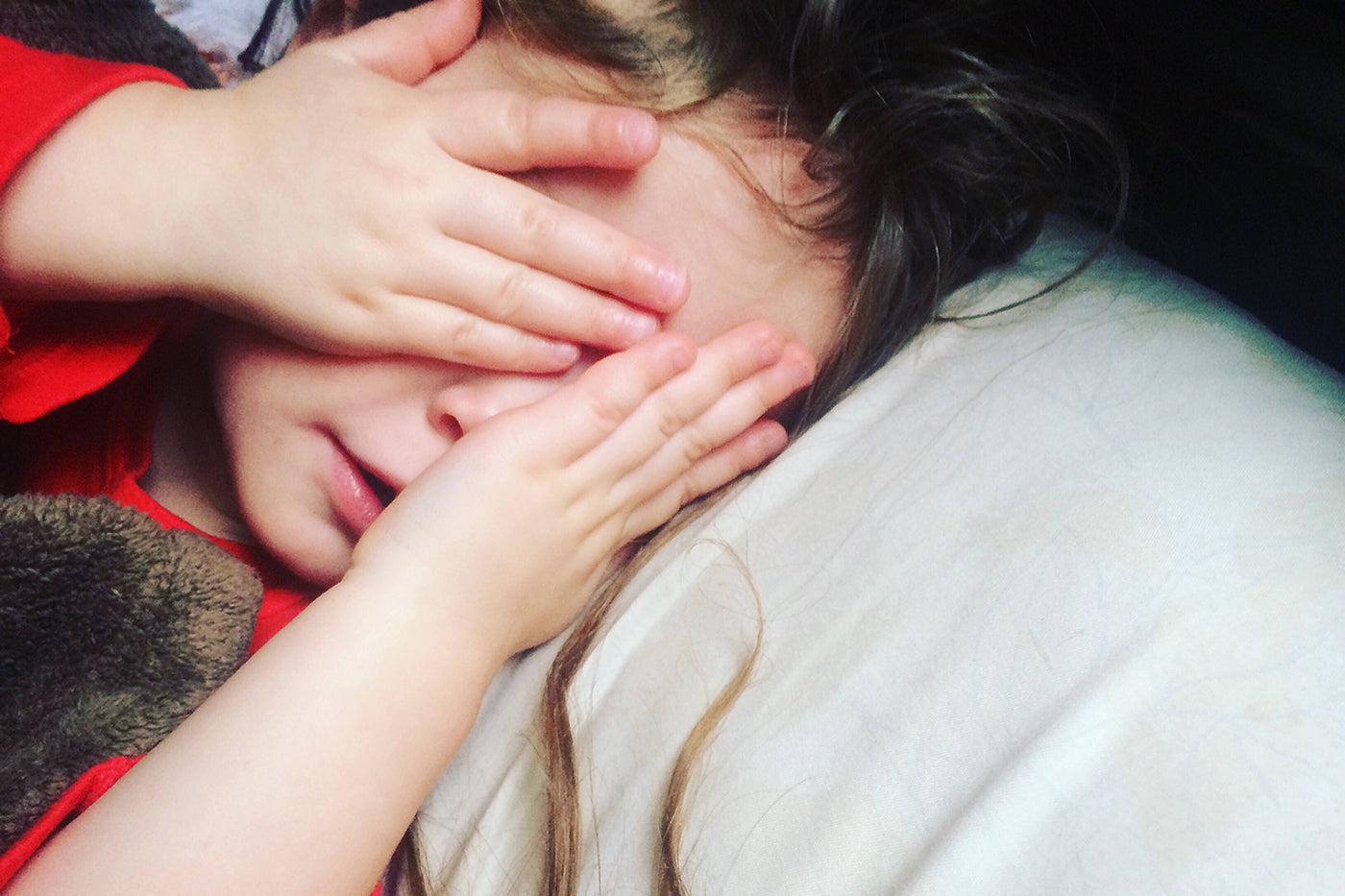
Fear is a common problem for toddlers and often comes on without warning. Typical fears include monsters, snakes, spiders, attackers, the dark, and being abandoned, but your toddler could develop a fear of almost anything—including clowns!
The Root of Toddler Fears
Fears may pop up when a child is under stress, suffers a scary experience (an injury, earthquake, car accident), sees a scary cartoon, or hears something ordinary but misinterprets it as something frightening. ('At the picnic, the ants carried away everything!')
Young toddlers (especially shy, cautious kids) often fear loud sounds like thunder, firecrackers, or barking dogs. Around age three, fear of 'bad men,' monsters, and witches often develop. One reason fears pop up at this age is because of a 3-year-old’s new ability: comparing. Three-year-olds constantly compare themselves to the rest of the world. And, as you might imagine, the world can look pretty big and scary to them. Toddlers love puffing out their chests and announcing their supremacy over babies, but they often feel weak and vulnerable compared to big kids, big dogs, and big strangers.
Older toddlers also have fears because of something called projection. Many bigger kids still have the urge to bite and hit, but they know that their parents expect them to control these primitive impulses. So they transfer the urge from themselves and project it onto scary shadows, strangers, and assorted imaginary 'meanies.' ('The monster took my toys . . . and tried to pinch me!')
Note: Your reaction to your toddler’s fears may be deeply rooted in your past. If your childhood fears were pooh-poohed, you may tend to overprotect your frightened child and accidentally undermine her confidence. On the other hand, if your family made a big deal out of praising you for courage, you may see your toddler’s fearfulness as a weakness that must be nipped in the bud.
I invite you to try to find a middle ground. Listen to your child’s fear without minimising it or overreacting. I have noticed that frightened kids calm fastest when their worries are respectfully acknowledged and when they are encouraged to take baby steps to confront their fears.
Tools to Relieve Toddler Fears
First, show your child that you take her feelings seriously. Then, you can address her fears.
Connect with respect. Toddler fears may start out small, but ignoring her fears will only make them grow. For instance, we know that ants are not a danger, but if you are too fast to pooh-pooh your child’s fear it may make her feel more alone…and more scared, just when she needs your help. So before you try to dispel her worries, invest a minute of your time in using the Fast-Food Rule and Toddler-ese to show your little friend that you 'get it' and you really care.
Plan a calming bedtime routine. Bedtime fears are made better by some loveys (cuddly protectors that 'stand in' for you when you are in the next room) and special bedtime routines. Put on soothing music and dim the lights in your house an hour before bedtime to help keep your child in a calm state of mind. (Avoid roughhousing and TV during that golden hour.)
Gossip. Let your child overhear you talking to her dollies about her fear. And use gossip to reward your toddler's little acts of bravery; for example, petting a neighbor’s puppy or climbing up the slide. Each time she takes another baby step forward, gossip to her toys about her courage.
Offer a win-win compromise. For toddlers, every day is filled with amazing, incredible sights! That’s why they strongly believe that almost anything is possible. (Ghosts? Sure. Monsters? Of course! Your boss 'exploded' at you today? Okay, but it sounds messy!) Using logic to deny a panicked child’s fears ('There are no monsters!') is as doomed to failure as telling someone who fears flying that planes are safer than cars. The fear is very real in the imagination.
Here is a better approach: Wait for the panic to subside a bit, then offer a win-win compromise that allows your tot to feel safe and enables you to calm her hysteria. For example, you might suggest: temporarily letting her sleep with you; allowing your dog to keep her company; getting a Mickey Mouse night-light, etc.
Tell fairy tales and role-play. Use the 'side door' of your child’s mind to help lessen her fears. Have her dollies 'talk to each other' about the things that scare them . . . and how they calm themselves. Tell stories about nice doggies that lick your fingers and never bite and about mean doggies who have to go to time-out when they do something bad; role-play about dogs and encourage her to remind the puppy to be nice and not to bite.
Use magic breathing. Calm breathing helps children learn how to keep panic under control. If you have an older toddler, I recommend you practise it every day . . . especially if she is anxious or fearful. For example, if your child is upset about a dog, first connect with respect ('You say, "No, no, doggie . . . no!" Say, "You go away, doggie! Go away!" Wow, that doggie was a little scary, huh?'). Then, once she calms, do some magic breathing. This will help her complete her calming and feel some mastery over the fear.
Build confidence during the day. Making your child feel big and strong can also help her overcome fears. Practise boosting her overall confidence (listen with respect, ask her opinion, play the boob) once or twice an hour. And take some specific steps to build her confidence about the thing she fears. For example, if she is petrified by bugs, read books about bugs, cut bug pictures out of magazines to make a scrapbook, etc.
Use a bit of 'magic.' This is another fun, confidence-building approach that really makes sense to a toddler’s immature brain. Try the following and see how fast the bad things go away:
- Offer a protective charm: a special 'magic bracelet,' a dreamcatcher (for bad dreams), a bedside photo of his protectors (like Mum and Dad or Superman), or a spray bottle of super-special 'magic water.'
- Pretend to put an invisible 'magic space suit' on your little one each night: Patiently massage it on from head to toe so it will keep him safe once he’s in bed. Draw a picture of what he would look like in it…if he could see it.
Avvertenza: Le informazioni presenti sul nostro sito NON sono consigli medici per alcuna persona specifica o condizione. Sono solo intese come informazioni generali. Se avete domande o preoccupazioni mediche riguardo vostro figlio o voi stessi, si prega di contattare il vostro fornitore di assistenza sanitaria. Il latte materno è la migliore fonte di nutrizione per i neonati. È importante che, in preparazione e durante l'allattamento al seno, le madri seguano una dieta sana ed equilibrata. L'allattamento misto (seno e biberon) nelle prime settimane di vita può ridurre la produzione di latte materno e la decisione di non allattare al seno può essere difficile da invertire. Se decidete di utilizzare il latte artificiale per neonati, dovreste seguire attentamente le istruzioni.
Principali notizie






CONDIVIDI QUESTO ARTICOLO
SCELTE DEI GENITORI
Bestseller