TODDLER
How to Become Your Toddler's Favourite Storyteller
Storytelling is a fantastic way to teach your toddler about character. Here is how to craft your own special stories tailored to your child’s particular needs.

Scritto da
Dr. Harvey Karp
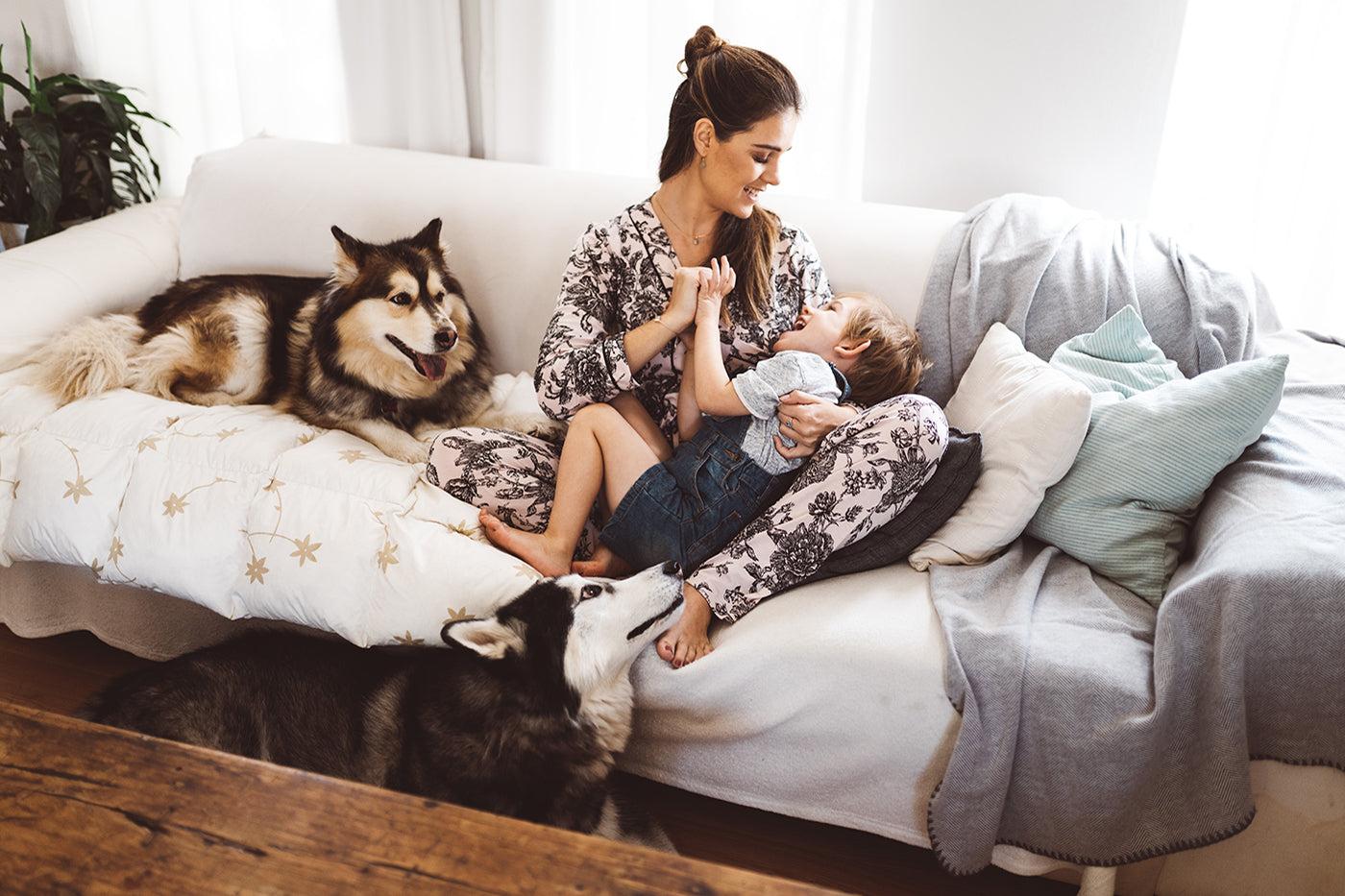
Storytelling is a wonderful way to entertain and connect with your toddler. And it is also a fantastic way to teach your toddler about character. Making up stories can more effectively teach our children lessons about right and wrong and good and bad than a direct lecture would. Think of it as planting seeds of kindness that slowly take root in your child’s spirit. It is no exaggeration to say that for young children hearing is believing.
But even if you have a rapt audience in front of you (aka your adoring toddler), you might have trouble figuring out how to get started. That is where these storytelling tips come in! Here is how to craft your own special stories tailored to your child’s particular needs.
The Beginning: 'Once Upon a Time'
Your goal at the beginning of a story is to capture your child’s imagination . . . with lots of description. Start out by saying a few sentences about what the little animal hero of your story is doing and feeling (think of both her emotional feelings and her five-senses feelings).
- What does the pony princess see, smell, wear, sing, eat for lunch?
- How does the sun feel on her face?
- How do the flowers smell? Is she happy, sad, curious, silly?
- What does she see on her walk home from school?
Within a minute, your toddler will start feeling snuggly and interested and her mind’s trusting side door will swing open.
The Middle: 'But Then'
Now weave in a little lesson about a specific behaviour or value that you want your child to learn—sharing, helping others, telling the truth, saying thank you, et cetera. This is where you introduce the 'problem' that has to get resolved by the end.
But then, when she got home from school, the little pony would not take turns; or told her mummy she washed her hands . . . but she had not; or teased her baby brother till he cried, etc.
- Why did she do it?
- How did her mummy feel about it?
- What did her mummy say or do? (Remember to use some of your Fast-Food Rule and Toddlerese at this part)
- What did the little pony finally do that made her mum happy?
The End: 'Happily Ever After'
Toddlers love happy endings, so always finish your stories with the problem being solved, the animals being safe, and everyone living 'happily ever after.'
. . . And then the princess came home safe to hugs, kisses, and her favourite macaroni and cheese and broccoli for dinner. And everyone lived happily ever after!
Tips to Make You a Star Storyteller
Make the main characters happy little animals. Pick names like Steven the Mouse or Mimi the Moose. Do not use children as characters. They may seem too real for the under-5 set.
Tell stories where the weak triumph over the strong. Kids love the three little pigs defeating the wolf or Jack outsmarting the giant because the little, weak guys win in the end.
Be a ham! Embellish your story with whispers, funny voices, dramatic faces, and some waves of your hands to keep your child’s attention.
If your child is more verbal, ask for suggestions. While you tell the story, ask: 'And what do you think she said then? Why do you think he was mad?'
Have fun adding little 'helpers.' Kids love angels, fairies, talking toads, or friendly trees who come to the hero’s rescue.
Include an animal who is grouchy and mean (but not too scary). Include some characters who are a little ill-mannered and have them keep messing up (like 'boobs') but they ultimately learn how to behave and become the hero’s friend.
Toss in lots of special words. Toddlers love words like 'party,' 'secret,' 'castle,' 'princess,' 'superhero,' 'flying,' 'magic,' 'presents,' 'toys,' 'surprise,' etc.
Storytelling in Practice
One mother shared the fairy tale she made up to help her toddler have less trouble separating from her in the mornings when she had to go to work:
Once upon a time there was a little girl Froggie named Hoppy. She was as green as peas and loved to eat cereal for breakfast with crunchy flies in it!
Poor little Hoppy was worried every time her mummy hopped off the lily pad to go to work. But she had a talking teddy bear, and whenever she got sad she cuddled him tight and they would sing her favourite song together (‘Old MacDonald’!)…and play house…and sometimes even have a tea party!
That helped Hoppy be happy. She was also happy when she put her hand in her pocket and touched the magic handkerchief that her mum gave her to help her smile when she was sad.
Then, before she knew it, her mummy always, always, always came hopping back home to the lily pad with kisses and lots of yummy, sweet, crunchy flies to eat…and they all lived happily ever after…The end!
Avvertenza: Le informazioni presenti sul nostro sito NON sono consigli medici per alcuna persona specifica o condizione. Sono solo intese come informazioni generali. Se avete domande o preoccupazioni mediche riguardo vostro figlio o voi stessi, si prega di contattare il vostro fornitore di assistenza sanitaria. Il latte materno è la migliore fonte di nutrizione per i neonati. È importante che, in preparazione e durante l'allattamento al seno, le madri seguano una dieta sana ed equilibrata. L'allattamento misto (seno e biberon) nelle prime settimane di vita può ridurre la produzione di latte materno e la decisione di non allattare al seno può essere difficile da invertire. Se decidete di utilizzare il latte artificiale per neonati, dovreste seguire attentamente le istruzioni.
Principali notizie






CONDIVIDI QUESTO ARTICOLO
SCELTE DEI GENITORI
Bestseller