TODDLER
The 18-Month Sleep Regression: What Parents Need to Know
Get your toddler’s sleep back on track!

Écrit par
Holly Pevzner
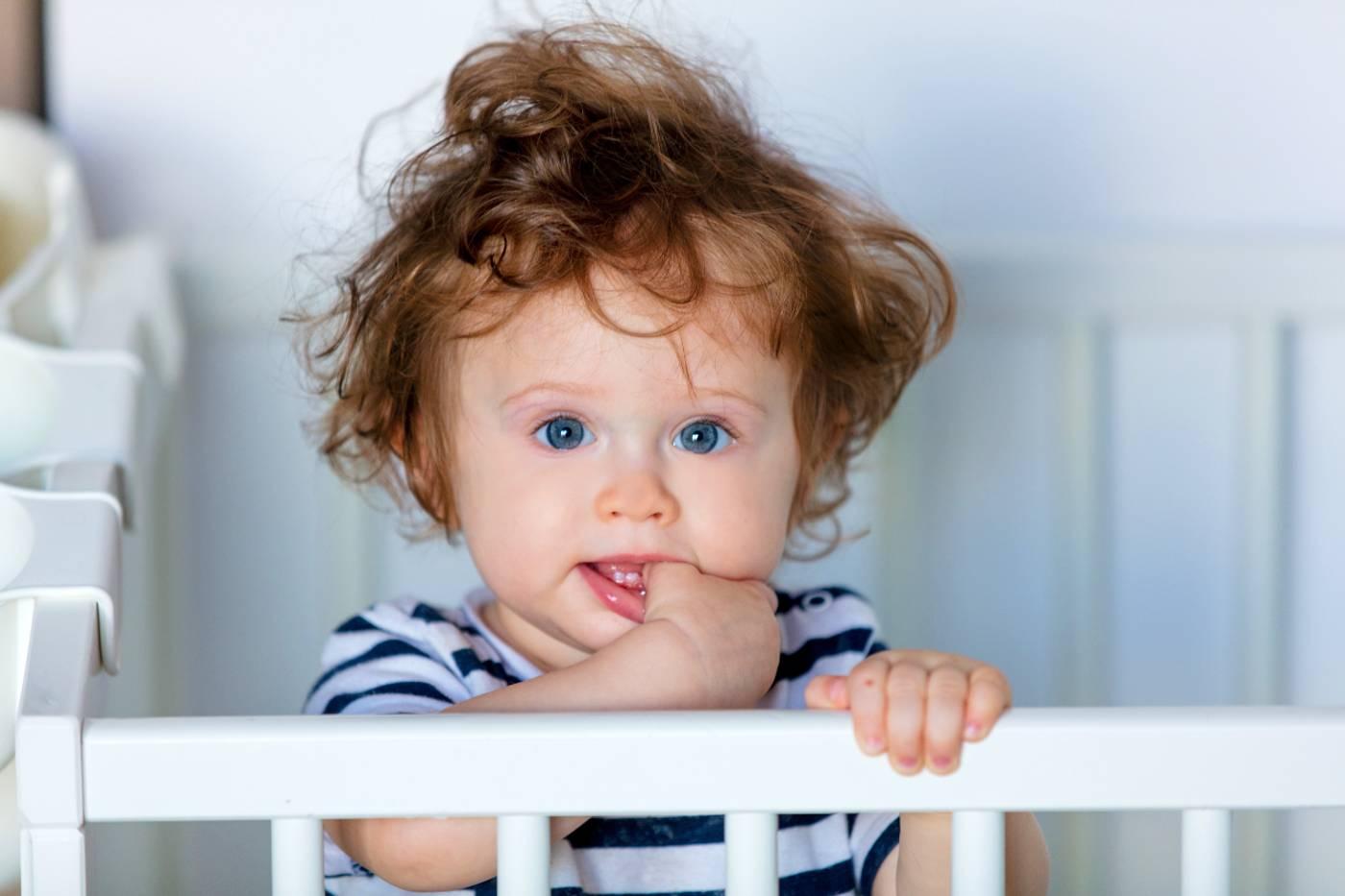
Just when you thought you had your toddler’s sleep routine all figured out—bam!—another dreaded sleep regression strikes. Gah! Try not to worry. After all, you’ve already powered through the 6-month sleep regression and maybe even the 9-month regression, too. You got this. To help you and your tot sail through this inevitable sleep hiccup, follow this 18-month sleep regression guide.
What is a sleep regression?
Dr. Harvey Karp, author of The Happiest Toddler on the Block puts it like this: “A sleep regression is when a toddler’s sleep patterns switch from good to crummy…seemingly overnight.” Essentially, a sleep regression is a period when a child who previously slept well experiences disruptions in their sleep patterns. While sleep regressions are for-sure frustrating, the bright side is that they’re a normal part of development and often coincide with a big cognitive leap. (Yay?)
While sleep regressions can strike at any time, the most common sleep regressions are the:
- 4-month sleep regression
- 6-month sleep regression
- 8-month sleep regression
- 9-month sleep regression
- 12-month sleep regression
- Between 18- and 24-month sleep regression
Why won’t my 18-month-old sleep?
Throughout the night—every hour or so—your 18-month-old enters the light, easily disturbed part of their sleep cycle. This is when they jerk, twitch, and move their small body around their cot or toddler bed…and possibly wake themselves up with all the commotion! Toddlers are more vulnerable to outside sleep disturbances during this phase of sleep, too. That means anything from a hallway light to a passing car to scratchy sheet can bolt your 18-month-old awake. Other common sleep-sappers for the toddler set:
- Transitioning into a big kid bed
- Teething
- Constipation
- Dry throat and stuffy nose
What is the cause of 18-month sleep regression?
“Besides normal toddler brain development and defiance, there are a few other common reasons for your 18-month-old’s sleep regression,” says Dr. Karp, including:
- Increased separation anxiety: Even tots who skipped over separation anxiety as babies, can start demonstrating challenges at about 18 months old, notes the American Academy of Pediatrics (AAP).
- Testing boundaries: Toddlers love to push limits! How else will they learn what’s acceptable—or what they’re capable of?
- Changing sleep needs: At 18-months, some kiddos are transitioning from two naps to one. “It can take a couple of weeks to a month to complete the transition from two naps to one,” says Dr. Karp.
- Booming brain development: Because toddlers have twice as many buzzing brain connections as adults do, it can be super-challenging to “power down” at bedtime. (The FOMO is real!)
- Emerging imagination may lead to new fears: When toddlers suffer a scary experience (like an injury or a flood), see a frightening cartoon, misinterpret something ordinary (“The ants carried everything away!”), or are stressed, their fears can sap sleep.
- More physical skills: “Toddlers get so jazzed by moving and exploring, the last thing they want to do is settle down and fall asleep,” notes Dr. Karp. “They often resist bedtime because they hate leaving the thrill of these experiences.”
Sleep Habits of an 18-Month-Old Toddler
An 18-month-old should clock 11 to 14 hours of sleep each day, according to the AAP. This usually consists of 10 to 12 hours of rest at night and 1 to 2 hours of napping, most often squeezed into one daytime sleep session.
More sleep insights:
- Around 18 months, most toddlers condense their two-naps-a-day schedule into one afternoon nap.
- A consistent bedtime between 6:30pm and 8:00pm is common for this age group.
- Many 18-month-olds have developed sleep associations, such as craving a specific lovey. (Learn more about the benefits of loveys, like SNOObear.)
- While some toddlers rise as early as 5.30am, 7am is an average wake time. (PS: Most tots are developmentally ready to start using an OK-to-wake clock between 2 and 3 years old, so get ready with SNOObie!)
Do all toddlers have an 18-month sleep regression?
No. Not all toddlers will experience the 18-month sleep regression—some will go through a toddler sleep regression earlier, later, or not at all! In fact, some toddlers’ sleep may even improve at 18 months. (Fingers crossed!)
18-Month Sleep Regression Symptoms
Is your toddler suddenly waking several times a night? That’s just one sign that they are going through an 18-month sleep regression. Here are common signs your toddler is experiencing a sleep regression:
- Growing resistance and fussiness at bedtime
- Difficulty relaxing and falling asleep once tucked in
- Crying when caregiver leaves the room
- More night wakings
- Increased difficulty calming down after nighttime wakeups
- Early morning wakeups
- Shorter or skipped naps
- Longer or more frequent naps
- Increased clinginess or separation anxiety at bedtime
How long does the 18-month sleep regression last?
The 18-month sleep regression rarely stretches longer than a few weeks. Of course, that’s not to say it won’t feel like an eternity! The key? Be consistent with routines and summon your patience—most toddlers return to their normal sleep patterns in no time. On the flip, “if you meet your 18-month-old’s sleep regression with shaming, impatience, or mixed messages, this could turn into months-long ordeal,” says Dr. Karp.
Coping Strategies for Parents During the 18-Month Sleep Regression
The 18-month sleep regression can be a challenging phase for even the most experienced parents. But remember, this is temporary, and you will get through it. For help, try these coping tips:
- Memorize some positive parenting affirmations—and plaster them all over your walls, too.
- Log off social media! Every 18-month-old is unique, so it’s not always helpful to compare your toddler’s sleep.
- If partnered, alternate “nights off,” so you can take turns catching up on ZZZs.
- Seek professional help if your toddler’s sleep regression is significantly impacting your mental health, your parenting confidence, or your child’s wellbeing.
How to Handle Sleep Regressions in Your 18-Month-Old
Sleep regressions are a fact of baby- and toddler-rearing. Your parents went through it with you, their parents with them, and so on back to the Dark Ages. The only difference? Today we have a name for this minor sleep set-back—and we have several proven strategies to help you and your 18-month-old weather this sleep storm with ease:
- Prepare for bedtime during the day. Bedtime starts…after breakfast? Yes! “Toddlers sleep better when they have a day filled with fresh air, sunshine, good food, and outdoor play,” says Dr. Karp.
- Rehearse your routines: “Review your routines before you’re up against the ticking clock of bedtime,” Dr. Karp suggest. To do that, create a DIY beddy-bye book, featuring images that illustrate all the steps of your child’s bedtime routine. “Reading it together during the day teaches your toddler what to expect when bedtime rolls around,” says Dr. Karp.
- Reassess timing. What worked two months ago may no longer be appropriate. Timing needs to adapt based on your child’s development. So, if your 18-month-old recently dropped a nap, you’ll likely need to move their bedtime earlier to avoid sleep problems related to being overtired. (Find the right bedtime for your toddler.)
- Consider a nightlight. Many toddlers feel a sense of comfort and safety if they can see familiar surroundings when they wake in the middle of night…not just a sea of darkness! Nightlights can help ward off nightmares, too! Learn how to pick the best toddler nightlight.
- Use a predictable bedtime routine. Start the routine about an hour before tuck-in by dimming the lights and playing some low, rumbly white noise. That’s everyone’s cue to stop all roughhousing and shut down screens. After pyjamas and washing up, use the last 15 minutes to snuggle together in bed (white noise on), read a few calming stories, and do some of Dr. Karp’s signature “bedtime sweet talk.”
- Introduce a lovey. “These cuddly friends are wonderful sleep aids, helping toddlers build confidence and security, and ease separation anxiety, too,” says Dr. Karp. Consider SNOObear: a lovey and white noise machine in one!
- Try Twinkle Interruptus. For 18-month-olds who rely on their parents to nod off, a technique called Twinkle Interruptus may be just the ticket. At bedtime, after going through your routine, suddenly say “Oh dear! Wait just one second! I need to shut off the water! I’ll be right back!” Leave the room for a couple of seconds and return. When you come back, praise your tot for waiting then pick up your routine where you left off. But once again, make an excuse to make a brief exit…then step out a little longer. (“Uh, oh! I have to potty! Snuggle your bear. I’ll be right back.”) Repeat this a few times, gradually increasing the wait time. After several nights, your tot will likely fall asleep while waiting for your return (which you always do). Dr. Karp notes that Twinkle Interruptus works about 75% of the time for kids over 18 months old!
18-Month Sleep Regression: Final Thoughts
Guess what? By trying to understand what’s behind your 18-month-old’s sleep regression you’re already ahead of the game! Next up: Begin implementing good-sleep strategies, like a predictable bedtime routine. If sleep struggles continue, you may need to tweak your approach using a different mix of the strategies above—what works for some toddlers may not work for others! If you have persistent concerns about your toddler's sleep patterns, don’t hesitate to consult with your paediatrician. With time and patience, this regression will be in your rearview mirror.
More Toddler Sleep Help:
- Dr. Harvey Karp on Sleep Training Your Toddler
- Toddler Sleep Myths to Stop Believing
- Signs Your Toddler Isn’t Getting Enough Sleep
- Toddler Nap SOS: What to Do If Your Tot Refuses to Nap
Avertissement : Les informations présentes sur notre site ne constituent PAS des conseils médicaux pour une personne ou une condition spécifique. Elles sont uniquement destinées à titre d'information générale. Si vous avez des questions médicales et des préoccupations concernant votre enfant ou vous-même, veuillez contacter votre fournisseur de soins de santé. Le lait maternel est la meilleure source de nutrition pour les bébés. Il est important que, en préparation et pendant l'allaitement, les mères adoptent une alimentation saine et équilibrée. La combinaison de l'allaitement au sein et au biberon dans les premières semaines de vie peut réduire la production de lait maternel de la mère et il est difficile de revenir sur la décision de ne pas allaiter. Si vous décidez d'utiliser une préparation pour nourrissons, vous devez suivre les instructions avec soin.
Principales actualités






PARTAGER CET ARTICLE
CHOIX DES PARENTS
Meilleures ventes












Plus sur Toddler


About Holly Pevzner
Holly Pevzner is Happiest Baby’s Staff Writer. She specializes in creating parenting, pregnancy, health, nutrition, and family travel content. Her work—including essays, columns, reported features, and more—has appeared in outlets such as EatingWell, Family Circle, Parents, Real Simple, and The Bump. Before becoming a full-time writer, Holly held senior staff positions at Prevention, Fitness, and Self magazines, covering medical health and psychology. She was also a contributing editor at Scholastic Parent & Child magazine and a regular kids-health columnist for Prevention and First For Women magazines. Holly lives in Los Angeles with her husband, two boys, and terrier mix.