SNOO
How to Clean SNOO
Accidents happen! Here is how to keep your favourite baby bassinet fresh and clean!

Escrito por
Happiest Baby Staff
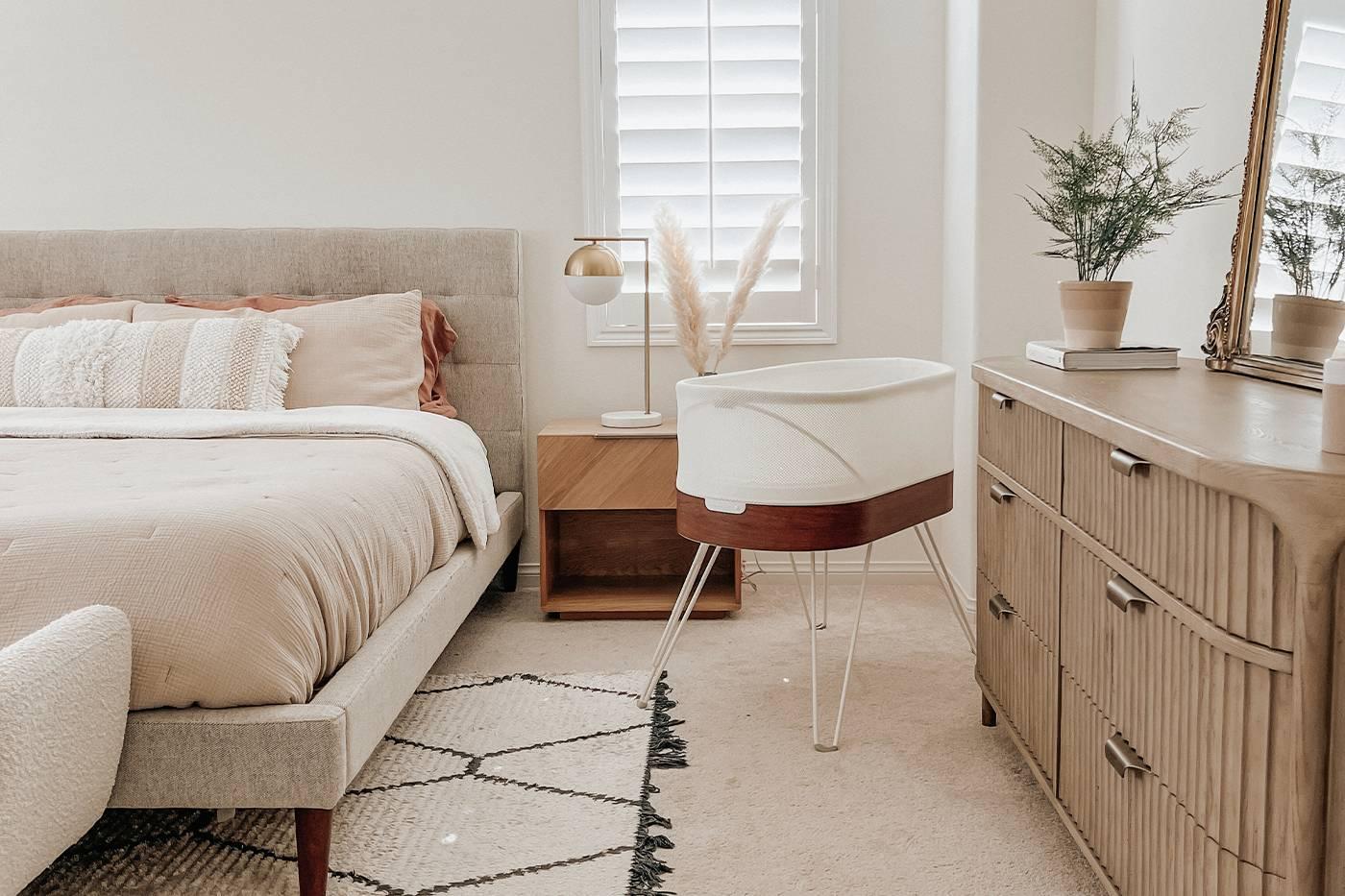
Yay! Your SNOO has arrived and it is crisp and clean and ready for your baby to safely sleep in. Cut to a few weeks into new babyhood: Your little one is sleeping great in SNOO…but your favourite Smart Sleeper now features a faint reminder of an unfortunate nappy blow-out. What do you do? Never fear! Cleaning SNOO is way easier than you may think!
How to Clean SNOO Mesh
Did your baby’s spit-up spray SNOO’s mesh? It happens! Simply spot clean the mesh with a soft, clean cloth, warm water, and a mild baby-safe cleanser. Remember, it is always smart to clean up messes quickly before stains set in and are difficult to get out. (For safety purposes, you should never remove SNOO’s mesh to soak or wash—or for any reason!) If you need a little more power behind your clean, reach for a baby-safe stain remover, like Dreft Laundry Stain Remover—and never use bleach or abrasive cleaners!
PS: If you accidentally spill a liquid in or on SNOO, quickly dry it up with a towel or sponge, then clean as suggested. Make sure SNOO is completely dry before putting the mattress and baby back in. If needed, you can use a hair dryer on a cool or warm setting (never hot!) to speed up drying.
How to Clean Between SNOO Mesh and Base
To clean between the mesh panels, locate the zipper at the head of SNOO and unzip. Next, wiggle a duster (like a Swiffer Duster) or a narrow hoover nozzle inside to remove any hidden dust or particles. While you are there, feel free to wipe down the platform (the metal shield under the mattress), base, and legs with hospital-safe cleaners like Oxivir Wipes. Again, bleach and abrasive cleaners are big no-nos.
How to Clean SNOO Mattress and Mattress Cover
SNOO’s firm, yet cosy mattress comes with a water-resistant cover, which not only makes quick clean-ups easy-peasy, it helps prevent stains and contamination. Still, it is a good idea to frequently check inside the mattress cover for signs of moisture—and wiping up anything you might find.
Regularly cleaning your SNOO mattress cover is important, too, especially after spit-ups or nappy leaks. (Routine cleaning is also recommended if you live in a humid climate.) To clean, remove the mattress cover and machine wash in warm with light-coloured items. (Washing with coloured items may discolour the mattress cover). Tumble dry on a low heat and remove promptly.
Make a point to check under the mattress at least once a week for signs of moisture and wipe up any wetness you spy. If the mattress itself needs to be cleaned, use mild soap and warm water to get the job done, allowing the mattress to air dry completely before placing it back in the mattress cover and returning to SNOO. Do not put the mattress in your washer and dryer! It will likely damage the foam, making it unsafe for SNOO use.
How to Clean SNOO Sack
If there are no nappy leaks or spit-up messes to take care of, you can wash your baby’s SNOO Sack at the same time you are cleaning their SNOO sheets. That means, every few days—or even once a week—should do. Machine wash with similarly coloured items in warm or cold water (never hot), always avoiding chlorine bleach.
Before tossing your SNOO Sack in the wash, be sure to attach the wings to each other and zip the sack completely. This will keep the arm and leg flaps from clinging to other items in the load and causing damage. Next, air dry or tumble dry on low heat, making sure everything is completely dry before using.
How do I keep SNOO clean?
It is smart to regularly inspect the mesh and spot clean SNOO when needed. Waiting too long to clean up oopsies can cause stains. When not in use, place SNOO in its dust bag and original box and store in a cool, dry place to help prevent mold, mildew, and general ickiness.
More SNOO Questions, Answered!
- What are SNOO’s Safety Features?
- When Should You Order Your SNOO?
- Why Rocking Bassinets Soothe Babies
- How to Transition Baby From SNOO to Crib
Descargo de responsabilidad: La información en nuestro sitio NO es un consejo médico para ninguna persona o condición específica. Solo se proporciona como información general. Si tiene alguna pregunta o preocupación médica sobre su hijo o sobre usted mismo, por favor contacte a su proveedor de salud. La leche materna es la mejor fuente de nutrición para los bebés. Es importante que, en preparación para la lactancia y durante la misma, las madres lleven una dieta saludable y equilibrada. La combinación de lactancia materna y alimentación con biberón en las primeras semanas de vida puede reducir la producción de leche materna y es difícil revertir la decisión de no amamantar. Si decide utilizar fórmula infantil, debe seguir las instrucciones cuidadosamente.
Principales noticias






COMPARTIR ESTE ARTÍCULO
ELECCIONES DE LOS PADRES
Más vendidos