PARENTS
Is Lying About Santa Naughty or Nice?
‘Tis the season for…deception? Here is how to navigate your child's tricky questions about Santa Claus.

Geschrieben von
Dr. Harvey Karp
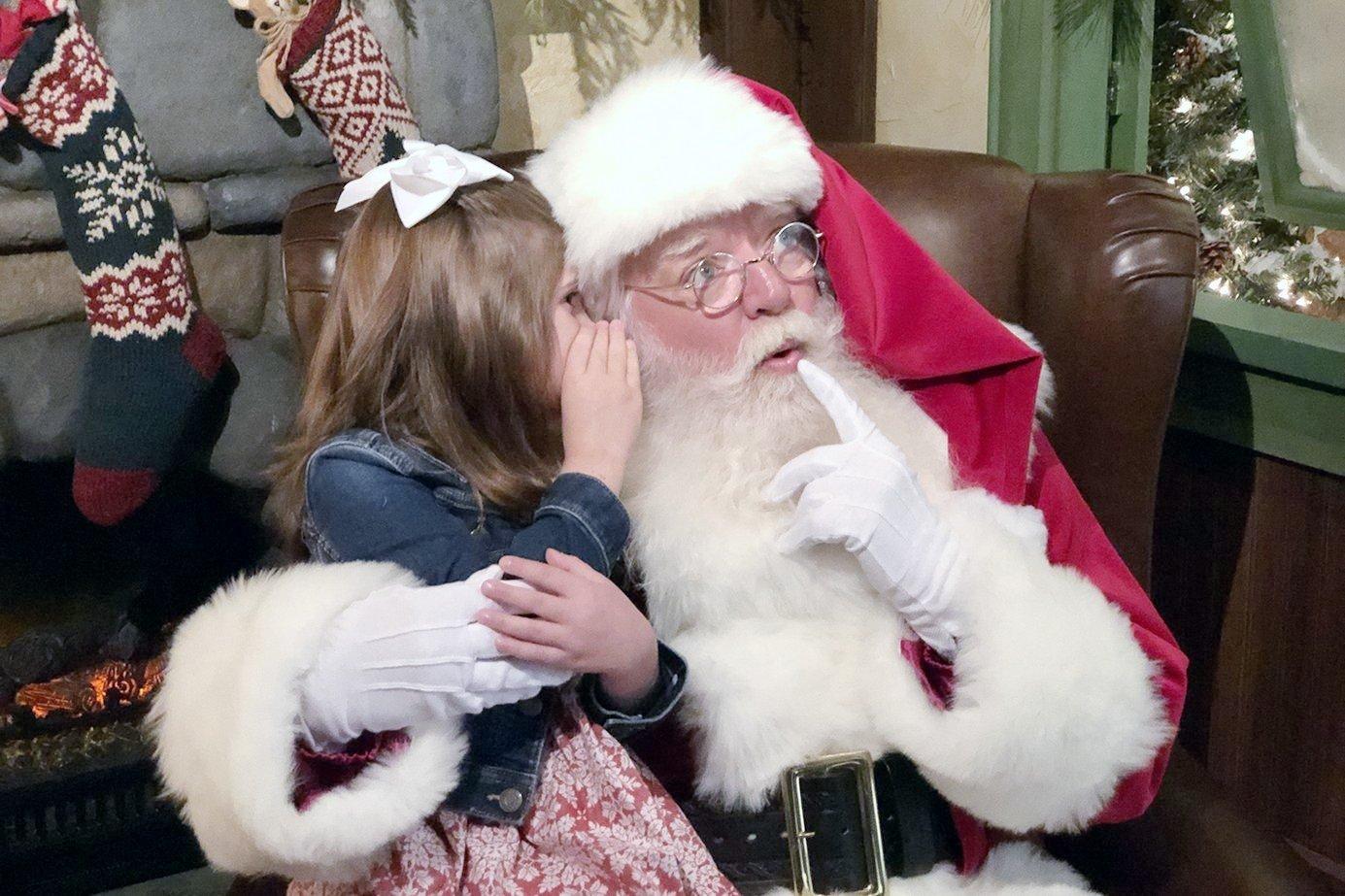
December comes with all sorts of traditions: trimming the tree with twinkling lights, decking the halls with boughs of holly, picking out the perfect presents and…lying to our children?
Indeed, the myth of Santa is a huge part of the Christmas holiday, yet it requires parents to fudge the facts a bit—something that may seem to run counter to your attempts to raise truth-telling kids. Fortunately, parents who fear their deception will land them on the naughty list can rest assured that spinning a few itty-bitty white lies to make a believer out of their children can actually be quite nice.
The Benefits of Believing in Santa
It grows little givers.
While one part of Santa’s appeal is that he brings gifts, the spirit of Santa is not just the spirit of receiving—it is the spirit of generosity as well. The Santa Claus story gives parents the opportunity to teach children to be their own Santa and discover the joy of giving to others. One way to cultivate generous little ones is to have them forego the popsicle-stick ornaments or homemade jewelry and give coupons instead. These could be IOUs to do something (think: help sort the laundry or get ready in less than a minute). Doing an act rather than giving a material gift lets your child have the experience of being a caring and generous person. And when children give something of value, they feel worthwhile.
It teaches kids to have faith.
Belief in something can give children a way to feel secure when facing the unknown and to find light in the darkness, which are the cornerstones of faith. And the funny thing about faith is, it actually requires some proof—so the half-eaten cookie you leave for your kids to discover on Christmas day or sooty reindeer footprints you put on the hearth—these are benevolent deceptions that give children reason to believe.
It ignites delight.
In addition to feeding, sheltering, clothing, and tending children’s basic needs, another part of the parenting job description (and one of the most rewarding aspects) is bringing delight to children. The stories you weave, the books you read, the finger-puppet shows you act-out can all be powerful ways to fire up a toddler’s imagination and flood them with joy. Santa’s story (though made-up) is no different.
So, How Do You Answer Your Child’s Tricky Santa Questions?
Even if you are sold on the harmlessness of nurturing your child’s belief, there may still come a time when your child asks some tough questions about that jolly fella from way up north. Here is how to handle those Kris Kringle queries (no holiday magic required):
Answer a question with a question.
Make sure you understand what is being asked and what exactly your child knows before you spill the beans. You might ask, 'Where did you hear that?' 'What else did they tell you?' Get a sense of what your child knows before you let the cat out of the bag.
If your child outright confronts you…
You can tell your child that there are a lot of stories in life that are not fully true but are very true…and there are things that are made up that still carry a great deal of meaning! Is there really a person in the North Pole who delivers toys every year? No. That part is not fully true. But is it true that good things come to you when you are a good person or that when you give things it makes you feel good about yourself? Those aspects of the Santa myth are true and enduring.
If your child gets upset or indignant…
Use the Fast-Food Rule and narrate back your child’s feelings before adding your own two-cents. Some things you might say: 'I am sorry, I did not think you would mind so much. I was not trying to make fun of you. I thought that we were having fun. Now that I see you do mind, I am sorry.'
A big part of parenting is delivering delight even if it is make-believe…regardless of the season. After all, make-believe is something our children all enjoy all year round—through books, movies, cartoons, and more. That does not seem like it merits a lump of coal now, does it?
Haftungsausschluss: Die Informationen auf unserer Website sind KEINE medizinischen Ratschläge für eine bestimmte Person oder einen bestimmten Zustand. Sie sind lediglich als allgemeine Informationen gedacht. Wenn Sie medizinische Fragen und Bedenken bezüglich Ihres Kindes oder Ihrer eigenen Gesundheit haben, wenden Sie sich bitte an Ihren Gesundheitsdienstleister. Muttermilch ist die beste Quelle der Ernährung für Babys. Es ist wichtig, dass Mütter in Vorbereitung auf das Stillen und währenddessen eine gesunde, ausgewogene Ernährung zu sich nehmen. Die Kombination von Stillen und Flaschenernährung in den ersten Lebenswochen kann die Muttermilchversorgung verringern und die Entscheidung, nicht zu stillen, ist schwer rückgängig zu machen. Wenn Sie sich entscheiden, Säuglingsnahrung zu verwenden, sollten Sie die Anweisungen sorgfältig befolgen.
Top-Nachrichten






DIESEN ARTIKEL TEILEN
ELTERN WAHL
Bestseller