PREGNANCY
24 Weeks Pregnant: Sexy Dreams, Strange Dreams
Many women start having strange dreams—and vivid sexual dreams.

Écrit par
Dr. Harvey Karp
PARTAGER CET ARTICLE
CHOIX DES PARENTS
Meilleures ventes
PREGNANCY
Écrit par
Dr. Harvey Karp
PARTAGER CET ARTICLE
Meilleures ventes
Bit by bit, your baby is stretching and growing! But they’re still far from being ready to arrive just yet. By now, your little one responds to bright light, your movements, and even your touch (try gently massaging your bump). Their hearing is improving, too. They can hear your tummy rumbling, outside music, and nearby conversations.
The two sounds they hear most clearly are the whoosh of your blood flowing through the placenta—and your voice. In fact, your voice travels directly through your lungs to your baby. Before long, they’ll move in rhythm with your speech and begin recognising your voice! (That rumbly, whooshing sound is also why white noise is so soothing for newborns—it mimics the womb environment.)
At this stage, your baby still receives all their oxygen through the umbilical cord, but their spongy lungs are developing tiny air sacs to prepare for breathing after birth.
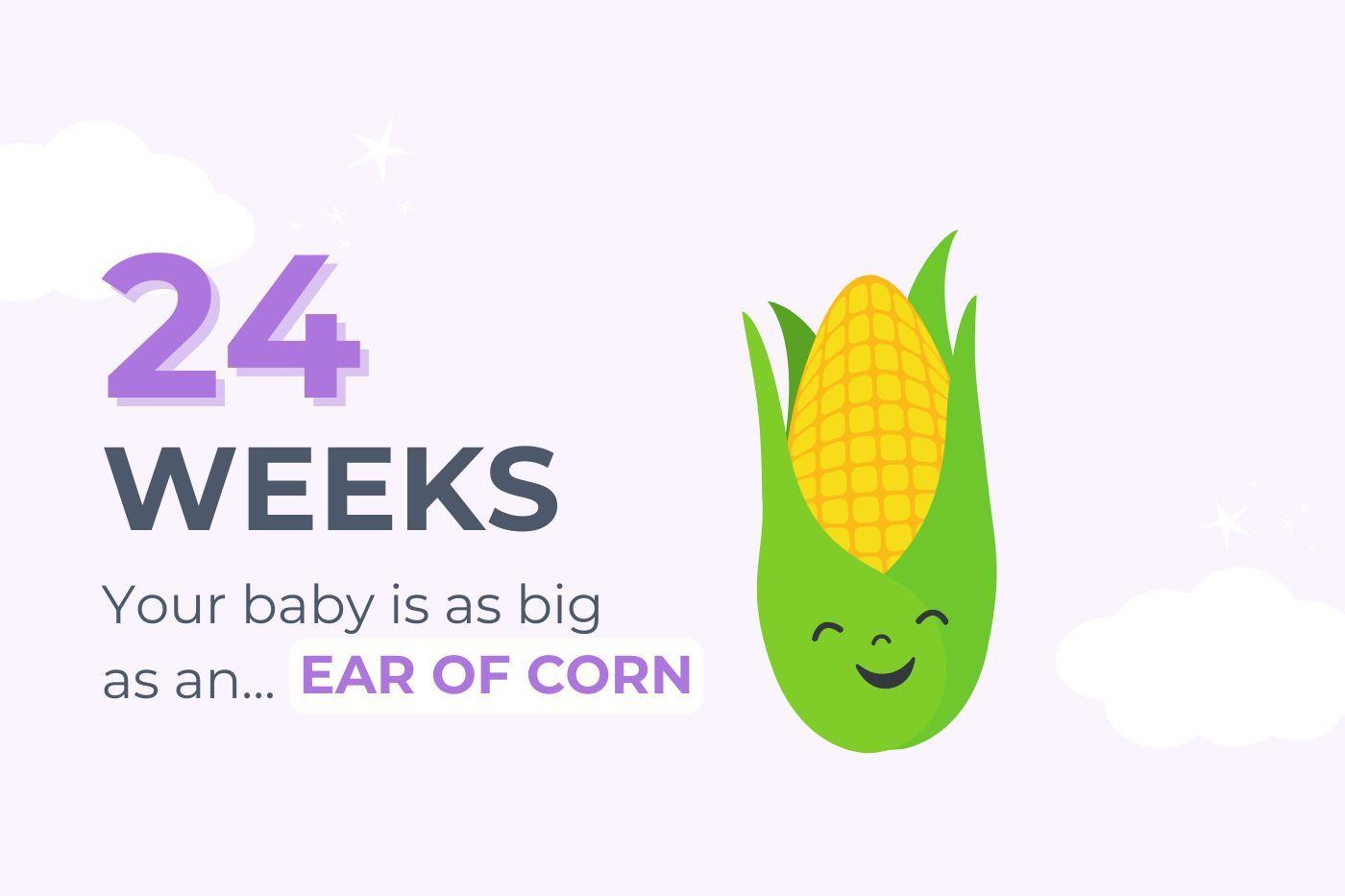
At 24 weeks, your baby is about the size of a corn cob.
At 24 weeks, you’re roughly five and a half months along.
You’ve reached the 6-month milestone! Many parents-to-be report vivid dreams around this time—sometimes even very strange or sexual ones. Experts aren’t exactly sure why, but hormonal changes, disrupted sleep, and more frequent night wakings (thank you, bathroom trips!) likely play a part.
Daytime desire may also be heightened. Increased blood flow to your pelvic area can make your vagina and labia a little swollen and sensitive—which can make sex feel more pleasurable. If you’re not in a high-risk pregnancy, sex is generally safe—your baby is well protected. But if you’re experiencing bleeding, pain, or are at risk of preterm labour, check in with your midwife or doctor before having penetrative sex.
“My mum used to say it doesn’t matter how many kids you have…because one kid’ll take up 100% of your time, so more kids can’t possibly take up more than 100% of your time.” — Karen Brown
Avertissement : Les informations présentes sur notre site ne constituent PAS des conseils médicaux pour une personne ou une condition spécifique. Elles sont uniquement destinées à titre d'information générale. Si vous avez des questions médicales et des préoccupations concernant votre enfant ou vous-même, veuillez contacter votre fournisseur de soins de santé. Le lait maternel est la meilleure source de nutrition pour les bébés. Il est important que, en préparation et pendant l'allaitement, les mères adoptent une alimentation saine et équilibrée. La combinaison de l'allaitement au sein et au biberon dans les premières semaines de vie peut réduire la production de lait maternel de la mère et il est difficile de revenir sur la décision de ne pas allaiter. Si vous décidez d'utiliser une préparation pour nourrissons, vous devez suivre les instructions avec soin.