TODDLER
Spark Your Toddler's Imagination With a Toy Rotation
Here is how to pull it off (and put it all away!)

Written by
Happiest Baby Staff
SHARE THIS ARTICLE
PARENT PICKS
Bestsellers
TODDLER
Written by
Happiest Baby Staff
SHARE THIS ARTICLE
Bestsellers
Parents of the world, let’s take a collective inhale through the nose. Exhale through the mouth. Feel better yet? Chances are you will not... not until some of the miscellaneous plastic that greets you underfoot each morning is up and away. Let us face it: Kids have a lot of stuff. And while you have invested in these toys, and many are thoughtful and useful gifts from family and friends, most of us simply do not have the space to keep every. Single. Thing. Out... at all times!
What is more, it is not great for them either. Studies show that being surrounded by too many toys at once can overwhelm kids and (counterintuitively) leads to more boredom and less fulfillment. It also makes it hard for kids to concentrate on—and, in turn—enjoy any specific item. We are not telling you to stop buying toys for your children, or even to take away most of what they have got… but, creating a toy rotation is a happy compromise.
Basically, you will be keeping only a third to a half of their belongings out in the play areas at any given time while storing the rest. Then, you will swap biweekly, seasonally, or on whatever timetable works for your family. This organisation method keeps their collection feeling new and exciting; helps you manage the chaos and clutter throughout the home; and leaves children feeling less overwhelmed and likelier to explore their imagination at playtime.
The key to any successful organising venture is to first throw out what no longer serves you. It is best to get the kids out of the house or at least situated in another room before doing this, lest every random pipe cleaner and broken toy part will be whined over. Tackle their playroom or bedrooms in two initial stages: trash first, decisions second.
The first step of your toy rotation top edit entails tossing anything that is actual trash. This means food wrappers, broken or damaged items that are not salvageable, random Band-Aids they have opened and tossed in a bin… you get the idea. Once the literal garbage is out, start your second step which is to pull out and pack up anything your children have developmentally outgrown, are not sentimental about, and still functions—these items should be donated.
Once the trash and donations are out of the room, the next phase of creating your toy rotation system is about organising everything they play with by like and kind. Create your categories custom to what your children use: Dolls, stuffed animals, board games & puzzles, cars, play kitchen food & utensils, etc.
After everything is grouped with its similar or associated toys, decision time begins. It is up to you whether to split the items in half or in thirds: this will depend on how often you plan to rotate the toys and how much volume you want and can handle being out at a given time.
This is probably the easiest part. Store your remaining toys to be cycled back in. If you have halved everything and are doing one big rotation, it is simplest to box them up according to their type. If you are dividing further to rotate one third in at a time, just toss everything for the next rotation together, and everything for the rotation after that together. We are thinking simplify here, parents! Keep it easy so you will not dread this project every time you go to switch things out.
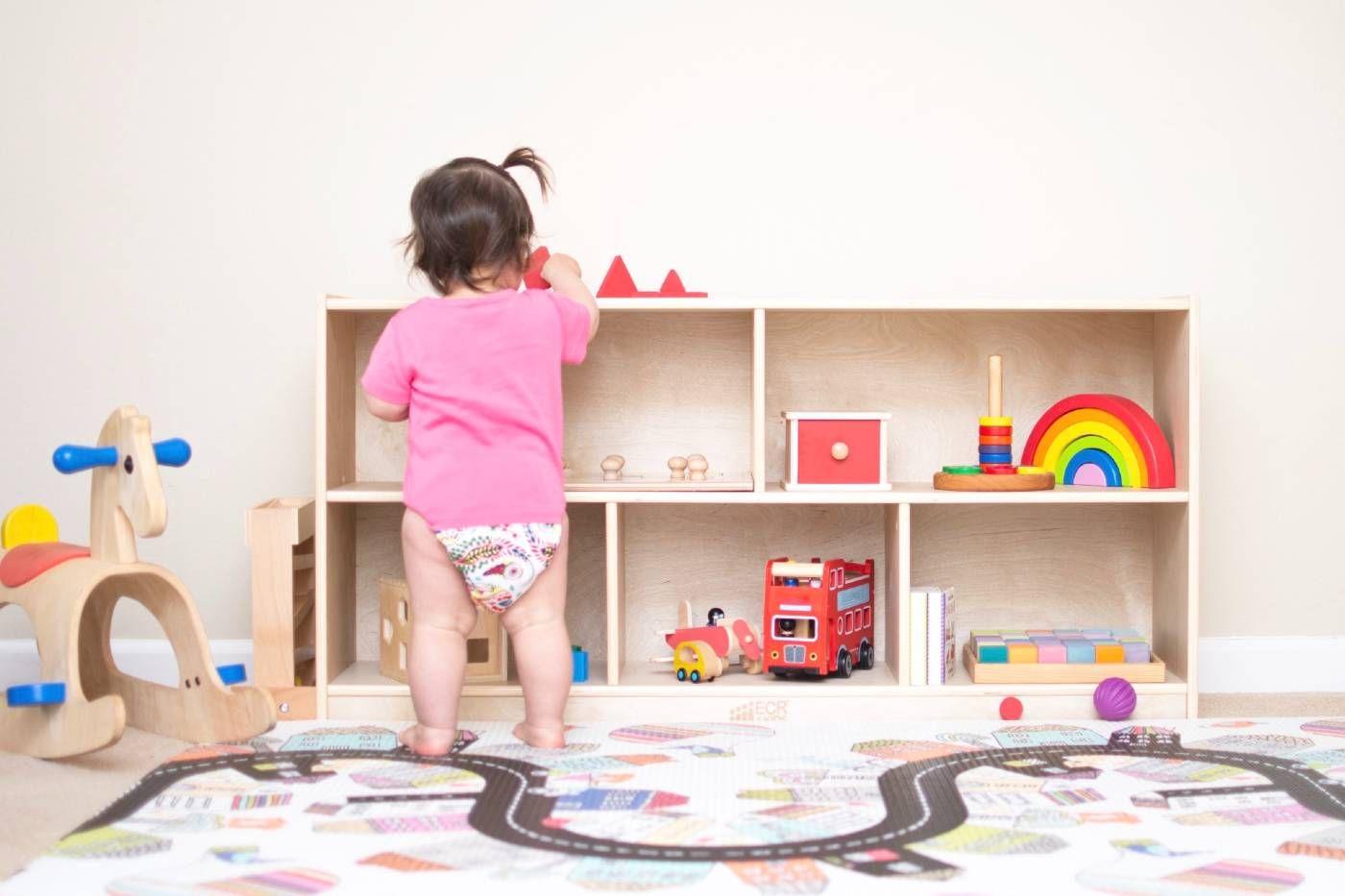
This is the fun part! Now that your playroom or child’s bedroom is relieved of half or more of what is usually present, you can see everything more clearly and each toy will have a happy home. Set up the space in a way that is natural and fluid, but easy for your kids to manage without much assistance. Play kitchen accessories and food should be in or near the kitchen; all stuffed animals and dolls should be in one place; set up small open containers for things like cars and Legos, keeping each one stocked with only that one item type.
Once you have arranged what is staying, stand back, and admire how streamlined the play space looks with one-half- to two-thirds less stuff in it. Your child is likely to be so busy enjoying their toys now that everything is visible and organised, they are not going to moan about some random item that has been packed away. (That said, any 'lovey' item that gets slept with, or an absolute favourite doll or train, for example, should stay year-round).
Keep yourself on track and your kids thriving by setting up an easy system to rotate and re-box the toys and games. Most parents like to do so fairly often to make sure that developmental toys get used, (and are seen and tossed when their time is up), but this is up to you. An easy way to start is to swap the toys out on the first of every month. That way you will be reminded every time the calendar jumps ahead, that it is time for the toys to, too.
If this is too frequent and will add to your parental stress, consider doing it every other month, or at every equinox or solstice. Each time you rotate provides a moment to reflect on what was really used and played with in the most recent period, so you will be able to offload more things with frequency and conviction once the system is up and running. You and your children are going to enjoy playtime and cleanup time so much more now! Keep it up to ensure hours of daily fun and an overall calmer and clutter-free home.
Disclaimer: The information on our site is NOT medical advice for any specific person or condition. It is only meant as general information. If you have any medical questions and concerns about your child or yourself, please contact your health provider. Breastmilk is the best source of nutrition for babies. It is important that, in preparation for and during breastfeeding, mothers eat a healthy, balanced diet. Combined breast- and bottle-feeding in the first weeks of life may reduce the supply of a mother's breastmilk and reversing the decision not to breastfeed is difficult. If you do decide to use infant formula, you should follow instructions carefully.