TODDLER
Why Is My Toddler Withholding Poop?
Get the 411 on your tot’s "number 2" woes.

Skriven av
Happiest Baby Staff
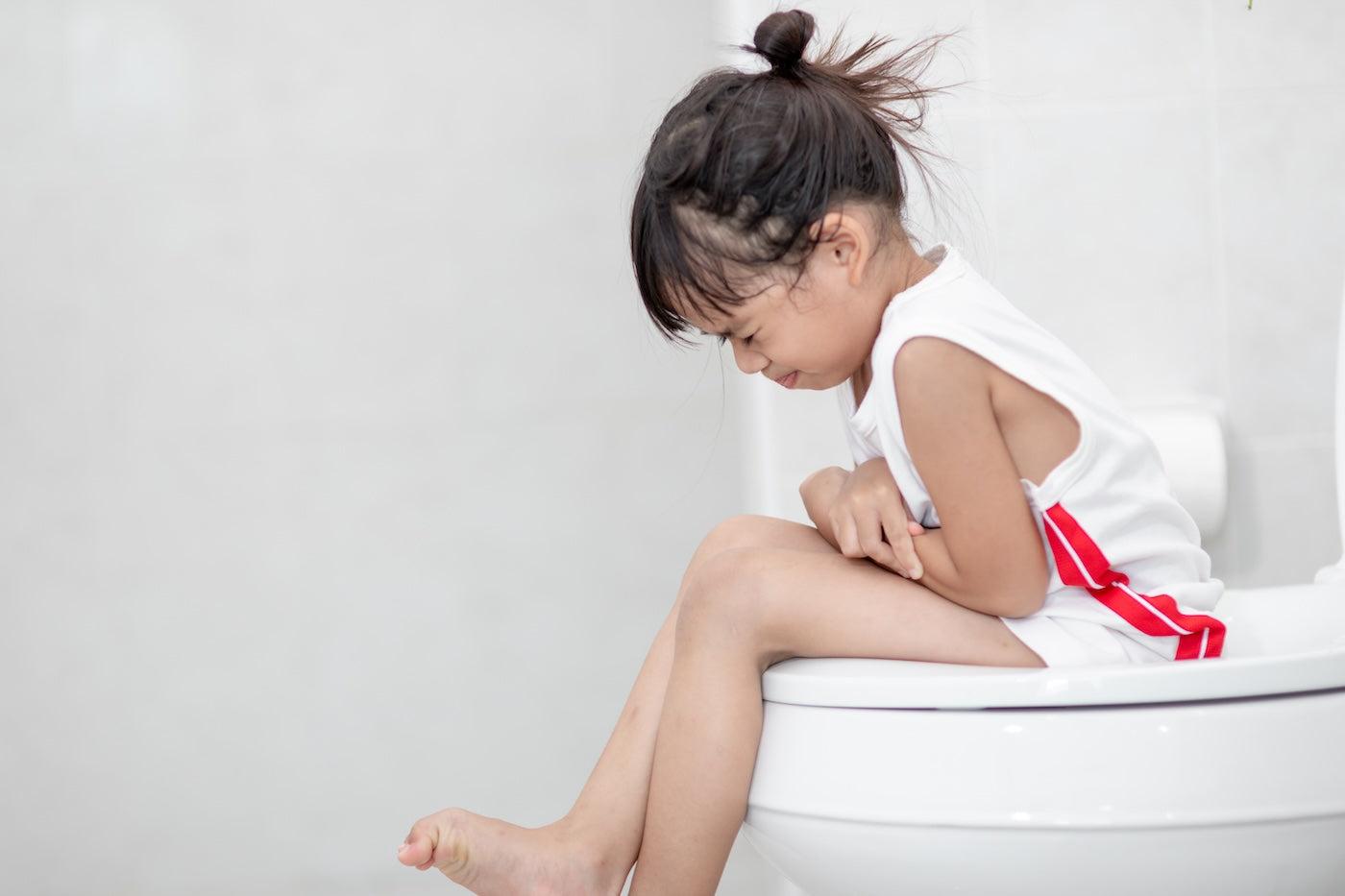
As a parent, you quickly get used to putting up with a fair bit of crap...both literally and figuratively. And then sometimes—often during toilet training—there’s a concerning lack of the literal kind. This all-too-common (figuratively!) crappy situation is known as stool withholding.
What is stool withholding?
Stool withholding happens when a child consciously avoids doing a poo, even when they feel the urge to go. Toddlers might clench their bottom, cross their legs, hide away, or cry when they need to poo—but still won’t go.
This behaviour can quickly lead to constipation. The longer stool stays in the bowel, the harder and more painful it becomes to pass, which only ramps up a little one’s fear and reluctance. Stool withholding is a leading cause of functional constipation, with up to 30% of children experiencing constipation at some point in childhood.
Why do toddlers withhold poo?
1. Fear of Pain
Toddlers who’ve had painful bowel movements—especially large or hard poos—may start associating going to the toilet with pain. In response, they withhold stool to avoid the discomfort, which only makes constipation worse. This cycle is a well-known cause of chronic withholding.
2. Toilet Anxiety
Some toddlers are scared of the loo. They might worry about falling in or be startled by the flush. Help ease your child’s worries by making the toilet more child-friendly, using a toddler-sized potty or a toilet insert with a footstool.
3. Wanting Control
Doing a poo is one of the few things toddlers can control! Withholding it can be their way of asserting independence—especially during times of change or stress.
4. Big Life Changes
Events like starting nursery or daycare, moving house, or welcoming a new baby sibling can shake up routines and trigger anxiety—both of which may lead to withholding behaviours.
What to Do When Your Toddler Refuses to Poo on the Toilet
Establish a routine
Encourage your little one to sit on the potty after meals for 5 to 10 minutes. This takes advantage of the gastrocolic reflex—a natural response that prompts the urge to poo after eating.
Make the toilet comfortable
Use a child-sized potty or a seat insert with a footstool to help your child feel physically secure. Being comfortable and relaxed is key when trying to poo.
Encourage, don’t pressure
Avoid scolding or pushing. Praise your child for trying, even if they don’t go. Stickers, small rewards, or simply enthusiastic praise can help make the experience more positive.
Serve up plenty of fibre and fluids
Offer a range of high-fibre foods (such as fruit, veggies, and wholegrains) and ensure they’re drinking plenty of water to keep things moving.
Chat with your GP about gentle remedies
If your child continues to struggle, your GP may recommend a stool softener—like a gentle laxative powder that mixes into drinks—to help break the cycle. (Always check with a medical professional first.) Some parents also find aloe vera juice or prune juice effective, as both can have a natural laxative effect.
Is stool withholding a toilet training red flag?
Stool withholding doesn’t automatically mean your toddler isn’t ready for toilet training. Many children go through this phase—especially if they’ve had a painful experience or are feeling anxious.
However, if it persists and leads to accidents, tummy pain, or emotional upset, it may be time to seek more support. Ongoing withholding can lead to encopresis, a condition where softer poo leaks around harder stool in the bowel. Reaching out to your GP early can help you prevent long-term issues.
When to Call the Doctor About Stool Withholding
Contact your GP or health visitor if your child:
- Hasn’t had a bowel movement in four or more days
- Passes hard, large, or painful stool
- Complains of stomach pain, bloating, or has a reduced appetite
- Has blood in their poo
- Soils their pants after being toilet trained
- Is visibly distressed about using the toilet
Your healthcare provider can assess for constipation, offer advice, and recommend treatment if needed.
As frustrating as it is when your toddler just. won’t. go., keep in mind that stool withholding is common. With a bit of patience, encouragement, and the support of your GP, your little one will move past this challenging (and yes, crappy!) stage.
***
REFERENCES
- American Academy of Pediatrics. Constipation in Children. HealthyChildren.org. 2017.
- NASPGHAN and ESPGHAN. Evaluation and Treatment of Functional Constipation in Infants and Children. JPGN. 2014.
- American Academy of Pediatrics. AAP Guide to Toilet Training. 2003.
- NIDDK. Eating, Diet, & Nutrition for Constipation. U.S. Department of Health and Human Services. 2018.
- American Academy of Family Physicians. Constipation in Children and Adolescents: Evaluation and Treatment. AFP. 2022.
Ansvarsfriskrivning: Informationen på vår webbplats är INTE medicinsk rådgivning för någon specifik person eller tillstånd. Den är endast avsedd som allmän information. Om du har några medicinska frågor och funderingar om ditt barn eller dig själv, vänligen kontakta din vårdgivare. Bröstmjölk är den bästa källan till näring för spädbarn. Det är viktigt att mödrar äter en hälsosam, balanserad kost i förberedelse för och under amning. Kombinerad amning och flaskmatning under de första veckorna i livet kan minska tillgången på en mammas bröstmjölk och det kan vara svårt att ångra beslutet att inte amma. Om du bestämmer dig för att använda modersmjölksersättning bör du noggrant följa instruktionerna.






DELA DENNA ARTIKEL
FÖRÄLDRARS VAL
Bästsäljare