TODDLER
What Causes Night Seizures in Toddlers?
When and why children experience night time convulsions.

Skriven av
Dr. Harvey Karp
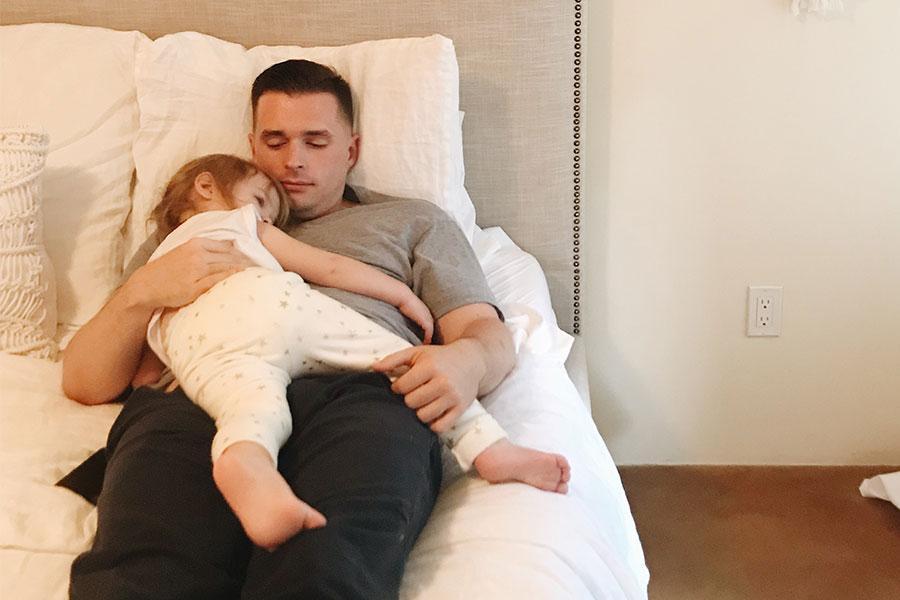
A seizure (also called a convulsion) occurs when the brain short-circuits. This can cause uncontrolled body jerks, an inability to communicate and urination.
Can You Seizure in Your Sleep?
Night is actually a common time for seizures. The brain is more susceptible to these electrical eruptions when it is overly tired and just entering sleep…or just awaking. It is easy to mistake the screaming and unresponsiveness of a night terror for a seizure. But while night terrors terrorize us, they lack the cardinal signs of seizures: drooling, limb twitching, tongue biting, and incontinence.
Signs of Seizures in Children
Common signs of seizures in children are:
- Staring
- Jerking movements
- Stiffening of the body
- Loss of bladder control / urination
- Loss of consciousness or awareness
But as we mentioned previously, because a toddler is asleep it may be difficult to determine if your child is having a night seizure. Make sure to consult with a medical professional if you have any concerns that your child is suffering from seizures or night seizures.
What Causes Seizures in Children?
Night seizures may be triggered by a sudden surge of fever (or fever seizures). It is pretty clear when this is the case because a child usually is flushed red and hot to the touch.
But when there is no obvious reason for a night seizure, the cause may be benign rolandic epilepsy (also called benign focal epilepsy of childhood).
This problem can start as early as 3 years of age, although it usually does not begin before children are 5. These night seizures are often overlooked for a long time because they happen during sleep. But once the diagnosis is suspected, parents often report that their kids have been sleeping less, exhausted during the day, and experiencing night terrors and sleepwalking for weeks or months. Fortunately, the seizures cause absolutely no serious health problems and disappear by the teen years.
The diagnosis of seizures requires a full medical evaluation, including a sleep EEG (electroencephalogram) to record the electrical activity in the brain (although sometimes the EEG may be normal). Many children do not need any treatment at all, while others benefit from taking an anticonvulsant drug.
Toddler Twitching in Sleep
Your toddler twitching while asleep may be startling—but there is nothing to worry about. Toddlers twitching in their sleep is pretty common, and it is believed that the twitching may be linked to sensorimotor development in babies and toddlers. The body’s twitching while asleep could be the brain’s way of teaching your child about their limbs and what they can do with them!
Ansvarsfriskrivning: Informationen på vår webbplats är INTE medicinsk rådgivning för någon specifik person eller tillstånd. Den är endast avsedd som allmän information. Om du har några medicinska frågor och funderingar om ditt barn eller dig själv, vänligen kontakta din vårdgivare. Bröstmjölk är den bästa källan till näring för spädbarn. Det är viktigt att mödrar äter en hälsosam, balanserad kost i förberedelse för och under amning. Kombinerad amning och flaskmatning under de första veckorna i livet kan minska tillgången på en mammas bröstmjölk och det kan vara svårt att ångra beslutet att inte amma. Om du bestämmer dig för att använda modersmjölksersättning bör du noggrant följa instruktionerna.






DELA DENNA ARTIKEL
FÖRÄLDRARS VAL
Bästsäljare