TODDLER
Crying Isn’t a Joke: How Laughing Hurts Kids
Experts say that laughing at tantrums can undermine secure attachment.

Skriven av
Happiest Baby Staff
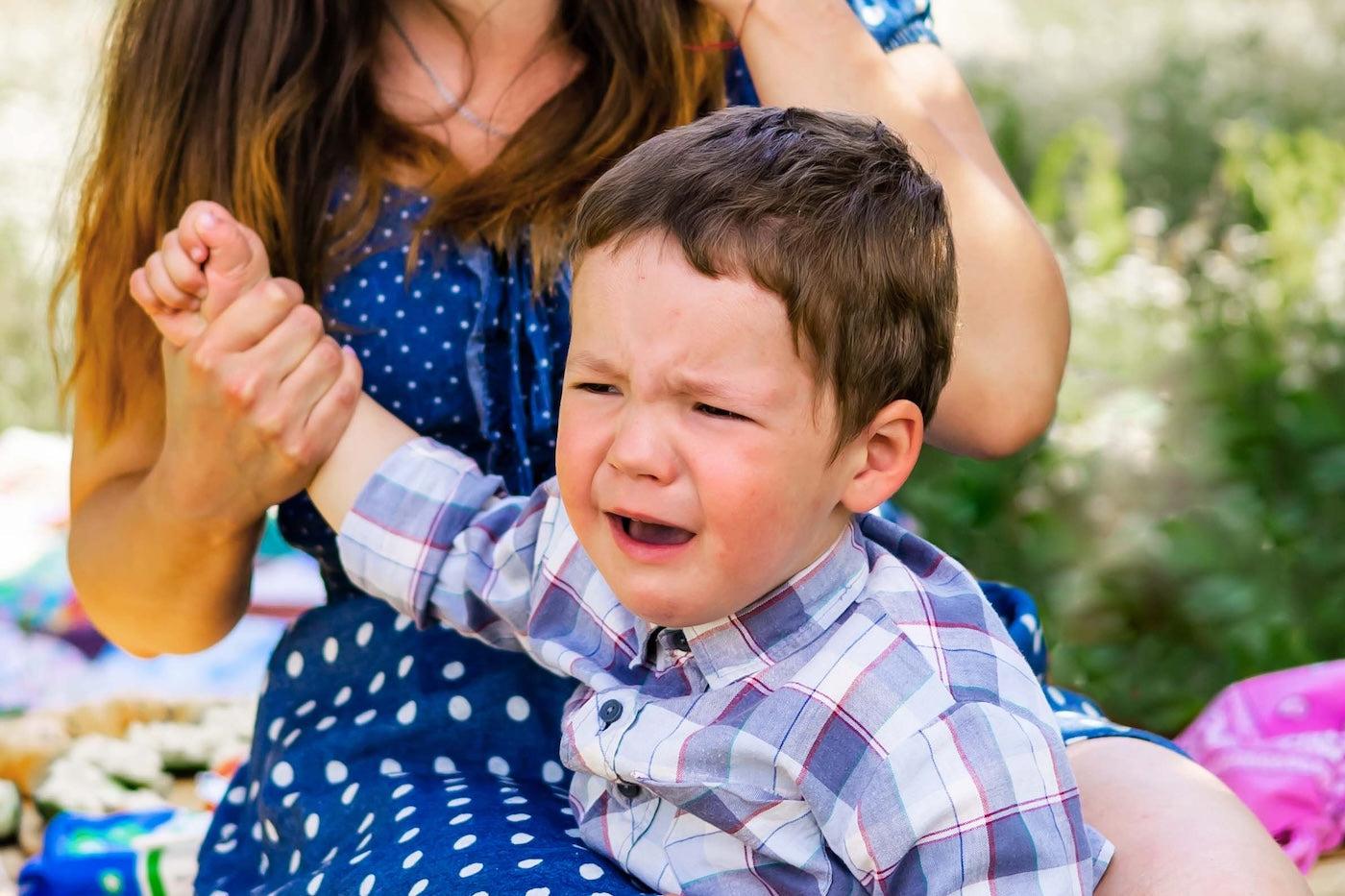
We’ve all been there: Your little one bursts into tears, and what comes out of your mouth is…a laugh? Maybe it’s a nervous reflex, or perhaps it’s your way of diffusing the tension bubbling over in the moment. Or maybe the ridiculous reason behind your tot’s meltdown is genuinely tickling your funny bone—their shadow is following them, they’re gutted the sun has gone down, or they’re upset you broke a biscuit…to share it with them! But when parents laugh at a child’s emotional distress, it can send an unhelpful message: “Your feelings aren’t serious. I can’t cope with them. You’re on your own.”
What the Research Says
Attachment psychologists Elisa Bronfman, PhD, and Johanna Sagarin, PhD, reviewed decades of studies showing that children develop internal patterns—secure, avoidant, ambivalent, or disorganised—through countless small interactions with their caregivers. When a parent laughs at a child’s tears, it isn’t playful humour—it can be experienced as dismissive or even mocking.
Even infants as young as 18 months are sensitive to these cues. In fact, laughter during moments of distress is considered an atypical caregiver behaviour—a marker strongly linked to disorganised attachment. This attachment style can negatively impact emotional regulation, trust, and long-term mental wellbeing.
Why It Feels So Bad for Kids
When a child cries, they’re sending a clear distress signal. If that’s met with laughter instead of comfort, what they hear is: “I don’t take you seriously. I can’t help. You’re being silly.” Over time, this can make them feel:
- Unsafe to share how they feel
- Emotionally invalidated
- Reluctant to seek comfort in future
What to Do Instead
- Stay present. Recognise that crying is their body’s way of saying, “I need help.”
- Validate gently. Say things like, “I can see you’re upset. I’m right here.”
- Offer soothing. Physical comfort (a cuddle, gentle rocking) and a calm voice help settle their nervous system.
- Empathise without judgement. Let them know that all feelings are okay—even the tough ones.
- Support recovery. Once they’re calm, help them move forward through connection, not dismissal.
Every Interaction Counts
Attachment patterns aren’t formed overnight—they emerge from the ordinary, everyday moments. A gentle, empathetic response to your child’s tears can go a long way in fostering secure attachment and building emotional resilience.
So next time your little one has a cry and the urge to chuckle bubbles up—pause. Choose to be the calm, caring presence they need. Because even the smallest moments of sensitivity can have a lasting impact.
When your child cries, laughter might feel like a harmless reflex—but it can unintentionally send the message that their feelings don’t matter. Choose empathy over humour. Responding with compassion helps build trust, emotional safety, and long-term wellbeing.
More on Emotional Wellbeing:
Ansvarsfriskrivning: Informationen på vår webbplats är INTE medicinsk rådgivning för någon specifik person eller tillstånd. Den är endast avsedd som allmän information. Om du har några medicinska frågor och funderingar om ditt barn eller dig själv, vänligen kontakta din vårdgivare. Bröstmjölk är den bästa källan till näring för spädbarn. Det är viktigt att mödrar äter en hälsosam, balanserad kost i förberedelse för och under amning. Kombinerad amning och flaskmatning under de första veckorna i livet kan minska tillgången på en mammas bröstmjölk och det kan vara svårt att ångra beslutet att inte amma. Om du bestämmer dig för att använda modersmjölksersättning bör du noggrant följa instruktionerna.






DELA DENNA ARTIKEL
FÖRÄLDRARS VAL
Bästsäljare