PARENTS
How to Support a Friend Who Just Had a Baby
Here is how to give some much-needed support to the new parent in your life.

Skriven av
Happiest Baby Staff

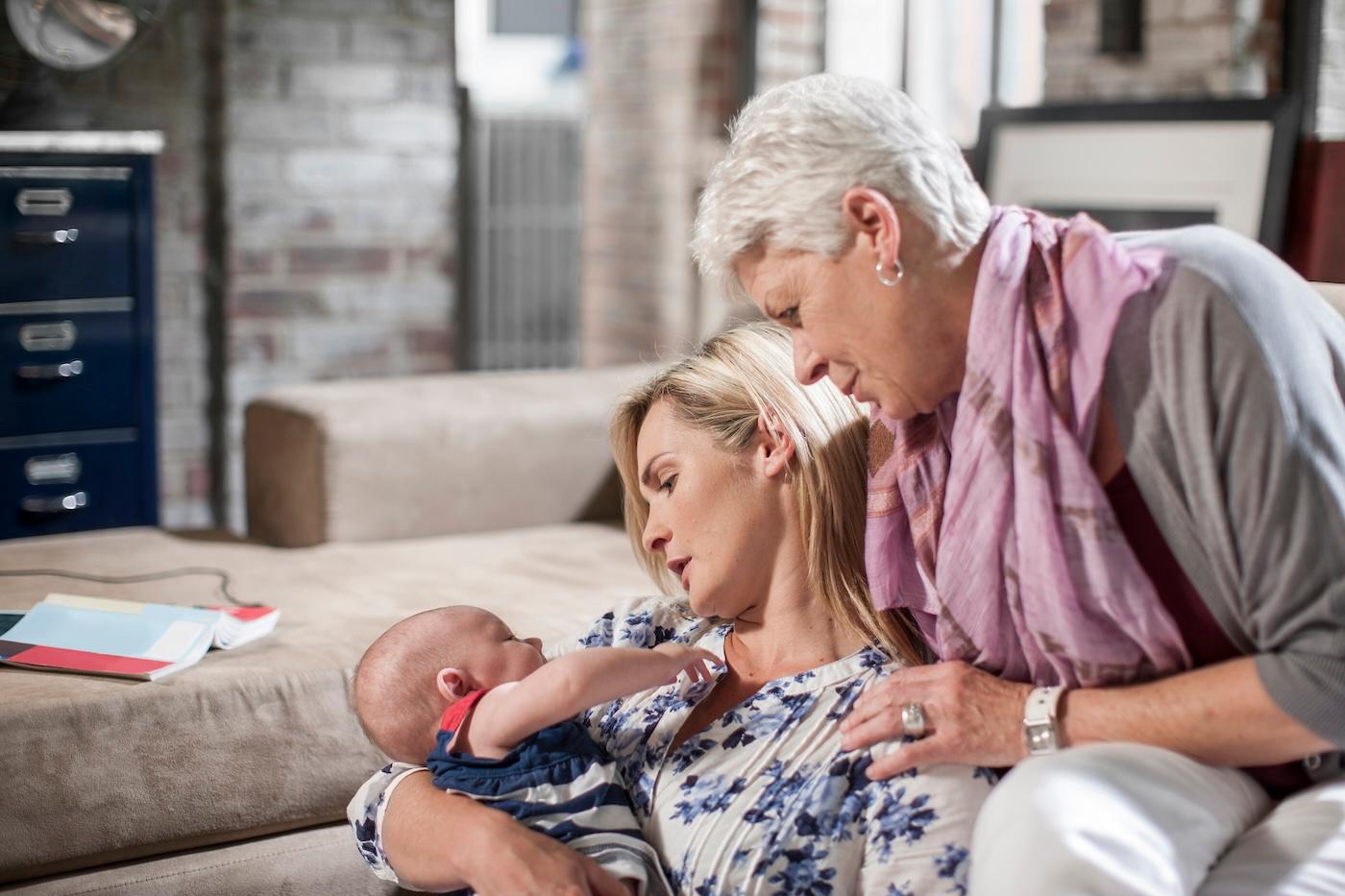
During pregnancy, there is so much attention directed at the parent-to-be. Everyone is asking How are you feeling? There are baby showers. You are offered a seat (and sometimes an extra biscuit) wherever you go. Once the baby is born, there is a flood of congratulatory texts and phone calls. Friends and family clamor to visit, to drop off a stew, and to give the new bundle a snuggle. Then, like a cruel magic trick—poof!—so much of that support disappears…just when you need it the most. If you are a parent, you likely experienced this phenomenon. And if you have a friend who is a new parent, they are likely experiencing it, too.
Research shows that up to 42% of pregnant and new parents feel lonely. What’s more, studies suggest that feeling lonely and isolated as a new parent is associated with postnatal depression. With 1 in 5 birthing parents struggling with perinatal mental health conditions—and many more simply struggling to adjust to this new life—it is important to remember that all new parents need support.
But for even those of us with the best intentions, it is not always easy to find the right words for someone who is struggling. That is why we put together some ideas for what to say—and when to speak up—if you suspect your friend is having a tough time.
Texts to Send a Friend Who Just Had a Baby
There are several ways you can help make a friend who is struggling with new parenthood feel seen, heard, and loved. Some messages you can send regularly:
- “I have been thinking of you! I know these early days are no joke! Sending all the good vibes.”
- “I dropped ____ on your porch. Love you!”
- “Checking in to remind you that I love you and you are a rock star!”
- “Can I swing by tomorrow to give you a break to take a shower, a nap, talk, whatever?”
- “I am heading to Asda/the supermarket. I am going to grab you ____ . Tell me what else you need and when I should drop it off.”
- “I need to get some fresh air! Can I take a walk with you and the baby? / Can I borrow your baby for a stroll tomorrow afternoon?”
- “I wil be in your neighbourhood around ____ time. What am I bringing you?”
- “Can I steal your toddler for a few hours this weekend?”
- “I work from home every Friday. I would love to set up a standing tea time or lunch date. If you are game, name a time that works!”
- “I read this / saw this and thought of you. XOXO”
- “I would love to see you when you are ready for visitors! Can we make tentative plans for a visit the week of ____?”
- “I know you are a great cook, but I would love to take supper off your to-do list. Can I drop off ____ sometime this week. No visit needed!”
- “Some of us are meeting up on ____ date. If you can make it, we would love to see you! Can be a day-of decision—and tiny humans are welcome if you want to bring!”
Signs Your Friend May Be Struggling
Everyone changes after becoming a parent. It is impossible not to. But sometimes those changes are actually signs that your friend is struggling with postnatal depression, anxiety, or another mental health issue. Here are some signs that your friend might be having a hard time as a new parent:
Your friend is not answering your texts or returning your calls.- Your friend suddenly seems uninterested in caring for themself.
- Your friend seems angry or hostile.
- Your friend says things like, “I feel like a failure.”
- Your friend’s worry seems out of proportion.
- Your friend appears to be unusually restlessness
- Your friend seems disconnected or detached from their baby.
- Your friend seems to be obsessing about their baby’s well-being.
- Your friend seems more exhausted than expected.
- Your friend seems to be withdrawing from conversations with others.
What to Text a Friend Who Is Struggling With Parenthood
It can be scary to start a conversation with a friend about their mental health. But it is even scarier to stay silent. One key: When asking questions, trade the vague “How is it going?” types of small talk and texts for something that offers your friend a better opportunity to share. Try:
- “I have noticed you are tearing up when we talk. Can we talk about what is going on?”
- “Hi! I noticed you have not answered my last few texts—and that is fine! I just want to make sure you are okay. I know you are dealing with a lot right now. Sending love!”
- “You have mentioned that things are really hard right now, which I totally get. I would love to talk with you about whatever is going on.”
- “To be honest, I really started to struggle at this point in the postnatal period. How are you doing with all the changes?”
- “Whatever thoughts or feelings you are having, I want you to know that you can tell me. I can handle it. I would love to be here for you.”
- “If you are interested in going to any kind of postnatal support group, I would be happy to tag along if you need me.”
- “After I had my baby, I started seeing an amazing therapist who really helped me. I can text you her info if you are interested. I can even help you make an appointment if you would like.”
- “If you are anything like I was after ____ was born, you are on a rollercoaster of emotions right now! Just know that I feel you and you are amazing. I am here for you—all hours!”
- “I am going to check in with you again tomorrow morning…and the next day, too!”
- “It sounds like you are really worried about ____. Talk to me.”
- “I miss you! I am a bit worried since you cancelled our last few plans together. Can we chat?”
Final Thoughts on Supporting New Parents
Caring for a baby is hard. It can also be isolating, boring, and exhausting…even if you are not dealing with postnatal depression! So, continue to check in—and offer your support—even after the early days.
But, please, press pause on the “If you need anything at all, I am here” comments, and take action instead. Offer an ear, a shoulder, and a helping hand. Change a nappy. Tidy the kitchen. Bring a tea. Do not try to solve problems and do not dismiss feelings with chipper platitudes. And remember, if your pal does not text you back immediately, or they cancel plans, or otherwise seem to disappear—it is not you! These can be signs that they need your support more than ever. Keep trying.
Ansvarsfriskrivning: Informationen på vår webbplats är INTE medicinsk rådgivning för någon specifik person eller tillstånd. Den är endast avsedd som allmän information. Om du har några medicinska frågor och funderingar om ditt barn eller dig själv, vänligen kontakta din vårdgivare. Bröstmjölk är den bästa källan till näring för spädbarn. Det är viktigt att mödrar äter en hälsosam, balanserad kost i förberedelse för och under amning. Kombinerad amning och flaskmatning under de första veckorna i livet kan minska tillgången på en mammas bröstmjölk och det kan vara svårt att ångra beslutet att inte amma. Om du bestämmer dig för att använda modersmjölksersättning bör du noggrant följa instruktionerna.






DELA DENNA ARTIKEL
FÖRÄLDRARS VAL
Bästsäljare