PARENTS
Why New Mums Still Feel Exhausted—Even With “Enough” Sleep
A new study shows it’s not just the number of sleep hours that matters, but how long you stay asleep without waking.
Skriven av
Happiest Baby Staff
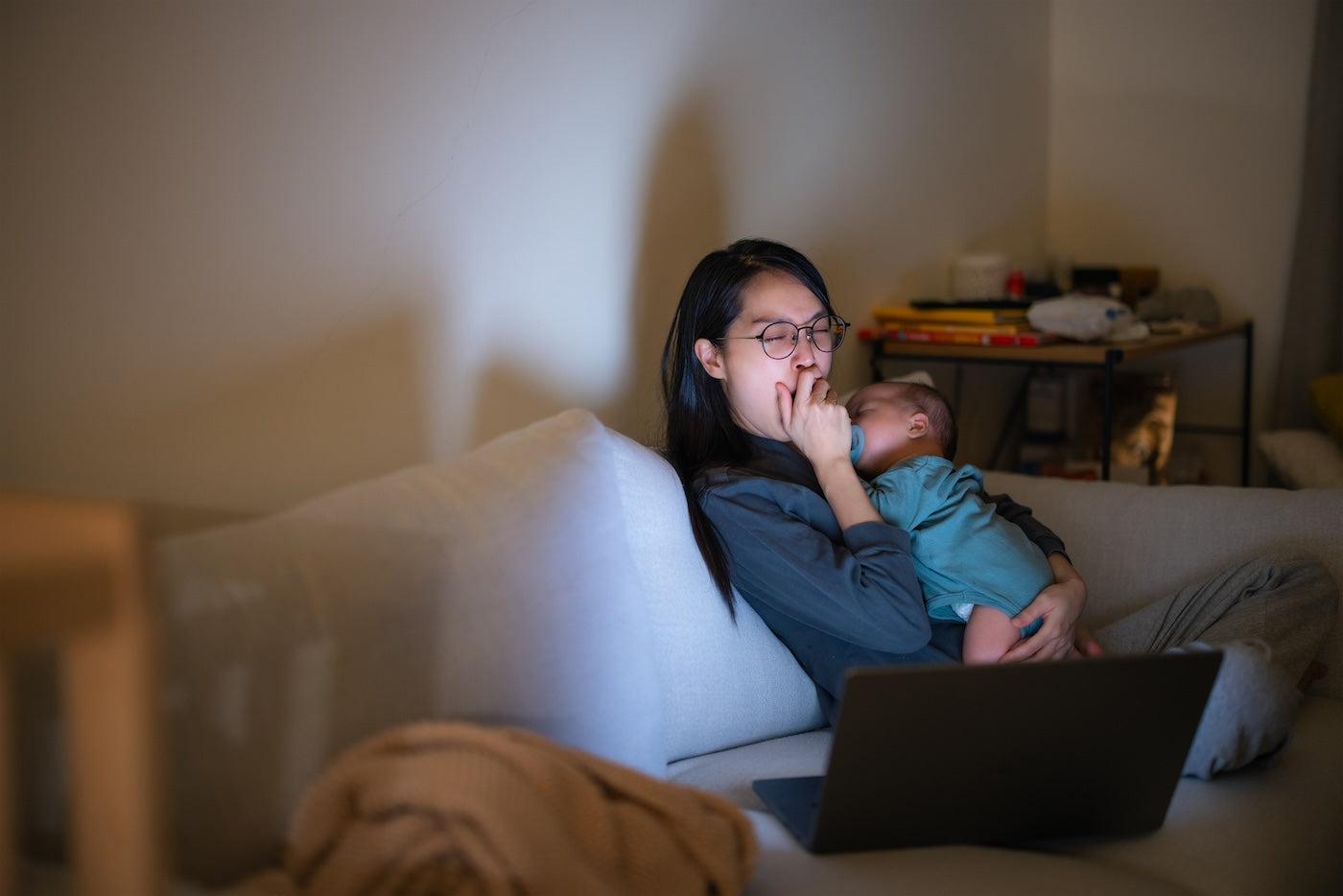
If you’re a new parent running on empty—even if your sleep tracker insists you’ve had a decent night’s kip—you’re not imagining it. A new study presented at the SLEEP 2025 annual meeting reveals that while new mums may eventually return to their pre-baby sleep totals, *how* they sleep remains profoundly different… and frequently disrupted.
Sleep: It’s Not Just About Hours!
Researchers from Washington State University’s Sleep and Performance Research Centre tracked the sleep patterns of 41 first-time mums (aged 26 to 43), collecting data from their Fitbits beginning a year before birth and continuing through their baby’s first birthday.
During the first week post-birth, these mums averaged just 4.4 hours of sleep per night—a sharp dip from their pre-baby average of 7.8 hours. Even more striking, their longest stretch of uninterrupted sleep shrank from 5.6 hours to a mere 2.2. By the time their babies were 2 to 3 months old, mums were still only getting around 4.1 hours of continuous shut-eye—well under what they were used to before becoming parents.
Dr Teresa Lillis, the lead author of the study and an adjunct professor at Rush University Medical Centre, explains: “Mums do tend to regain their total nightly sleep after those early weeks, but the structure of their sleep stays changed.” In other words, it’s not just about how *much* you sleep—but whether you manage to stay asleep. And that has a big impact on how rested (or not) you feel.
Why This Matters for Maternal Health
Broken sleep isn’t just annoying—it can affect both your mental and physical wellbeing. Dr Lillis notes that this type of fragmented sleep may contribute to postnatal depression and other health challenges.
So while advice like “nap when the baby naps” isn’t exactly wrong, this research suggests we need to go further: New mums need support to get longer, more restful blocks of sleep—not just a few extra minutes here and there.
The bottom line? If you’re a mum feeling utterly shattered despite technically getting “enough” sleep, there’s a reason. Your rest is likely still fragmented and far less restorative than it once was—and that really does matter. We need to shift the conversation from just *how much* sleep new mums get, to *how well* they sleep.
A Smarter Way to Stretch Sleep
At Happiest Baby, we understand that exhaustion isn’t just a passing inconvenience—it can affect every part of your life. That’s why we created SNOO. Our award-winning smart bassinet automatically responds to your baby’s cries with gentle rocking and white noise, helping them drift off and stay asleep…so you can enjoy more uninterrupted rest, too. In fact, SNOO adds 1–2+ hours of sleep per night, helping tired parents get the deep, consistent sleep they need to feel like themselves again.
More on Sleep and Maternal Health:
Ansvarsfriskrivning: Informationen på vår webbplats är INTE medicinsk rådgivning för någon specifik person eller tillstånd. Den är endast avsedd som allmän information. Om du har några medicinska frågor och funderingar om ditt barn eller dig själv, vänligen kontakta din vårdgivare. Bröstmjölk är den bästa källan till näring för spädbarn. Det är viktigt att mödrar äter en hälsosam, balanserad kost i förberedelse för och under amning. Kombinerad amning och flaskmatning under de första veckorna i livet kan minska tillgången på en mammas bröstmjölk och det kan vara svårt att ångra beslutet att inte amma. Om du bestämmer dig för att använda modersmjölksersättning bör du noggrant följa instruktionerna.






DELA DENNA ARTIKEL
FÖRÄLDRARS VAL
Bästsäljare