BABY
Understanding Baby Body Language
Four common infant gestures and signals and what they mean.

Skriven av
Dr. Harvey Karp
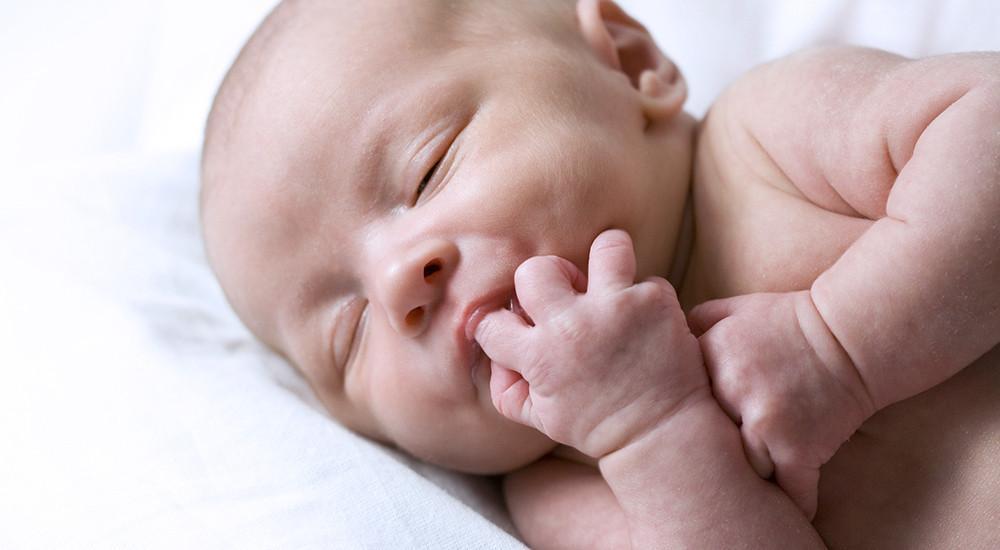
Many parents think that crying is the only way babies communicate, but you will learn a lot by watching your newborn’s body language. You will be amazed by the repertoire of gestures or cues the newest member of your family has to help you understand their needs. Here is your guide to understanding your little one's body language.
Baby Body Language Guide
Is your baby opening their mouth or putting their hand up to their lips?
Translation: This could be early hunger.
Is Baby rubbing their eyes or staring out with glassy eyes?
Translation: This usually means fatigue.
Does your little one hiccup or look away from you when your face is close to theirs?
Translation: This could be a sign that Baby feels a bit overstimulated.
Is Baby grimacing, grunting and bearing down a lot?
Translation: Could be that your baby needs to poop or feels the food making its way through their intestines.
For more on how to interpret your little one's behaviour, check out:
- How to Decipher Different Types of Baby Cries
- Signs Your Baby Is Hungry
- How Your Baby Tells You They are Tired
Ansvarsfriskrivning: Informationen på vår webbplats är INTE medicinsk rådgivning för någon specifik person eller tillstånd. Den är endast avsedd som allmän information. Om du har några medicinska frågor och funderingar om ditt barn eller dig själv, vänligen kontakta din vårdgivare. Bröstmjölk är den bästa källan till näring för spädbarn. Det är viktigt att mödrar äter en hälsosam, balanserad kost i förberedelse för och under amning. Kombinerad amning och flaskmatning under de första veckorna i livet kan minska tillgången på en mammas bröstmjölk och det kan vara svårt att ångra beslutet att inte amma. Om du bestämmer dig för att använda modersmjölksersättning bör du noggrant följa instruktionerna.






DELA DENNA ARTIKEL
FÖRÄLDRARS VAL
Bästsäljare