TODDLER
Water Safety Rules for Kids..and Parents!
Drowning is the leading cause of accidental death in children ages 1 to 4, but is preventable! Follow these easy water safety rules.

Scritto da
Happiest Baby Staff
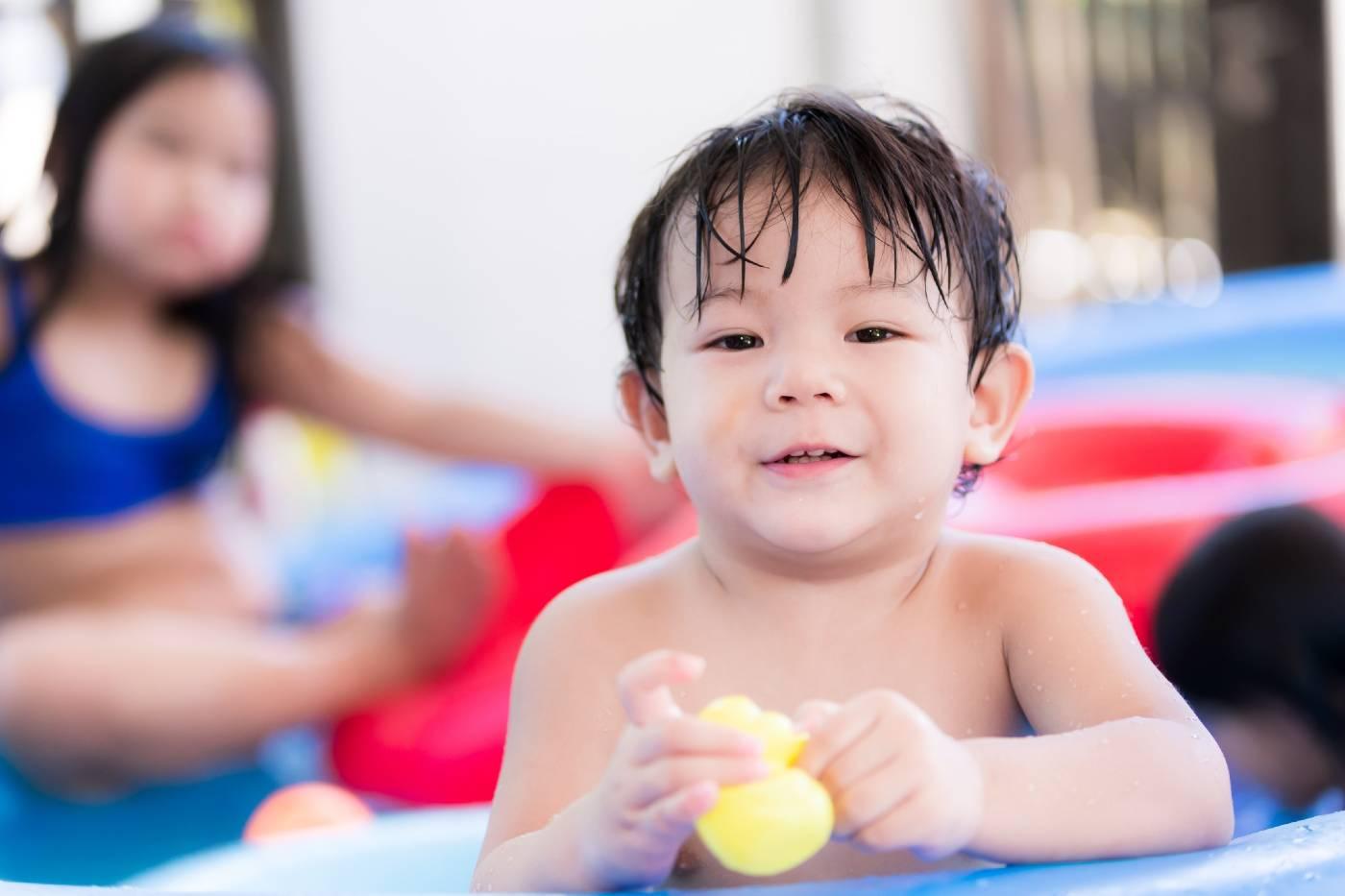
This post was guest written by Nikki Miller, licensed MFCT and 25+ year member of the US Swim School Association.
Drowning is the 3rd leading cause of unintentional injury death worldwide…and it is completely preventable. Many drownings occur when both parents are home or during gatherings, like family parties. To prevent these tragic deaths, it is critical to be educated about water safety and life-saving techniques.
Water Safety for All Ages
Water safety is not just for homeowners with a pool in their backyard. It is likely that at some point you and your family will be invited to a backyard pool party or an event that involves water! That is where following these simple pool safety rules comes in handy.
Water Safety Rules for Children
- Supervise children at all times when they are around the water. NEVER leave children unattended in the pool for even just a few minutes…never! Designate a specific person to be the pool supervisor. Do not assume someone is watching.
- Enroll your child in swim lessons. Babies as young as 2 weeks old can learn to get comfortable in the water and hold their breath...it is never too soon to start! Teach your children to swim and enjoy...but also to respect the water.
- Install and properly maintain a multiple-barrier system if you have a pool at your home. Barriers include fences, gates, pool safety covers, pool and deck alarms, and door/window alarms.
- Make sure that children cannot climb your fence. Check to make sure there are no holes or spaces where children can slip through. Ensure that gates open away from the pool, self-close and positively self-latch from any open position. Gates should always be locked when the pool is not in use.
- Do not rely on flotation devices or toys to keep a child afloat.
- Locate or own rescue equipment in the pool area—have it available for immediate use.
- Keep a phone by the pool. This way you can use it in case of an emergency.
- Do not allow the pool to be used if: water clarity is poor, electrical storms are in the area, main drain grates are broken or missing, or the pool cover has not been completely removed from the surface of the pool.
- Keep toys, tricycles, and other items attractive to children away from the pool when it is not in use.
- Enroll in first aid and CPR course. Learn what to do in case of an emergency.
Learn More about Nikki Miller: Nikki is a licensed Marriage, Family and Child Therapist and owner of Academy Swim Club in Los Angeles, CA. Nikki has been teaching water safety and swim lessons for over 40 years, is a member of the US Swim School Association and runs the non-profit educational Aquatic Safety Awareness Program. Nikki has published many articles about the importance of introducing children to swimming early in infancy and is a nationally recognised speaker within the global swim community. Learn more about her mission here.
Avvertenza: Le informazioni presenti sul nostro sito NON sono consigli medici per alcuna persona specifica o condizione. Sono solo intese come informazioni generali. Se avete domande o preoccupazioni mediche riguardo vostro figlio o voi stessi, si prega di contattare il vostro fornitore di assistenza sanitaria. Il latte materno è la migliore fonte di nutrizione per i neonati. È importante che, in preparazione e durante l'allattamento al seno, le madri seguano una dieta sana ed equilibrata. L'allattamento misto (seno e biberon) nelle prime settimane di vita può ridurre la produzione di latte materno e la decisione di non allattare al seno può essere difficile da invertire. Se decidete di utilizzare il latte artificiale per neonati, dovreste seguire attentamente le istruzioni.
Principali notizie






CONDIVIDI QUESTO ARTICOLO
SCELTE DEI GENITORI
Bestseller