TODDLER
The Magical Benefits of Music for Toddlers: A Parent’s Guide
Discover the aww-inspiring impact music can have on your toddler’s wellbeing.

Scritto da
Holly Pevzner
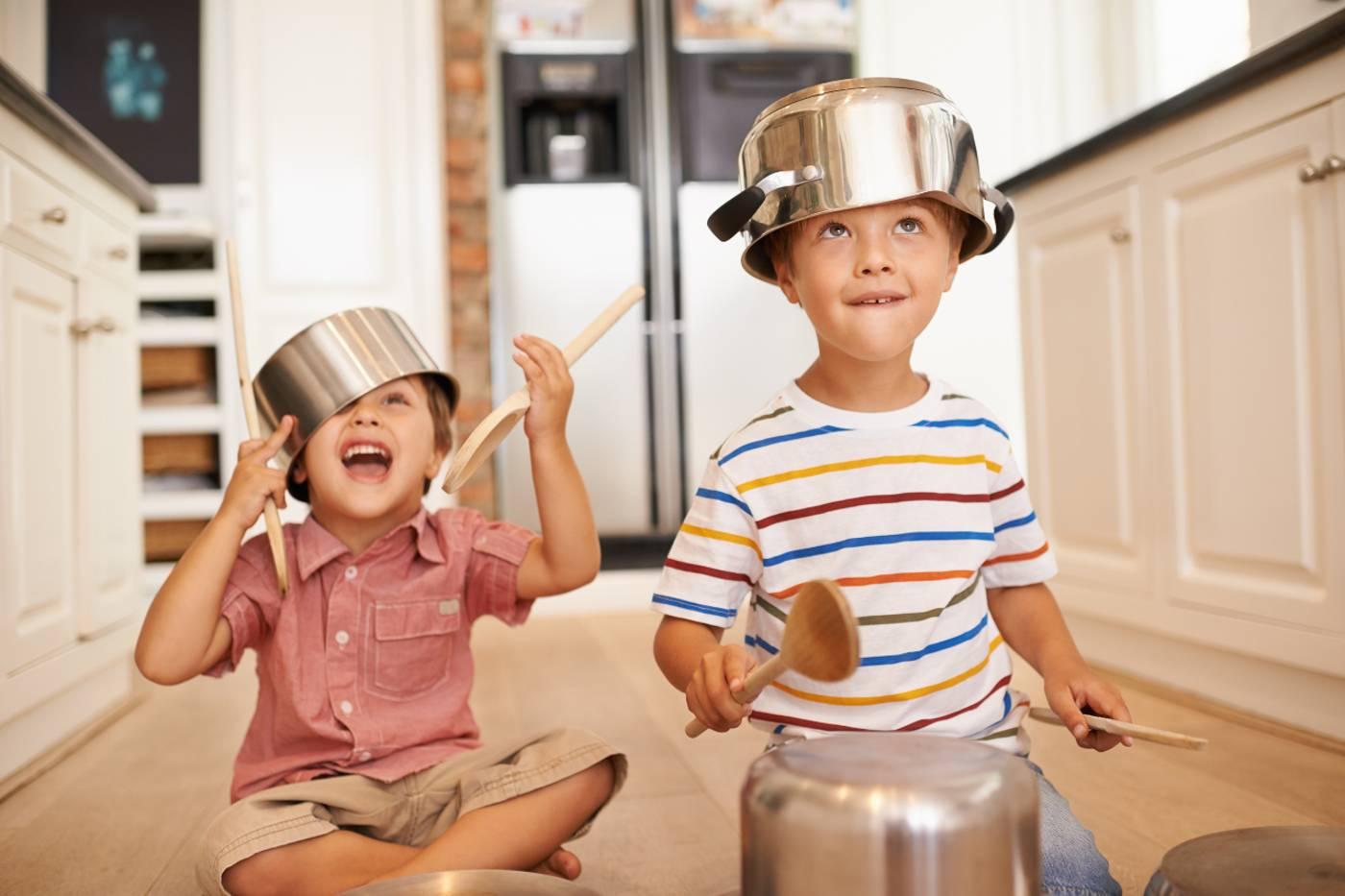
Music is magical, isn’t it? And for toddlers, it can be extra enchanting! The catchy tunes that get you pumped for a run can send your tot into a spirited dance frenzy. The melodies that stir your emotions can captivate your toddler, teaching them about feelings and self-expression. From soothing lullabies to energetic sing-alongs, music shapes your toddler’s world in remarkable ways. Singing, dancing, and banging pots and pans doesn’t just entertain your toddler—it’s a vital tool for building bonds, promoting emotional and cognitive development, and creating joy that’ll last for years to come. Let’s explore the magic of music—and how to weave it into each day.
Music calms and bolsters positive feelings.
If you’ve ever watched your little one instantly relax as you played or hummed a lullaby, you won’t be surprised to learn that soothing sounds literally slow a child’s heart rate down. Plus, the repetitive nature of music calms anxious feelings. More than that, when you help your tot wind down with a lullaby, you teach them the life-changing art of self-regulation—an A+ skill for helping kids settle into sleep and tamp down tantrums.
As a feel-good bonus: Music spurs the release of endorphins and dopamine in the brain, which are chemicals that have shown to increase a child’s “positive world outlook and happiness.” In fact, a study out of McMaster University found that little ones who participated in interactive music classes smiled more and were easier to soothe! Researchers noted that these kids showed better early communication skills, too.
Music boosts brain power and language skills.
Learning to play an instrument in childhood has been shown to accelerate brain development, especially in areas responsible for language acquisition and reading skills, according to a five-year study of young elementary school children. It seems that when kids learn and practise music, their auditory system matures faster than it would without music. That auditory boost increases a child’s neuroplasticity, which is the brain’s ability to form new connections and acquire more skills!
Another study, this one in Scientific Reports, found that playful group music activities, if attended for several years, have a positive effect on preschoolers’ linguistic skills. Beyond auditory enhancement, learning to play music as a toddler strengthens the bridge between the brain's two hemispheres, allowing messages to zoom back and forth more quickly. That’s likely one of the reasons learning to play music as a little one helps improve mathematical learning—and may bolster grades.
Music enhances emotional intelligence and social skills.
A 2021 report revealed that learning music may have a positive impact on emotional intelligence among kids ages 3 to 12, especially when it comes to emotional perception, expression, and regulation. Music education also boosted empathy, self-esteem, and teamwork skills. And, no, you don’t need to sign your toddler up for daily piano lessons to reap the rewards! Even listening to tunes can help little ones express themselves by prompting the release of endorphins and dopamine, which play a role in closeness and connection with others. Plus, when toddlers listen and sing about feelings, they learn the words to describe their emotional experiences (“If you’re happy and you know it…”).
Music improves coordination and builds muscles.
Don’t let Elaine Benes’ dance moves fool you, experts assure that music can improve a child’s big and small muscular coordination! That’s because playing music—and its accompanying hard-to-resist movement—helps develop a child’s gross motor skills and balance.
(Just swaying or shifting weight from one foot to the other to music works wonders for a child’s balance.) In addition, playing an instrument helps children hone precise control of the smaller muscles in their arms and hands, which are the same muscles they need for writing and drawing. Engaging in “finger plays” like “Where Is Thumbkin?” or “The Wheels on the Bus” helps, too!
Easy Ways to Add Music to Your Toddler’s Day
You don’t need season tickets to the opera, a pint-size drum set, or weekly music-and-me classes to usher music into your toddler’s life. Start with these easy toddler musical activities.
Seek out “instruments.”
The best musical instruments for toddlers are ones you already own: a wooden spoon, a pot, an empty oats container or coffee can, Christmas bells, dried beans or rice inside an empty water bottle, and more. And don’t forget that their little bodies are their most precious instrument! Toddlers can clap, snap, stomp, pat their thighs, and of course, use their voices. But if you are itching to buy an instrument, experts recommend toddler-friendly drums, shakers, maracas, a glockenspiel (also called orchestra bells), or a xylophone.
Start the day with a song.
Waking up to a gentle, upbeat song can help set a positive tone for the whole day—and make the transition from sleep to wakefulness easier. Consider setting up a special Rise & Shine routine with SNOObie, Happiest Baby’s all-in-one OK-to-wake clock, sound machine, and nightlight. Use the connected app to select one of four calming melodies (Brahms’ Lullaby, Hush Little Baby, Amazing Grace, or Rock-a Bye Baby) for your tot to gently wake to along with a light cue that signals it’s time to start the day! (Learn how to create routines with SNOObie.)
Turn chores into musical games.
Create a soundtrack for your daily to-dos! Transform toy pick-up by adding a silly “clean-up song” to the mix. Bring some fun predictability to bathtime by singing the 1950’s classic “Splish Splash.” Crank up CoComelon’s “Get Outside Song” for when it’s time to get out the door.
Play a variety of music in the car.
The perk of being your child’s official chauffeur is that you have myriad opportunities to listen to music together in the car. Make a point to mix up what you listen to. Monday could be Kidz Bop day. Tuesday could be all about the ‘90s. Wednesday may be dedicated to classical music, while Thursday is Yacht Rock. Friday might be time for Taylor, Olivia, and Ariana, while Friday could by your child’s choice.
Become a sound detective.
As you stroll outdoors, listen for nature’s melodies, like the gentle whoosh of the wind, the cheerful chirps of the birdies, or the soft rustle of leaves. Tune into your neighborhood orchestra—the honk bellowing from zooming cars, the clangs and whirs of garbage trucks, and the woofs from your neighbor’s dog. Make a game of it by playing an aural version of “I Spy” and/or take turns mimicking the sounds your hear.
Take dance breaks.
When your tot needs to burn off energy, crank their favourite tunes and have a kitchen dance party! A toddler disco perfectly combines the benefits of music and the benefits of physical activity. The cherry on top? Boogying helps develop relationships, connect people, and increase feelings of joy and togetherness, according to a report in the journal Frontiers in Physiology!
Read books with singing parts.
There are so many amazing children’s books that have built-in singing opportunities! Seek out kids’ reads with rhythmic phrasing, like nearly any Llama, Llama or Sandra Boynton book, and turn them into songs. For more sing-songy book recs, ask your local children’s librarian.
Final Thoughts: Music and Your Toddler
From boosting brain power and language skills to nurturing emotional know-how, music plays a vital role in your toddler’s development. The best part? You don’t need to be a skilled musician yourself or invest in expensive lessons to enjoy the benefits. Everyday musical moments—like singing during bathtime or busting a move in the kitchen—can have a profound impact on your toddler. Remember, you’re not simply creating a soundtrack for your little one’s childhood, you’re laying the foundation for a lifelong love of learning, emotional expression, and joy. So, strike up the band, crank the Spotify, and let the toddler symphony begin!
Avvertenza: Le informazioni presenti sul nostro sito NON sono consigli medici per alcuna persona specifica o condizione. Sono solo intese come informazioni generali. Se avete domande o preoccupazioni mediche riguardo vostro figlio o voi stessi, si prega di contattare il vostro fornitore di assistenza sanitaria. Il latte materno è la migliore fonte di nutrizione per i neonati. È importante che, in preparazione e durante l'allattamento al seno, le madri seguano una dieta sana ed equilibrata. L'allattamento misto (seno e biberon) nelle prime settimane di vita può ridurre la produzione di latte materno e la decisione di non allattare al seno può essere difficile da invertire. Se decidete di utilizzare il latte artificiale per neonati, dovreste seguire attentamente le istruzioni.
Principali notizie






CONDIVIDI QUESTO ARTICOLO
SCELTE DEI GENITORI
Bestseller












Di più su Toddler
About Holly Pevzner
Holly Pevzner is Happiest Baby’s Staff Writer. She specializes in creating parenting, pregnancy, health, nutrition, and family travel content. Her work—including essays, columns, reported features, and more—has appeared in outlets such as EatingWell, Family Circle, Parents, Real Simple, and The Bump. Before becoming a full-time writer, Holly held senior staff positions at Prevention, Fitness, and Self magazines, covering medical health and psychology. She was also a contributing editor at Scholastic Parent & Child magazine and a regular kids-health columnist for Prevention and First For Women magazines. Holly lives in Los Angeles with her husband, two boys, and terrier mix.