TODDLER
The Problem With Telling Your Toddler 'Good Job!'
Move over 'Good job!' Here is how to praise toddlers in a way that leaves them feeling good and ready to achieve more!

Scritto da
Happiest Baby Staff
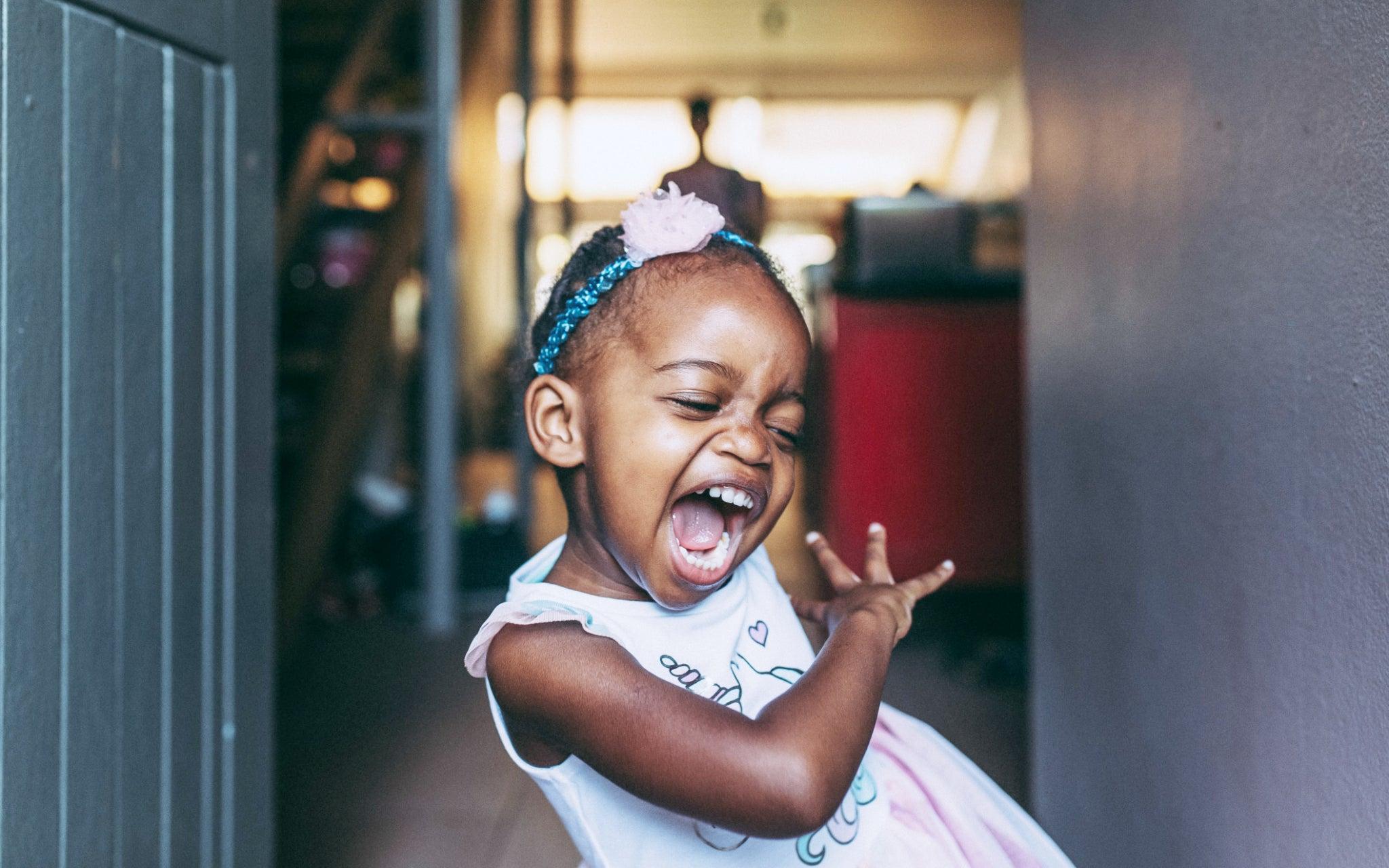
We all like to be praised...toddlers included. The adoration! The acclaim! The compliments! They all feel good. But it turns out that doling out excessive and vague 'Way to gos!' and 'Good jobs!' do not do that much good after all. And worse, this brand of kudos might be chipping away at your kid’s self-esteem and can-do spirit. Does that mean you should refrain from acknowledging your toddler’s good behaviour, their artistic and athletic feats, and their thoughtful ways? Not at all. You simply need to rethink how—and why—you praise your precious toddler. Here, some advice to cheer about.
Why you should stop saying 'good job'
'Good job,' and all of its iterations, seem harmless enough. Your child finishes their peas: Good job! Your toddler scribbled a drawing: Way to go! Your little one remembered to put their toy trains away: That is great! But what does 'Good job' even convey to a toddler? It is an empty compliment that does not articulate to your kid what they accomplished that was 'good.' Moreover, it is believed that when a child hears a constant loop of vague praise, it actually diminishes their intrinsic motivation to do the very thing they were praised for. (Oops!)
And if you turn up the praise to inflated levels (You are the smartest kid in your whole class! That is the most beautiful drawing I have ever seen! You are the best boy in the world!) a kid may assume they are supposed to be great at something, which makes it harder for them to tackle unexpected difficulties they may encounter along the way. Finally, the praise pile-on may leave you with a toddler who mistrusts praise and/or needs constant applause to feel a sense of self-worth.
Should you still praise your toddler?
Yes! Toddlerhood is a frustrating time, and a little encouragement can go a long way. Research has shown that parents who offer their toddler daily praise—plus catching them being good—saw an improvement in their kid’s wellbeing when compared to those who were not praised. The key to success is how grown-ups deliver kudos and what exactly they say. Here are the basics:
Be specific.
A big problem with 'good job' is how unclear the praise is. If you want your child to truly feel complimented—and to encourage their good behaviour—clearly state what you are applauding.
For instance, instead of saying 'Good job' when you see your toddler's impressive block tower, try, 'Look how you put the smaller blocks on top of the bigger blocks! That is exactly how to construct a tall tower!'
Say, your toddler put their coat away. Go with 'You took your jacket off and put it away yourself. Thank you!' instead of 'Way to go!' Think of it like this: If you share with your toddler why they did a good job, they can work to replicate that behaviour again and again.
Acknowledge good tries.
Cheer on your child when they try, even if they do not quite fully succeed. ('Good try pouring the milk!' 'You put some of your toys away. Thank you!') When you point out and praise steady progress, your kid will feel like a success every step of the way, which encourages resilience.
Praise the action, not the child.
'Good job!' zeros in on the outcome, not the process. But the process is what you want to focus on because that will encourage trying, skill-building, confidence, and determination. You see, when you praise your child ('You are so good at soccer!') it sends the message that you value that specific fixed ability. But when you shout out the process ('You worked hard and did a great job following the ball down the field!') you are telling your child that you value the effort...and effort is in your kid’s control.
This subtle shift in focus is pretty impactful: Research in the journal Child Development found that toddlers who were praised for their efforts had a more positive and productive approach to challenges at 7 and 8 years when compared to toddlers who were complimented as individuals. (Feeling lazy? 'Good effort' is a quick cut to this type of applause.)
Highlight the good.
Feed your toddler a 'balanced diet' of praise. Think of praise as a delicious casserole, packed with lots of plain noodles (aka: calm attention) and a heaping cup of tasty sauce (think: mild praise) topped with a sprinkle of tangy cheese (cheers and celebration). The base of the praise casserole is all about noticing and encouragement, which can be done throughout the day by simply narrating what your child has accomplished right back at them. Think: 'Look at you! You finished the puzzle all by yourself!' or 'I saw you got to the top of the climbing structure!' Your smile and enthusiasm tell them everything they need to know!
Change with time.
Young toddlers between the ages of 12 and 18 months thrive on enthusiastic smiles, some applause, and a few happy words...repeated over and over. For example, 'Yea! You got to Mum so fast . . . so fast! Yea! Sooooo fast!' But as toddlers hit the 18- to 36-month range, it is best to scale back the over-the-top praise, relying mostly on big smiles, thumbs up, and bits of modest praise. ('Hmmm . . . you built a tall tower!') Older toddlers may feel mocked or even patronised if you make too big a fuss. Keep it understated and focused on process, not the end result.
For more advice on how to set your toddler up for success, check out “The Happiest Toddler on the Block."
Avvertenza: Le informazioni presenti sul nostro sito NON sono consigli medici per alcuna persona specifica o condizione. Sono solo intese come informazioni generali. Se avete domande o preoccupazioni mediche riguardo vostro figlio o voi stessi, si prega di contattare il vostro fornitore di assistenza sanitaria. Il latte materno è la migliore fonte di nutrizione per i neonati. È importante che, in preparazione e durante l'allattamento al seno, le madri seguano una dieta sana ed equilibrata. L'allattamento misto (seno e biberon) nelle prime settimane di vita può ridurre la produzione di latte materno e la decisione di non allattare al seno può essere difficile da invertire. Se decidete di utilizzare il latte artificiale per neonati, dovreste seguire attentamente le istruzioni.
Principali notizie






CONDIVIDI QUESTO ARTICOLO
SCELTE DEI GENITORI
Bestseller