TODDLER
How to Get a Toddler to Sleep
Avoid entering into a battle of wills with this proven technique.

Scritto da
Dr. Harvey Karp

How to Get a Toddler to Sleep
Bedtime was frustration time for Aaron because two-year-old Emma would make him sing ‘Twinkle, Twinkle, Little Star’ over and over for an hour, until she fell asleep.
‘She insisted that I sing “Twinkle” to her about 10 gazillion times…again and again!’ he said. ‘Sometimes she seems to be asleep and I will try to ease myself off her bed, but if I make any tiny sound, she will immediately grumble out a half-asleep demand, “Twinkle!!!” and I know I will be stuck there for another 20 minutes, until she is fast asleep.’
Sleep Tricks to Get Toddlers to Sleep
To save Aaron’s sanity, I taught him a simple trick based on patience-stretching to put his toddler to sleep fast. For a week, I had Aaron do three things to prepare Emma for sleep success:
- Use rough, rumbly sound for all Emma’s naps and night sleep. About an hour before bedtime, he quietly played the rain on the roof track—and continued it until morning—increasing the sound—each night—until it was as loud as a shower.
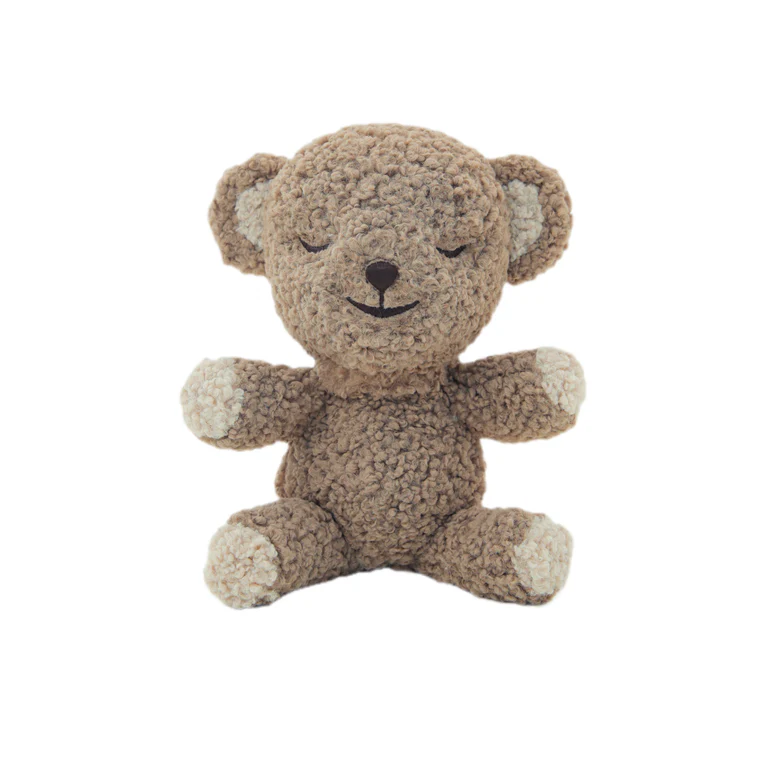
- Give Emma a lovey each night.
- Practice patience-stretching five times a day. Soon Emma was able to wait a whole minute without complaining.
Now Aaron was ready to start the twinkle interruptus strategy for putting his toddler to sleep.
Getting Your Toddler to Sleep
That first night, Aaron put on the white noise, snuggled with Emma, and sang her song for a few minutes. Then he shot his finger up in the air—as if he had suddenly remembered something important—and announced, ‘Wait! Wait! I forgot to kiss Mum. Here, hold Teddy. I will be RIGHT back.’ He hurried out for 5 seconds.
Emma’s practice with patience-stretching during the week gave her the confidence to wait those few seconds. She remembered that when Daddy said ‘Wait! Wait!’ and left, he would be right back.
Soon Aaron slid back into the room whispering, ‘Good waiting! Good waiting!’ He immediately cuddled up with his little girl and started singing again. Another few minutes, he repeated the same ‘Wait! Wait!’ routine, but this time he disappeared for 15 seconds.
Again, Emma tolerated it fine, and when he returned, he repeated, ‘Good waiting! Good waiting!’ and sang to her until she fell asleep.
The next night, Aaron repeated the same actions—but his first exit lasted for 30 seconds and his second lasted for a full minute. And when he tiptoed in at the end of the second time, Emma was fast asleep. And she stayed asleep for the night!
You will really have fun with this approach. It works about 75% of the time for kids over 18 months of age (and I have even had success with twinkle interruptus in helping a few 12-month-olds sleep train without a tear!).
What to Do if Your Toddler Still Will Not Fall Asleep
If your toddler cries when you leave, immediately return to comfort her—she may be experiencing some special stress, anxiety, or fear. Over the next few days, keep doing patience-stretching during the day, white noise for sleeping times and make sure she has a lovey to hold when you go away.
Next, when you try twinkle interruptus again, do not leave the room. After saying, ‘Wait! Wait!’ simply go across the room and pretend to be searching for something. Then return to the bed again and say, ‘Good waiting!’ Gradually increase the amount of time you spend on the other side of the room. If she tolerates that well after a couple of days, try leaving the room for a short period again.
Please do not think of this as devious. But everyone is tired and has low frustration tolerance at bedtime, so this is a better time to be a little tricky than to enter into a battle of wills.
If you are still having trouble putting your toddler to sleep, or are just looking for some additional advice, then get a copy of Happiest Toddler on the Block, by Dr. Harvey Karp.
Avvertenza: Le informazioni presenti sul nostro sito NON sono consigli medici per alcuna persona specifica o condizione. Sono solo intese come informazioni generali. Se avete domande o preoccupazioni mediche riguardo vostro figlio o voi stessi, si prega di contattare il vostro fornitore di assistenza sanitaria. Il latte materno è la migliore fonte di nutrizione per i neonati. È importante che, in preparazione e durante l'allattamento al seno, le madri seguano una dieta sana ed equilibrata. L'allattamento misto (seno e biberon) nelle prime settimane di vita può ridurre la produzione di latte materno e la decisione di non allattare al seno può essere difficile da invertire. Se decidete di utilizzare il latte artificiale per neonati, dovreste seguire attentamente le istruzioni.
Principali notizie






CONDIVIDI QUESTO ARTICOLO
SCELTE DEI GENITORI
Bestseller