PREGNANCY
6 Weeks Pregnant: Hello, Morning Sickness
Deep inside your womb, your baby has begun to move!

Scritto da
Dr. Harvey Karp
6 Weeks Pregnant: Baby Update
Deep inside your womb, your baby has started to move! You won’t feel those tiny kicks or flips for a while yet, but during an early scan they may look like a little jumping bean.
Your baby now has a distinct head and body, and their facial features are beginning to form—starting with a tiny nose. Paddle-like hands and feet are appearing at the ends of their little arm and leg buds, and the tail-like extension they had a couple of weeks ago is disappearing. Their lungs are forming, and their heart has begun pumping blood.
Big news: you may now be able to see cardiac activity on an ultrasound—how exciting!
How Many Months Is 6 Weeks Pregnant?
At 6 weeks, you’re about 1½ months pregnant.
Baby’s Size at 6 Weeks
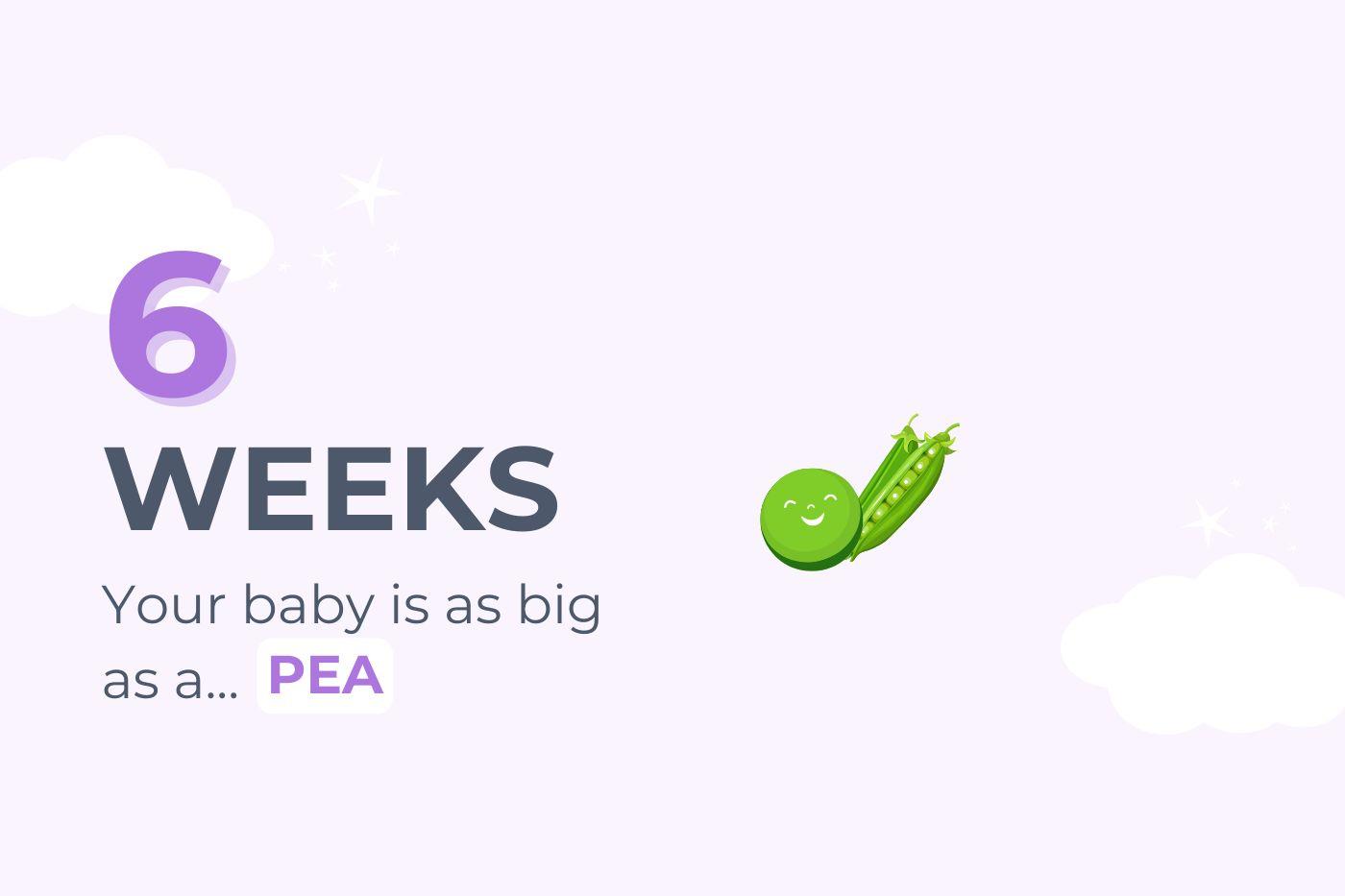
Your baby is about the size of a pea.
6 Weeks Pregnant: What to Expect
Ah, morning sickness—the symptom most people dread. Up to 9 in 10 pregnant women experience nausea and/or vomiting, and it often kicks in around this stage.
Why does it happen? The truth is, no one is entirely sure. Some experts think it may be nature’s way of protecting you from harmful foods. Others point to the massive surge in pregnancy hormones. Whatever the cause, there’s some good news: studies show that people with morning sickness are up to 75% less likely to miscarry.
A very small number (fewer than 2%) develop severe morning sickness, known as hyperemesis gravidarum (HG). This involves vomiting more than three times a day, leading to dehydration and weight loss, and sometimes requires hospital treatment. (Well-known cases include Princess Catherine and comedian Amy Schumer.)
If simple remedies—like plain crackers, crystallised ginger, or acupressure wristbands—don’t help, or if you can’t keep fluids down, speak to your GP, midwife, or obstetrician. Prescription medicines can be offered if needed.
6 Weeks Pregnant To-Do List
- Cut back on caffeine: It may feel like the pregnancy “no” list is never-ending—no alcohol, no unpasteurised soft cheeses, no hot tubs. Do you need to give up coffee too? The good news is you don’t have to quit completely. The NHS and Australian guidelines both suggest keeping your intake below 200mg of caffeine per day—that’s about one strong cup of coffee. Don’t forget that tea, cola, energy drinks, and chocolate also contain caffeine.
- Get plenty of sleep: Thanks to high levels of progesterone, you may find yourself sleeping far more than usual—sometimes 12–14 hours a day. Don’t feel guilty if you need naps or nod off early. Your body is working incredibly hard.
- Stay hydrated: If water feels unappealing, try flavouring it with lemon, mint, or berries. Sip small amounts often, rather than drinking large glasses at once. If your stomach is sensitive, ice chips or no-added-sugar icy poles/lollies (popsicles) can help.
Myth or Fact?
You can’t eat sushi while pregnant.
Fact—with a caveat. Raw fish carries risks of bacteria, parasites, and mercury, so NHS and Australian guidelines recommend avoiding raw sushi while pregnant. But you don’t need to skip Japanese food altogether—cooked options such as tempura prawn, teriyaki salmon, or veggie rolls are fine.
In fact, eating fish during pregnancy is encouraged. Research links regular fish consumption to better cognitive outcomes for children. The advice is to eat 2–3 serves (225–340g) of low-mercury fish per week. Safe choices include salmon, sardines, trout, and mackerel. Skip high-mercury fish such as shark, swordfish, king mackerel, and (in Australia) orange roughy.
Avvertenza: Le informazioni presenti sul nostro sito NON sono consigli medici per alcuna persona specifica o condizione. Sono solo intese come informazioni generali. Se avete domande o preoccupazioni mediche riguardo vostro figlio o voi stessi, si prega di contattare il vostro fornitore di assistenza sanitaria. Il latte materno è la migliore fonte di nutrizione per i neonati. È importante che, in preparazione e durante l'allattamento al seno, le madri seguano una dieta sana ed equilibrata. L'allattamento misto (seno e biberon) nelle prime settimane di vita può ridurre la produzione di latte materno e la decisione di non allattare al seno può essere difficile da invertire. Se decidete di utilizzare il latte artificiale per neonati, dovreste seguire attentamente le istruzioni.
Principali notizie






CONDIVIDI QUESTO ARTICOLO
SCELTE DEI GENITORI
Bestseller