PREGNANCY
23 Weeks Pregnant: Gestational Diabetes Explained
Eating healthy during your pregnancy has lots of benefits for you...and your baby!

Scritto da
Dr. Harvey Karp
Your Baby at 23 Weeks
Your little one’s face is now fully formed, complete with eyebrows, eyelashes, and the sweetest little nose with nostrils. Their arms and legs are stretching, kicking, and grasping away. Because their skin is still so delicate and thin, it’s covered with a rich, waxy coating called vernix—which has been forming for the past three weeks. Soon, it will be spread all over their body, protecting their skin from the amniotic fluid (imagine how wrinkly you’d get sitting in water for nine months straight!).
This week your bub is starting to put on a bit of baby fat. Right now, they weigh in at about a pound, but they’ll double that over the next month.
And here’s something amazing: your baby can hear muffled sounds through your belly and the amniotic fluid that surrounds them. The tiny bones in their ears are now formed, making it possible for them to hear the world outside. The two sounds they’ll hear most clearly? The rushing whoosh of your blood pulsing through the placenta…and your voice! Your speaking and singing actually echo down through your body, reaching your baby loud and clear.
How Many Months is 23 Weeks Pregnant?
Twenty-three weeks pregnant is about five and a quarter months along.
Baby’s Size at 23 Weeks Pregnant
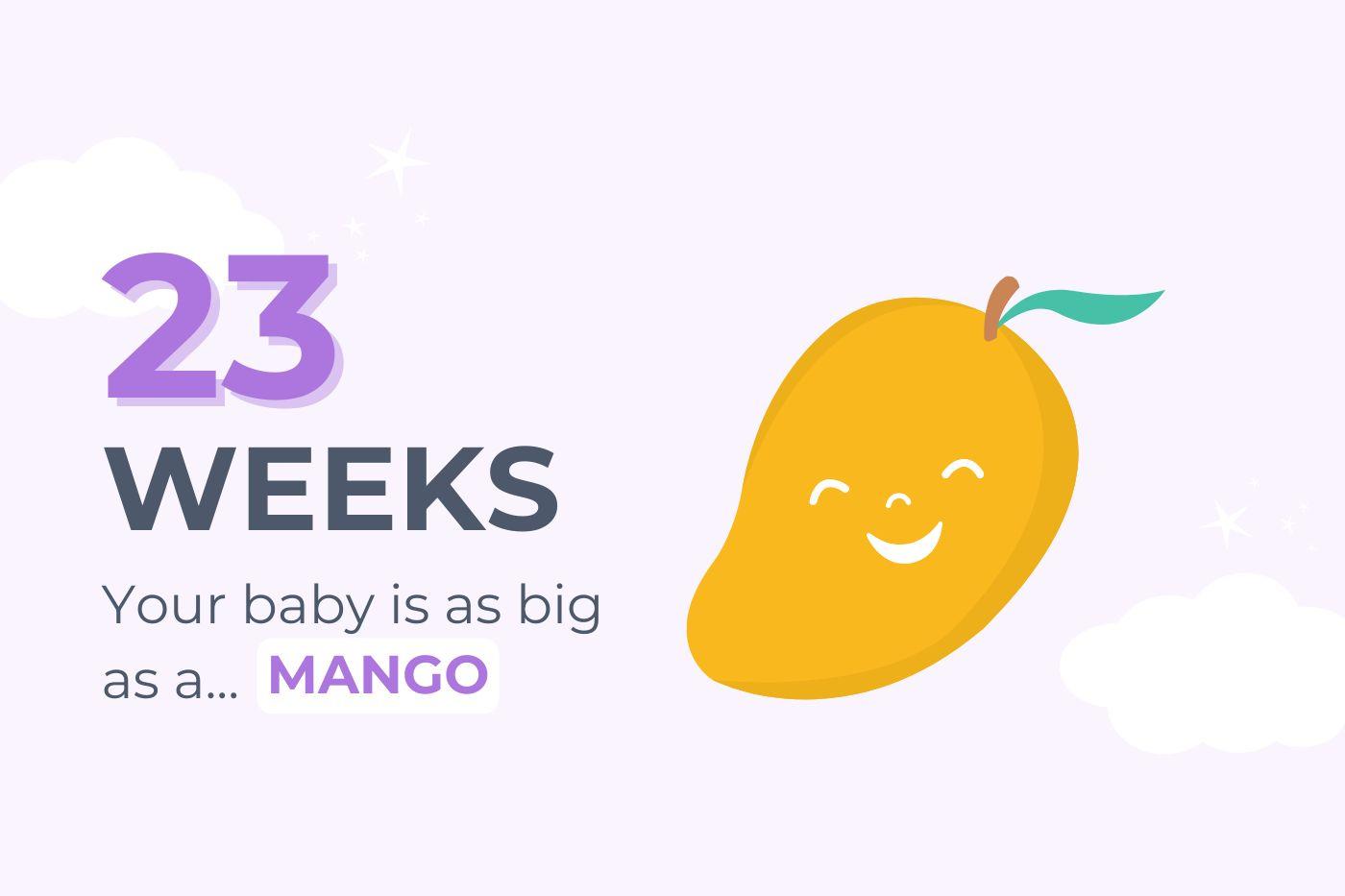
At 23 weeks, your baby is about the size of a mango.
23 Weeks Pregnant: What to Expect
Around now, you’ll be asked to take one of the most important routine tests of pregnancy: the glucose screening. This test usually happens toward the end of the second trimester and checks for early signs of gestational diabetes.
Gestational diabetes happens when your body doesn’t make quite enough insulin during pregnancy, causing your blood sugar levels to rise. In turn, your baby may get extra sugar, which can lead to faster weight gain. The good news is that it’s usually a temporary condition that resolves after birth—but during pregnancy, it’s vital to keep blood sugar within a safe range.
There are two types of tests:
- The glucose screening: You’ll have a normal breakfast, then drink a very sweet solution (Glucola) and have your blood tested an hour later.
- The glucose tolerance test: If the first test shows high sugar levels, this follow-up test is more in-depth. After fasting overnight, you’ll drink another sugary drink and have blood taken several times over three hours.
If you’re diagnosed with gestational diabetes, your doctor or midwife will help you manage it with dietary changes (think more veg and protein, fewer simple carbs and sugars), exercise, extra rest, and sometimes medication.
23 Weeks Pregnant To-Do List
- Check your partner’s leave policy: You’ve probably already worked out your own leave, but what about your partner’s? The first weeks are a crucial bonding time for baby and parents. Have the conversation now to see what’s possible.
- Keep germs at bay: Pregnancy can make you more susceptible to catching colds. Carry hand sanitiser, wash your hands often, and consider a saline spray or Neti pot for relief if you get congested.
- Focus on good nutrition: Cut back on processed carbs and steer clear of high-mercury fish like tuna, swordfish, and shark. Instead, load up on colourful fruits and veg, low-mercury fish such as salmon, trout, and sardines, and nutrient-rich sea greens like spirulina or seaweed.
- Plan a babymoon: The second trimester is the sweet spot for travel—you’ve got more energy and are (hopefully) past the worst of early symptoms. Many airlines won’t allow you to fly after 34 weeks, so if you’ve been dreaming of a getaway, now’s the time. Even a staycation can be a great way to relax and recharge before bub arrives.
Pregnancy Lingo Lesson
Episiotomy, Crowning, Shoulder Dystocia
- An episiotomy is a small surgical cut made under local anaesthetic to widen the vaginal opening, usually when a baby is crowning (when the head starts to appear).
- Once thought to heal better than natural tears, episiotomies are now less routine, but they can still be useful if a baby’s shoulders are stuck (shoulder dystocia) or if your baby needs to be delivered quickly.
Avvertenza: Le informazioni presenti sul nostro sito NON sono consigli medici per alcuna persona specifica o condizione. Sono solo intese come informazioni generali. Se avete domande o preoccupazioni mediche riguardo vostro figlio o voi stessi, si prega di contattare il vostro fornitore di assistenza sanitaria. Il latte materno è la migliore fonte di nutrizione per i neonati. È importante che, in preparazione e durante l'allattamento al seno, le madri seguano una dieta sana ed equilibrata. L'allattamento misto (seno e biberon) nelle prime settimane di vita può ridurre la produzione di latte materno e la decisione di non allattare al seno può essere difficile da invertire. Se decidete di utilizzare il latte artificiale per neonati, dovreste seguire attentamente le istruzioni.
Principali notizie






CONDIVIDI QUESTO ARTICOLO
SCELTE DEI GENITORI
Bestseller