PREGNANCY
18 Weeks Pregnant: Should You Get Vaccinated?
Your baby is developing her sleep and wake cycle—and she doesn’t even need an alarm clock to do so!

Scritto da
Dr. Harvey Karp
Your Baby at 18 Weeks
Your baby is beginning to settle into a sleep and wake cycle—though no alarm clock needed! They may even have a favourite snoozing spot…like right on top of your bladder. When awake, their kicks and wriggles are getting stronger, so those once-delicate flutters might now feel like proper thumps.
Even though your baby’s eyelids are still fused shut, their little eyes are making blink-like movements. Meanwhile, their nervous system continues to develop as their nerves become wrapped in a protective fatty layer called myelin—think of it as insulation around copper wiring. They’re also developing fat stores, including an essential type called brown fat, which acts like an internal candle to help keep them warm once they’re born.
All babies, regardless of sex, start out with the same basic structures. By now, girls will have a uterus and fallopian tubes in place, while boys’ penises are developed, though the testes haven’t yet dropped into the scrotum (sometimes this can take months—or even years—after birth).
How Many Months is 18 Weeks Pregnant?
Eighteen weeks pregnant is just over four months along.
Baby’s Size at 18 Weeks
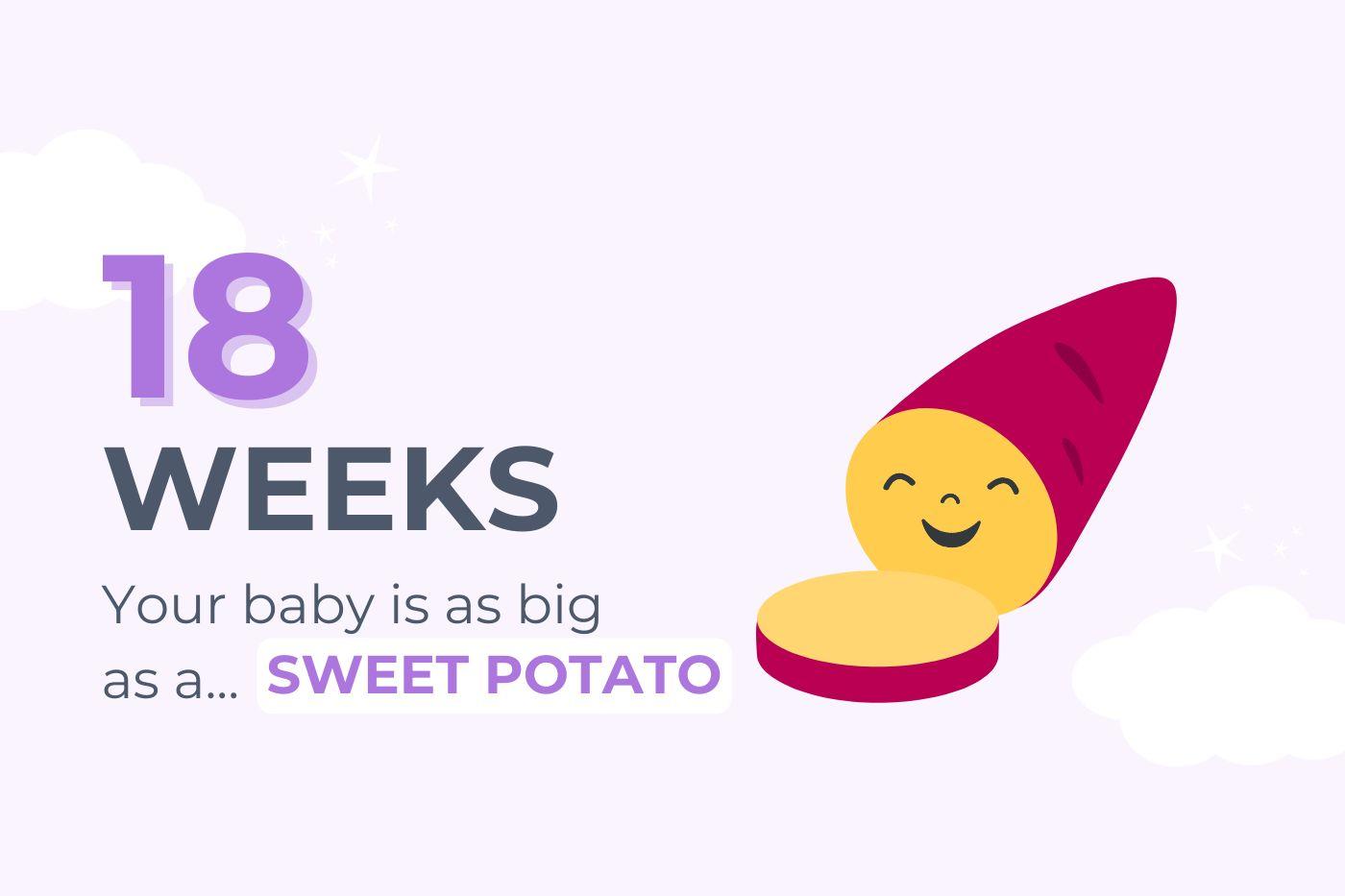
At 18 weeks, your baby is about the size of a sweet potato.
18 Weeks Pregnant: What to Expect
Welcome to the sweet spot of the second trimester! Many expectant parents notice they’re finally regaining energy, enjoying more balanced meals again (veggies and protein, welcome back!), and feeling more inclined to exercise.
It’s also time to start thinking about vaccinations. Both the flu jab and the whooping cough (pertussis) vaccine are recommended during pregnancy and considered safe.
- Flu jab: Pregnant people are more vulnerable to complications from influenza, and flu can also be dangerous for babies. If your pregnancy overlaps with flu season, your GP or midwife will advise you to get immunised as early as possible.
- Whooping cough (pertussis/Tdap): Usually given in the third trimester, this vaccine protects your baby through you until they’re old enough for their own jabs at 2 months. Research shows that babies whose mums had the jab during pregnancy were well protected in those early, vulnerable weeks.
18 Weeks Pregnant To-Do List
- Discuss your worries with your care provider: Whether you’re anxious about weight gain, birth defects, or labour pain, you’re not alone—every expectant parent has concerns. Write down your questions and bring them to your next appointment. Talking them through often makes them feel far less daunting.
- Begin your birth plan: Chat with your partner about your hopes for labour and delivery, from pain relief options (hypnobirthing, epidural, water birth) to preferences like having a doula, delayed cord clamping, or immediate skin-to-skin. Draft your plan and review it with your midwife or doctor—but remember, flexibility is key! Birth can be unpredictable, and that’s completely normal.
- Protect your family: Now’s the time to think about some grown-up essentials: updating insurance, checking smoke alarms, drafting a will, and even naming a guardian for your child—just in case. Having these steps in place offers peace of mind.
Pregnancy Quote of the Week
"The moment a child is born, the mother is also born. She never existed before. The woman existed, but the mother, never. A mother is something absolutely new." —Rajneesh
Avvertenza: Le informazioni presenti sul nostro sito NON sono consigli medici per alcuna persona specifica o condizione. Sono solo intese come informazioni generali. Se avete domande o preoccupazioni mediche riguardo vostro figlio o voi stessi, si prega di contattare il vostro fornitore di assistenza sanitaria. Il latte materno è la migliore fonte di nutrizione per i neonati. È importante che, in preparazione e durante l'allattamento al seno, le madri seguano una dieta sana ed equilibrata. L'allattamento misto (seno e biberon) nelle prime settimane di vita può ridurre la produzione di latte materno e la decisione di non allattare al seno può essere difficile da invertire. Se decidete di utilizzare il latte artificiale per neonati, dovreste seguire attentamente le istruzioni.
Principali notizie






CONDIVIDI QUESTO ARTICOLO
SCELTE DEI GENITORI
Bestseller