PARENTS
Why It’s Smart to Wear a Face Mask (Yes, That Includes Kids!)
Several studies now show that face masks dramatically reduce COVID-19 transmission—here is everything you need to know about masking up to keep your family safe.

Scritto da
Dr. Harvey Karp
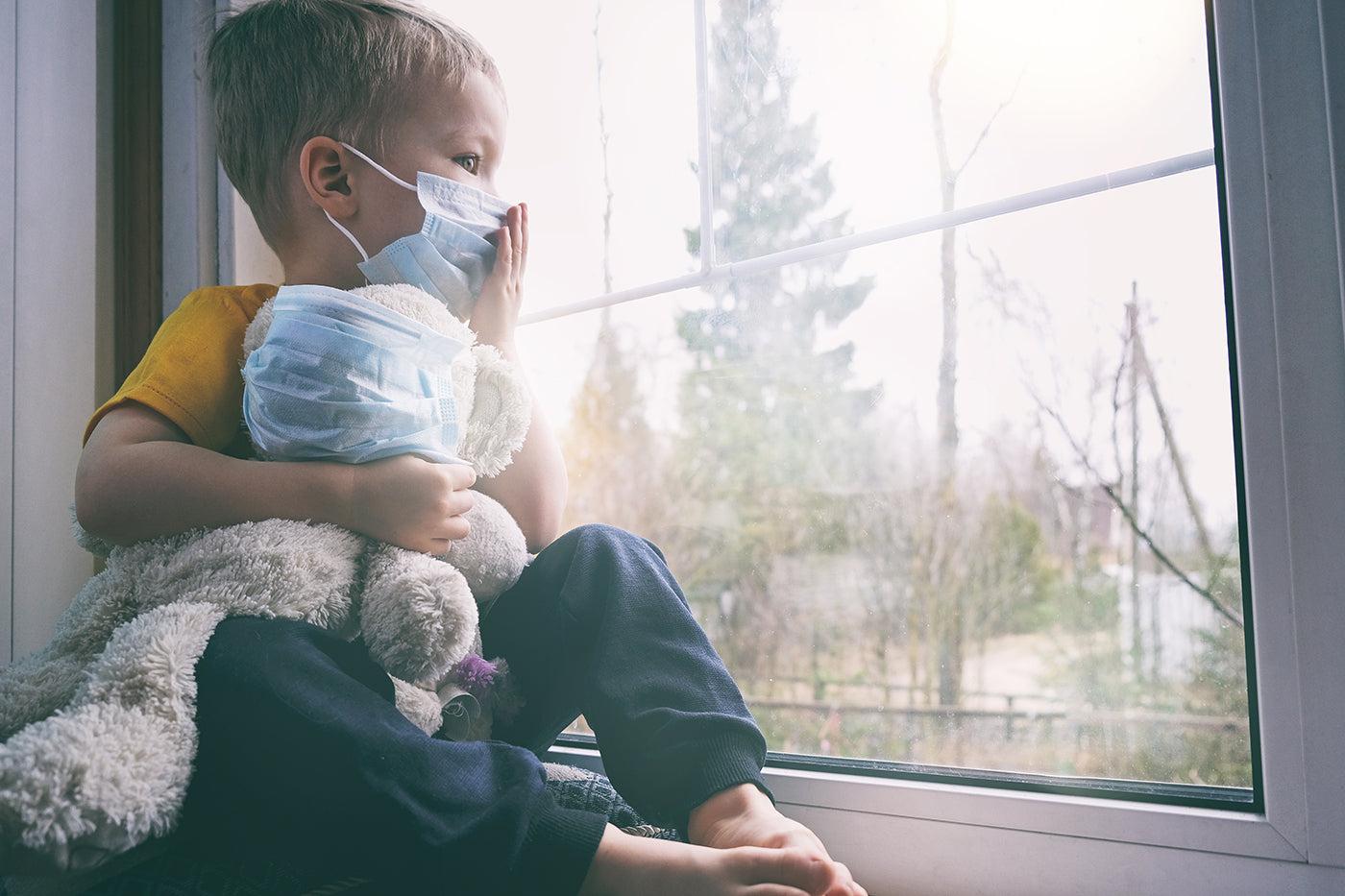
This season’s hottest accessory (and probably next season’s, too) is not cool new shoes or a jangle of jewelry…it is a face mask. No, it is not on the cover of Vogue or 100% comfy (but, neither are those new shoes), but it could save you, your friends, family, and strangers from a terrible sickness…or even a tragic death.
'Wear your mask' is now the cultural norm in many countries, like Japan and China. And, now even the United Kingdom is getting with the program. As we are working hard to flatten the COVID curve, we have had to adopt new practices into our everyday lives.
Since mask-wearing is such an unfamiliar act, there is quite a bit of confusion about them. How do they work? Do we all need to wear them? Even, how do you put them on and take them off?
So, let us unmask the facts…
How do face masks protect you—and others— from COVID-19?
When worn properly—over the nose and mouth—face masks can reduce the spread of the virus. Like most respiratory infections, coronavirus spreads three ways: 1) through tiny droplets of liquid that you expel when you cough, sneeze…or speak, 2) through teeny-tiny aerosol particles that you expel when you breathe, and 3) from surfaces—if you cough into your hand and then touch a doorknob, you have spread the virus to the doorknob…and then, to the people who touch it after you.
Early on, it looked like coronavirus was spread primarily through coughing or sneezing, which propels those droplets through the air really fast, far, and with a lot of force. (MIT researchers found that particles from a cough can travel up to 5 metres and sneeze particles can soar 8 metres…yikes!)
But since so many coronavirus victims have no idea where they got it and since so many coronavirus-spreaders have absolutely no symptoms, researchers began to investigate other ways it might be spreading. Soon, they learned that the virus could be transmitted by singing, speaking…or even breathing. One recent study found that simply talking can release droplets that hang around in the air for up to 14 minutes!
Since airborne particles are the culprit in a lot of COVID cases, masks slow the spread in two big ways. First, and most importantly, masks trap the virus-filled foamy spray that emits or explodes from our mouths and nose when we speak, cough, and sneeze. So that means we are much less likely to infect people around us. Second, masks filter out some of the droplets expelled from the faces of family, friends, and passersby.
Another great thing we have learned is that it does not take a fancy, high-tech mask to kick viral butt (and actually, professional-grade masks, should be reserved for nurses and doctors working on the frontlines). Homemade cotton face masks made from t-shirts, pillowcases, or scarves are highly effective at keeping people safe.
Several studies now show that face masks dramatically reduce COVID-19 transmission. Get this: If 60% of the public wore face masks…we could end the pandemic!
Countries that enforce mandatory mask-wearing have seen a huge payoff. South Korea, for example, has been super successful in keeping corona contained within their borders.
Now, it is up to us to become the masked heroes who stop the villain in our community and country. You say that masks are 'kind of uncomfortable and stuffy?' Okay, but…this is a war! We have lost 100,000 of our friends, family, and fellow citizens, in just two months. So, think of wearing that mask as your patriotic duty. After all, every person who wears a face mask could save a life and save the country lots of money.
How to wear a mask…the right way!
The only way to truly get the benefits of wearing masks is to wear them correctly. Here are some tips to help you do it smartly.
- Cover your nose, mouth, and chin. Cover your face from the bridge of your nose to the bottom of your chin. If your nose is out or the sides of your mask are not secure, contaminants can sneak in. Pro tip: If you wear glasses, try letting your glasses sit on top of the mask to prevent your lenses from fogging up.
- Do not touch…the front of your mask. This is the biggest rookie mistake people make! Your mask filters out virus, meaning those germy little droplets that you are trying not to spread, well they are being caught on the front of your mask (the way your shower drain filters out your hair). So, by touching the fabric, you are touching all those germs! Once you are done with your mask, stash it somewhere safe until you can wash it. Consider your mask contaminated—wash your hands after touching it! Speaking of which…
- Always wash your hands before and after using a mask. Touching your mask is a fast way to get sick…that is why it is ultra-key that you always wash your hands before and after putting on a mask or touching the front of it.
- Remember, it is a face mask, not a neck or table mask! Do not wear your mask around your neck or drop it onto your table or desk. You risk contaminating anything your mask touches…and conversely, anything your mask touches could spread infection to you.
- Do not assume that a mask alone will keep you safe. A mask can significantly reduce your COVID risk, but it does not make you invincible! Even with a mask, you still need to stay smart, such as skipping non-essential errands and keeping a safe distance from others. (Here are a few tips for running errands safely during a pandemic.)
How to convince your kids to wear masks, too…
Kids can be fussy about what goes on their little bodies. They might even resist putting on a hat or wearing a certain kind of sock if it rubs them the wrong way…so trying to get them to wear a face mask might feel like an alligator-wrestling match!
However, because masks are such a big part of putting the kibosh on coronavirus, it is super important that kids (over 2 years) wear masks when they are around other people. Here are a few tips:
- Get creative with your face covering. Let your child decorate her mask with stickers and markers to make it feel special!
- Offer options. Kids love to choose! So, getting to pick between the red mask and the green mask—or the ‘Elmo’ mask and ‘Daniel Tiger’ mask—helps make kids feel like they have a say in the matter.
- Develop a daily mask routine. Predictable routines help toddlers feel safe and secure, so try to build comforting rituals around mask-wearing. Designate a special place to store your masks when you are not wearing them where your child can retrieve it before you run errands. Have your child throw the mask in a special mask hamper when you come in from outside. Or maybe there is a fun mask song you can sing before suiting up!
- Turn the mask into a friend. Include the mask in family activities. Have your child give your mask a name and let her bring her mask with to the dinner table or to bed. This might seem silly, but it helps make the mask feel more like a friend…and less like something they have to wear that makes it hard to breathe!
- ‘Gossip’ when your toddler wears her mask. Praising the behaviour you want to see helps encourage that behaviour…and it is even more effective when that praise comes in the form of ‘gossiping!’ The next time your child puts on her mask without complaint, whisper to her teddy bear about what a great job she is doing keeping herself and other people healthy!
- Practice, practice, practice. Practise wearing a mask around the house before going into public so that you and your child can figure out what feels okay and what does not.
- Set a timer, give a star. To help your toddler get used to wearing a mask, start wearing them at home. Set a timer for a minute (or even 10 seconds). When they wear it successfully for that length of time, give them a check on their hand, a star on their chart, or something else that tells them they’re doing a great job! Work your way up to longer and longer periods of time.
- Set an example. To your child, you are a total rockstar, so when Mummy or Daddy wear their masks (and wear them correctly!), your toddlers will be inspired to follow suit!
Avvertenza: Le informazioni presenti sul nostro sito NON sono consigli medici per alcuna persona specifica o condizione. Sono solo intese come informazioni generali. Se avete domande o preoccupazioni mediche riguardo vostro figlio o voi stessi, si prega di contattare il vostro fornitore di assistenza sanitaria. Il latte materno è la migliore fonte di nutrizione per i neonati. È importante che, in preparazione e durante l'allattamento al seno, le madri seguano una dieta sana ed equilibrata. L'allattamento misto (seno e biberon) nelle prime settimane di vita può ridurre la produzione di latte materno e la decisione di non allattare al seno può essere difficile da invertire. Se decidete di utilizzare il latte artificiale per neonati, dovreste seguire attentamente le istruzioni.
Principali notizie






CONDIVIDI QUESTO ARTICOLO
SCELTE DEI GENITORI
Bestseller