PARENTS
Composting Tips for the Whole Family
Think composting is too yucky or complicated for your tot? Not so!

Scritto da
Happiest Baby Staff
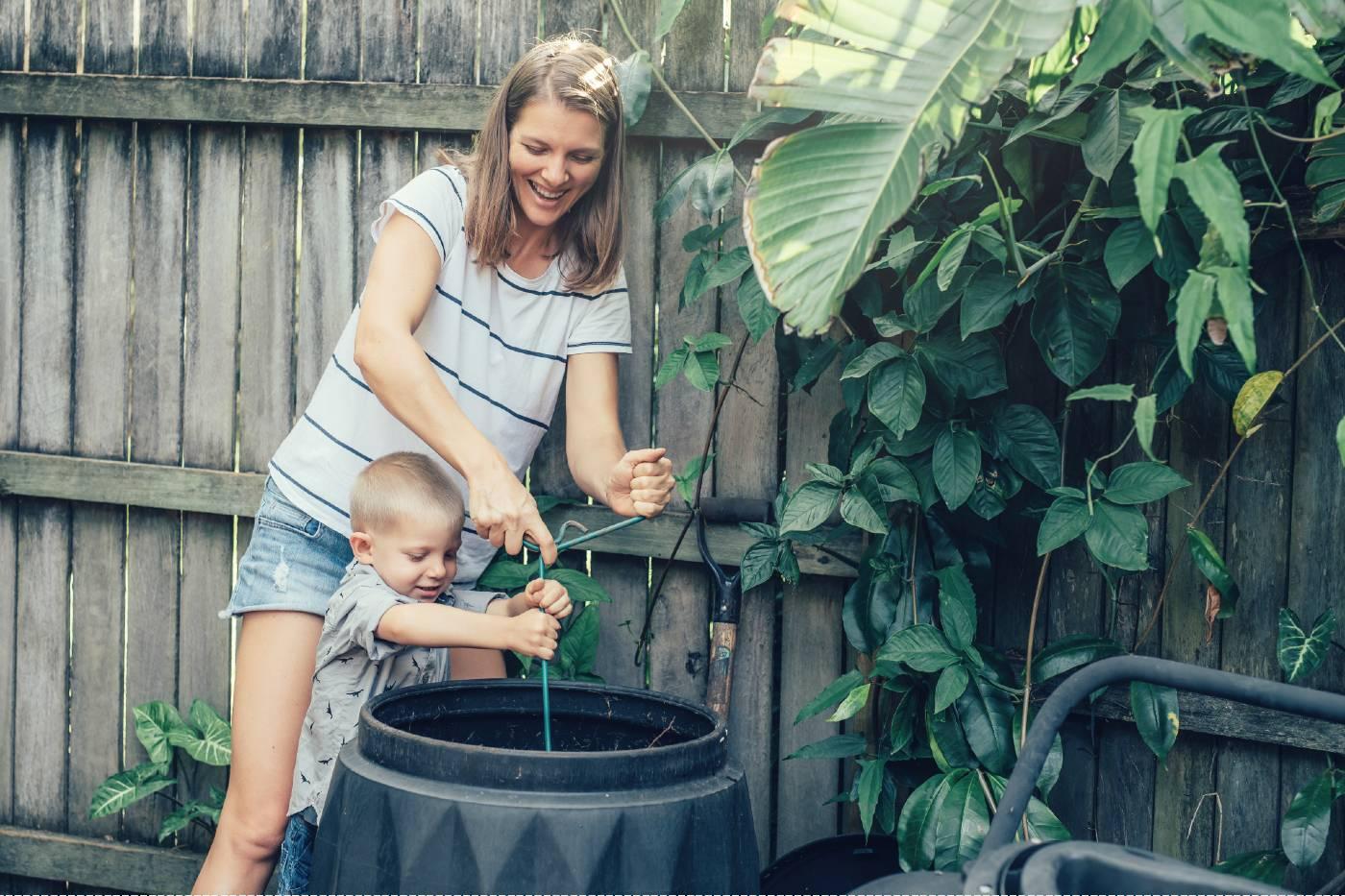
As a grownup you might think composting is a chore, but children are way more likely to view composting as a super-fun science experiment that involves some of their favourite things: Dirt! Squirmy worms! Helping the Earth! In fact, a 2022 survey found that 55% of children are the ones who spearhead sustainability and environmentally-friendly practices in their homes. And a 2021 report found that even little kids are primed to be mini stewards of the environment. Researchers noted that preschoolers can not only get their heads around the negative impact of using chemicals on the Earth, they are excellent at understanding how composting works and how to do it. So, what are you waiting for? Here, some ideas to get your whole family composting right now!
What is composting?
Composting is recycling! But instead of tossing plastic bottles in your blue bin and wondering if it will be turned into, say, polyester or PVC decking, composting turns organic materials, like leaves and certain food scraps, into fertiliser. And you can do it at home. In short, composting creates an environment filled with bacteria, fungi, and other organisms (like worms and sowbugs) that work together to speed the decomposition process and creates a rich soil-like material called compost.
What are the benefits of composting?
Compostable goods, like veggie scraps and garden waste make up more than a third of what we throw in the trash. That means composting greatly reduces the amount of trash we produce! According to the Environmental Protection Agency (EPA), composting at home also:
Helps prevent greenhouse gasses from being emitted into the atmosphere- Produces free, high-quality compost for your plants
- Improves plant growth in your garden and yard
- Reduces your need for fertiliser and pesticides
- Helps prevent soil erosion, in part, by binding soil together
- Conserves water because compost is more absorbent than soil
- Is fun!
Composting Activity #1: Start windowsill composting.
The best way to get little ones jazzed about composting is creating a windowsill compost bin where they can watch organic matter decompose right in front of their own eyes! Take an empty wide-mouth glass jar (and lid) from your recycling bin and the following supplies:
Yard debris, like dead leaves, grass, and dirt- Fruit and veggie scraps, peels, and cores
- 1 cup rain or tap water
- Newspaper
- Permanent marker
Have your tot toss a handful of dirt into the jar, followed by a few strips of newspaper, then kitchen scraps. Next, add a layer of dead leaves and grass clippings. Repeat the layers until the jar is mostly full then top with rainwater and close the jar. Poke several holes in the lid so oxygen can circulate and use your marker to draw a line (and mark the date) on the glass at the tip-top of your compost pile. Set your jar on a sunny windowsill and, about every two weeks, make a date and make a new line on the jar. (You and your bub will notice that the contents settle and move down.) By roughly week 12—voila!—your jar will be filled with nutrient-rich compote (and maybe even some worms) that is ready to move to your garden.
Composting Activity #2: Read fun composting books.
Children of all ages learn through storytelling. So, it is a no-brainer that picture books are perfect for sowing the seeds of composting. Here are some great options:
Compost Stew: An A to Z Recipe for the Earth: From apple cores to zinnia heads, this book is an A+ introduction to many items that are ripe for the compost bin. Kiddos ages 3 to 7 love the colourful illustrations, the poem-like vibe, and the you-can-help message.- Save the Scraps: Educational and silly? Yes, please! This charming book (for the 3 and up crowd) shares the story of two children who are learning how to utilise their community compost heap with the help of their pal…a wiggly worm! (At the end, children learn how to make their own compost.)
- What’s Sprouting in My Trash?: A Book about Composting: Talk about an inside look at composting! This book for kids 4+ uses photographs to perfectly illustrate—and explain—the Dos and Do nots of composting. The short glossaries and supplemental reading lists at the ends are a definite bonus.
- Compost: A Family Guide to Making Soil from Scraps: Fun facts, sound science, lots of creative ideas, and easy-to-follow advice are sure to inspire children—and their grownups—to explore composting themselves. Plus, lots of environmentally friendly stickers are included!
Compost Activity #3: Make a pumpkin planter.
We love pumpkins—for about two months. After that, about 1.3 billion of them wind up in landfills! Instead of adding to the pile—and contributing to greenhouse gasses—try this activity from Honestly Modern next autumn:
Clean your pumpkin like you are making a jack o’ lantern.- Add some soil (or compote if you have got it!)
- Plant some hearty seeds, like carrots, squash, or garlic, inside the pumpkin.
- Once the pumpkin begins to rot, bury it in your garden where you would like your veggies to grow.
Compost Activity #4: Play “What to Compost” Bingo.
The folks at the blog Raising Global Kidizens have a super-fun (free!) composting bingo game you can easily print out and play with your kids. (Hint: You can also print out two copies and make it into a composting memory game.) This is an engaging way for the whole family to learn what can—and cannot be-compostable. For example, did you know things like greasy pizza boxes, hair clippings, and egg cartons can all go directly into your compost bin? It is true!
Compost Activity #5: Watch worms work!
Worm composting (aka vermicomposting) is a type of composting where you feed earthworms (specifically red wigglers) your kitchen scraps to create a super nutrient-dense compote. Here is how to do it, courtesy of KidsGardening:
Find a clear shoe box-size plastic bin with a lid.- Drill roughly 10 small holes on the sides and bottom of the box to help get oxygen in and excess fluids out.
- Cover the holes with some screen. (You can also buy bins that are ready to go!)
- Shred newspaper and fill 1/2 to 3/4 of the box with it.
- Dampen the bed of paper with a spray bottle.
- Once moist, add some dirt and mix it all up.
- Add your red wiggler worms. (If you cannot find red wigglers in the damp, dark areas of your yard, you can get some at a bait shop, or even online.)
- Add some kitchen scraps, like fruit and veggie peels, eggshells, tea bags, and coffee grounds into the paper-and-soil mix.
- Place your bin in a warm spot, but not in direct sunlight.
- Have your kiddos add food regularly and till the mix with a garden trowel once a week. (If the box is overly wet, cut back on the food and add more newspaper. If dry, up the food and spray with more water.)
- Scoop out worm castings (soil-like worm poop) and use in garden as needed.
Avvertenza: Le informazioni presenti sul nostro sito NON sono consigli medici per alcuna persona specifica o condizione. Sono solo intese come informazioni generali. Se avete domande o preoccupazioni mediche riguardo vostro figlio o voi stessi, si prega di contattare il vostro fornitore di assistenza sanitaria. Il latte materno è la migliore fonte di nutrizione per i neonati. È importante che, in preparazione e durante l'allattamento al seno, le madri seguano una dieta sana ed equilibrata. L'allattamento misto (seno e biberon) nelle prime settimane di vita può ridurre la produzione di latte materno e la decisione di non allattare al seno può essere difficile da invertire. Se decidete di utilizzare il latte artificiale per neonati, dovreste seguire attentamente le istruzioni.
Principali notizie






CONDIVIDI QUESTO ARTICOLO
SCELTE DEI GENITORI
Bestseller