PARENTS
This Paediatric Allergy Expert Wants to Rethink Baby Feeding
When it comes to food allergy prevention, few experts have shaped the field as profoundly as Dr. Carina Venter.

Scritto da
Happiest Baby Staff
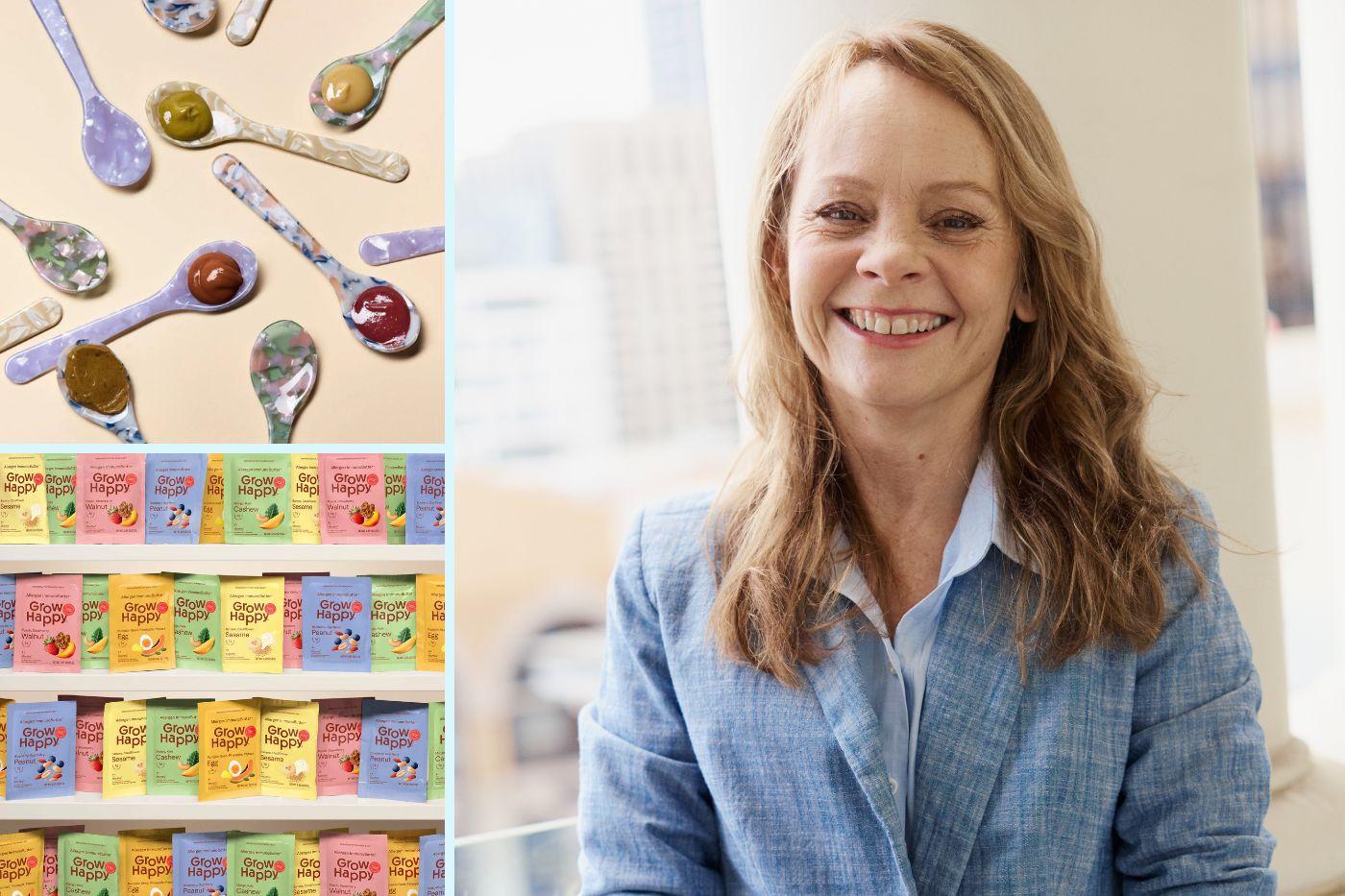
When it comes to infant feeding and food allergy prevention, few experts have shaped the field as profoundly as Carina Venter, PhD, RD, co-founder of GrowHappy. A trailblazer in the concept of ImmunoNutrition—how food impacts the immune system and allergy risk—Dr. Venter’s groundbreaking research has shifted clinical guidelines across continents. From developing the first milk and egg allergy food ladder to authoring the European, American, and Canadian allergy prevention guidelines, her influence is global. But for Dr. Venter, this work is also deeply personal.
We grabbed time with Dr. Venter to talk about early allergen introduction, busting long-held allergy myths, and how her experiences as a clinician, scientist, and mom have shaped her mission to make allergy prevention more accessible—and more nourishing.
What inspired your career in paediatric allergy and nutrition—and how did that passion lead you to cofound Go Happy?
My love for nutrition started early, inspired by my grandmothers who always cooked from scratch and ate whatever was in season in South Africa, where I’m from. Allergies were also part of my everyday life— two of my sisters have food allergies. When they became pregnant, I realised how hard it was to give them clear, evidence-based advice on how to prevent allergies in their babies. One of my nieces now has multiple severe food allergies, and I often wonder if things could have gone differently if we had known more at the time.
That experience really fueled my interest in allergy prevention. Since then, I’ve worked with some of the best allergists and dietitians all over the world to help further our knowledge in food allergy prevention and treatment. Over the years, my work has shifted more and more toward what I call ImmunoNutrition—looking at how what we eat influences the gut microbiome, the immune system, and allergy risk. My passion for ImmunoNutrition led me to create GrowHappy, a place where families can feel supported while teaching their child’s immune system and fostering a healthy gut microbiome, in a science-backed and nourishing way.
What was your “lightbulb moment” that made you realise the current food allergy landscape needed to change?
Early in my career, I was working on the Isle of Wight in England, and we published research showing that peanut allergy had tripled in kids born between 1989 and 1997. That made me realise just how rapidly food allergies were increasing and how urgently we needed to rethink our approach. That’s when I really became focused on prevention—not just managing food allergies, but figuring out how to stop them before they start. This data from these studies supported the need to do the LEAP study, which is the famous prevention study that proved that we should feed allergens early to teach the immune system to accept them. One of the authors of that study is George du Toit and he is on the GrowHappy team as well.
What have you learned about food allergies from your experience as a researcher and clinician that you wish parents knew?
I’ve learned a lot from the families I’ve worked with over the years. Here are my top tips for a food allergy parent:
- Always carry your epinephrine if your child has food allergies—it can save your child’s life.
- Always read labels or ask about ingredients—never assume something is safe.
- If you don’t know what’s in it, don’t eat it—it’s just not worth the risk.
- It’s not your fault—food allergies are complex, and you’re doing your best.
- With the right support, good nutrition is still possible—even with multiple food allergies.
Here are my top tips for all other parents without food allergies:
- The first few months that baby can eat solids is a critical time to get started with allergens and teach the immune system that allergens are safe
- It’s never too late to start. Even if your child is three, it’s better late than never. Even if you already have one allergy, get in there feeding the other allergens regularly so you don’t get those allergies too. Talk to a paediatrician about how to get allergens in safely
- A bite once or twice is not going to protect your child. Teaching the immune system to accept allergens is a journey. We need to feed these foods throughout childhood.
- Allergens are really good for your child’s gut microbiome. The more allergens your child eat, the healthier their gut microbiome. Each allergen plays a specific role to create a healthy gut microbiome, so we need to eat all of them.
- A healthy gut microbiome is important for all children, it prevents diseases and fights infections.
Food allergy prevention has evolved so much in the past decade. What’s one myth or outdated belief you often find yourself correcting?
The biggest myth is still the idea that you should delay introducing allergens. For years, that was the standard advice, but we now know it’s the opposite of what we should be doing. Research from the last ten years—especially the LEAP and EAT studies—has shown that introducing allergens early, around 4 to 6 months, can lower the risk of developing allergies.
I always advise parents and health professionals: Early and regular exposure is key. Avoiding allergens doesn’t prevent allergies—it may increase the risk. It’s a shift in mindset, but one of the most important things we can do is to get children to eat food allergens.
What’s GrowHappy’s mission in a nutshell?
GrowHappy’s mission is to make feeding allergens and fostering a healthy gut microbiome simple, safe, and nourishing. We want to help families feed their children real, diverse foods, including allergens, during the time it matters most —and to do it in a way that supports overall health and development.
How does GrowHappy differ from other early allergen introduction products on the market?
What makes us different is that we don’t just deliver allergen proteins. GrowHappy is built around whole, nutrient-dense foods—fruits, veggies, healthy fats—combined with the right amounts of allergenic proteins like peanut, egg, and tree nuts. It’s a full-diet approach, not just a supplement. We really care about helping babies learn to love a wide variety of flavors and textures, which plays a huge role in long-term eating habits.
Can you tell me a little more about GrowHappy’s approach and why it matters?
We designed GrowHappy to take the stress and confusion out of early allergen introduction. A lot of parents know they should do it, but they’re not sure when, how much, or how often—and that’s where we come in. Each GrowHappy product includes 2 grams of key allergens—like peanut, egg, cashew, walnut, and sesame—blended into real foods like fruits and vegetables. It’s ready to go and easy to use.
Why does that matter? Because introducing allergens early and consistently—starting when babies are developmentally ready for solids—can help set these babies up for success with eating food allergens for the rest of their lives. The key is giving the right amount (about 2 grams) at least twice a week, and making sure it’s part of a healthy, varied diet. We support our families, too, by writing guides for them, like the Ultimate Feeding Allergen Guide. It’s a step-by-step guide written by some of the best in the field.
You’re a scientist, founder, educator, and mom. How has your personal experience as a parent shaped the way you approach your work?
Becoming a parent gave me a whole new perspective. Suddenly, all the research and science I’d studied became personal—it was about feeding my children and making my decisions in the middle of real-life chaos.
I’ve always believed in evidence-based nutrition, but parenting taught me that it also has to be doable. You can know what’s “right,” and still feel overwhelmed, exhausted, or unsure how to make it happen. That experience gave me a deeper understanding of what families actually need: real tools, real support, and a little grace.
What’s your hope for the next generation of babies when it comes to food freedom and health?
I hope the next generation grows up with less fear around food and more joy in eating. I want babies to grow into kids who love trying new flavors, who eat foods from all cultures, and who aren’t limited by food allergies.
And I hope parents feel confident knowing they’re giving their kids the best possible start with food that supports both health and happiness. To me, a good relationship with food means that every child can thrive—and every family feels supported along the way.
Learn more about GrowHappy!
About Carina Venter
Professor Carina Venter is a world-leader in the concept of ImmunoNutrition and how nutrition impacts the immune system and allergy outcomes. Her breakthrough studies have changed clinical practices worldwide. For example, she's the author of the first food ladder, an approach used all around the world to determine and induce tolerance development in those with milk and egg allergies. She's also published many important studies looking at diet diversity and how critical it is for a healthy gut microbiome, allergy prevention and allergy treatment. And her maternal diet studies are changing the way the world sees prevention from the womb as well. She's the Author of the European, American and Canadian Allergy Prevention Guidelines and the Chair of Immunomodulation and Nutrition at the European Academy of Asthma Allergy and Clinical Immunology. She's based at the University of Colorado and Children’s Hospital Colorado where she is a Professor in Paediatric Allergy.
Avvertenza: Le informazioni presenti sul nostro sito NON sono consigli medici per alcuna persona specifica o condizione. Sono solo intese come informazioni generali. Se avete domande o preoccupazioni mediche riguardo vostro figlio o voi stessi, si prega di contattare il vostro fornitore di assistenza sanitaria. Il latte materno è la migliore fonte di nutrizione per i neonati. È importante che, in preparazione e durante l'allattamento al seno, le madri seguano una dieta sana ed equilibrata. L'allattamento misto (seno e biberon) nelle prime settimane di vita può ridurre la produzione di latte materno e la decisione di non allattare al seno può essere difficile da invertire. Se decidete di utilizzare il latte artificiale per neonati, dovreste seguire attentamente le istruzioni.
Principali notizie






CONDIVIDI QUESTO ARTICOLO
SCELTE DEI GENITORI
Bestseller