BABY
Is White Noise Bad for Babies' Hearing?
Dr. Karp explores the science surrounding sound machines.

Scritto da
Dr. Harvey Karp
Parents and kids love white noise...and I do, too! Research shows that it can help 80% of infants fall asleep in just 5 minutes and it can increase sleep in colicky babies (no wonder white noise is a core part of my 5 S's). Even the American Academy of Pediatrics (AAP) recommends white noise to improve a baby’s sleep. That’s because white noise helps turn on your baby’s innate calming reflex...an infant's built-in "off-button" for crying and “on-button” for sleep. As babies get older, white noise then becomes a learned sleep cue. As babies get older, white noise continues to be a big help. It’s a beloved and comforting bedtime friend, think of it as a “Teddy bear of sound.”
But even with all the (well-deserved) praise of nighttime sound, some parents are confused about white noise. Some worry that their baby will become too reliant on it or wonder if white noise is bad for hearing. But I’m here to tell you—when used correctly—these are white noise myths!
Does white noise damage a baby’s hearing?
No. Back in 2014, there was a small study in the medical journal Pediatrics about white noise. Researchers tested 14 white noise machines placing them a mere 12 inches from the “babies’ heads”—and cranking the sound up to max volume. (Instead of actual babies, this study used equipment to measure sound.) When researchers then measured how much sound reached the “babies,” they found that three sound machines exceed 85 decibels. (Eighty-five decibels is like a very noisy restaurant or a wee bit louder than an alarm clock.)
The researchers warned that sound machines played at 85 decibels (dB) for 8 or more hours would exceed adult safety standards and might be a risk for a baby’s hearing. (The study itself did not examine hearing loss.) They advised parents to move their babies’ white noise machines as far away as possible, playing the machines at 50 decibels…shutting them off after the baby falls asleep.
In late 2023, the AAP came out with a report about babies’ exposure to white noise that quoted that study, but made no recommendations for parents about white noise machines. This added to the confusion.
I am deeply committed to keeping babies safe, that’s why I invented SNOO. However, I believe that not using white noise effectively is wrong...and may even be dangerous. Here’s why: Nighttime sound—played all night at 60 to 70dB—calms infant crying and boosts sleep (for babies and parents). By improving sleep, white noise may help save babies’ lives by reducing the temptation that makes some exhausted parents allow their babies to sleep in an unsafe way (like bed-sharing or stomach sleeping).
How loud should white noise be?
Let’s look at the researchers’ recommendation of playing white noise at 50 decibels. Fifty decibels is quieter than normal conversation and about the same level as a quiet refrigerator. It offers little to no benefit for your baby’s sleep.
To improve a baby’s sleep, I recommend playing white noise at 55 decibels (the level of a whisper) to 70 decibels (the level of singing a lullaby). A study in the journal Child & Family Behavior Therapy found that white noise machines set at 75 decibels at bedtime—and used all night—improved sleep and reduced night-wakings in 1-year-olds with no ill effects. Plus, a 2022 report in the journal Advances in Social Science, Education and Humanities Research concluded that white noise has time and again been shown to help infants and toddlers fall asleep and reduce night waking.
How loud should white noise be to calm an upset baby?
While 55 to 70 decibels is great for keeping calm babies calm, upset babies need us to temporarily boost to closer to the level of an infant’s wailing to flip on the calming reflex. (Note: Every increase of sound by 10 decibels is 10 times louder to the ear. So, 80 decibels is 10 times louder than 70 and 90 decibels is 100 times louder than 70. Infant crying can reach 100 to 120 decibels, which is 1,000 to 100,000 time harsher to a baby’s ears than the lullaby level of 70 decibels!)
That's why, when a baby cries, SNOO’s sound goes up, but it never exceeds 85 decibels…and that level only lasts a few minutes. (Think about it like this: Playing loud white noise for minutes, not hours, is a lot less traumatic to your baby’s ears than their own crying!) Once your baby has fallen asleep, SNOO slowly reduces the white noise intensity back to the low level you have chosen.
Are white noise machines safe for babies?
White noise machines are safe for babies. As long as you keep them at a safe level, there’s absolutely nothing to worry about. Of course, it should go without saying that you should not blast white noise at max volume right next to your little one’s head all night long. But if your baby is crying, you can safely boost the volume to match your baby’s cry intensity. Once your baby drifts back to sleep—and has been asleep for 5 or 10 minutes—reduce the white noise volume back down to the level of a soft shower.
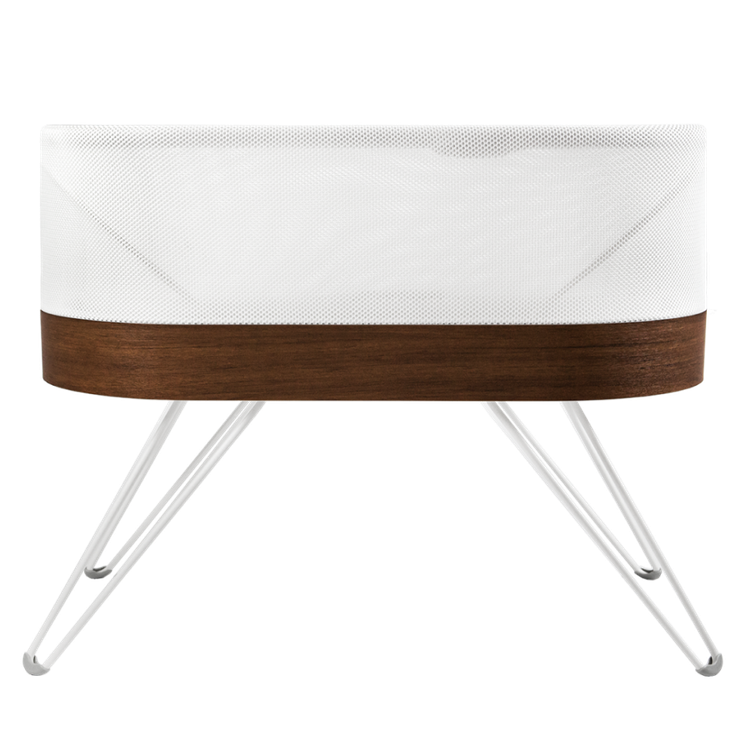
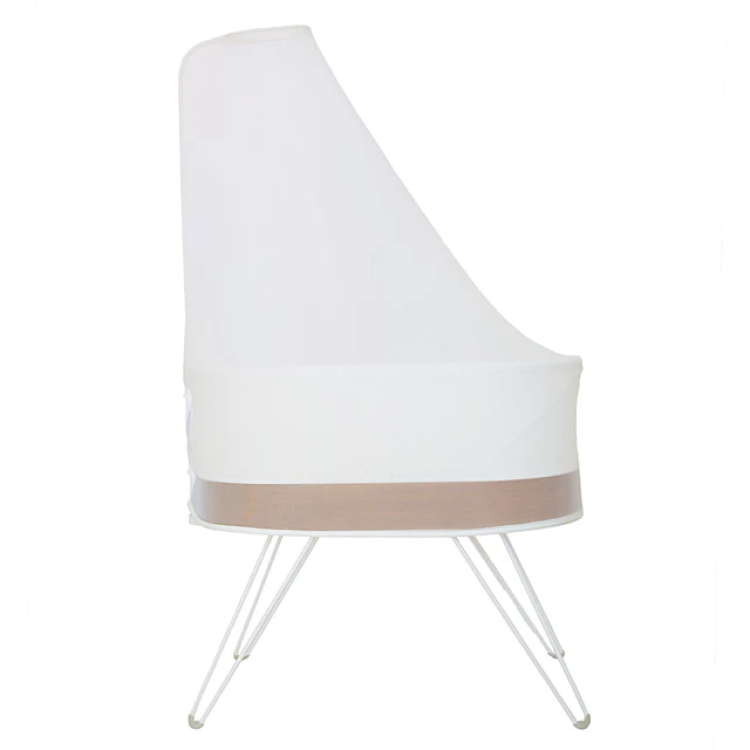
One nice safety feature of SNOO is that it does this for you automatically. In fact, SNOO is the only white noise device specifically designed to give your baby the exact right level of sound they need, when they need it. SNOO expertly changes from softer to stronger and back to soft…just like an experienced caregiver.
What’s a safe white noise machine for Baby?
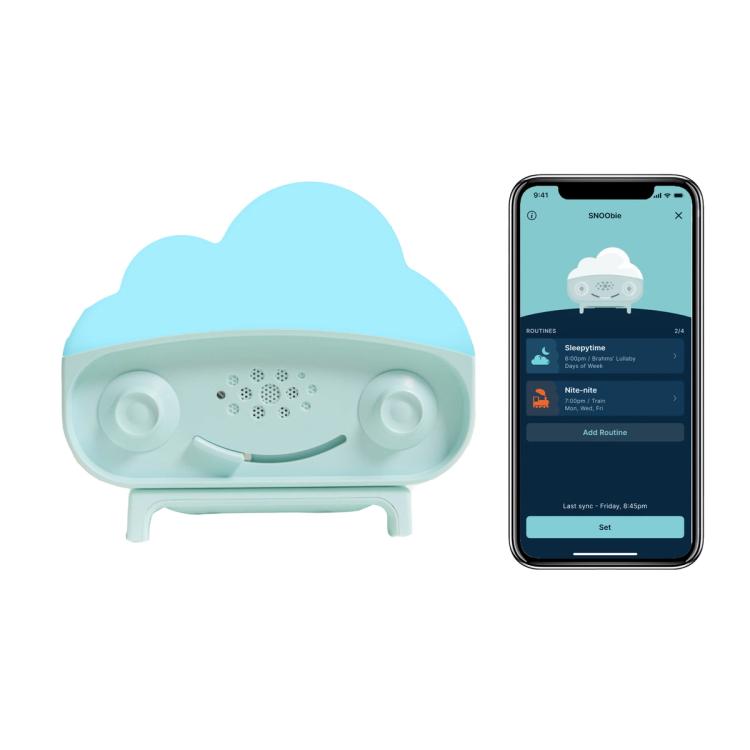
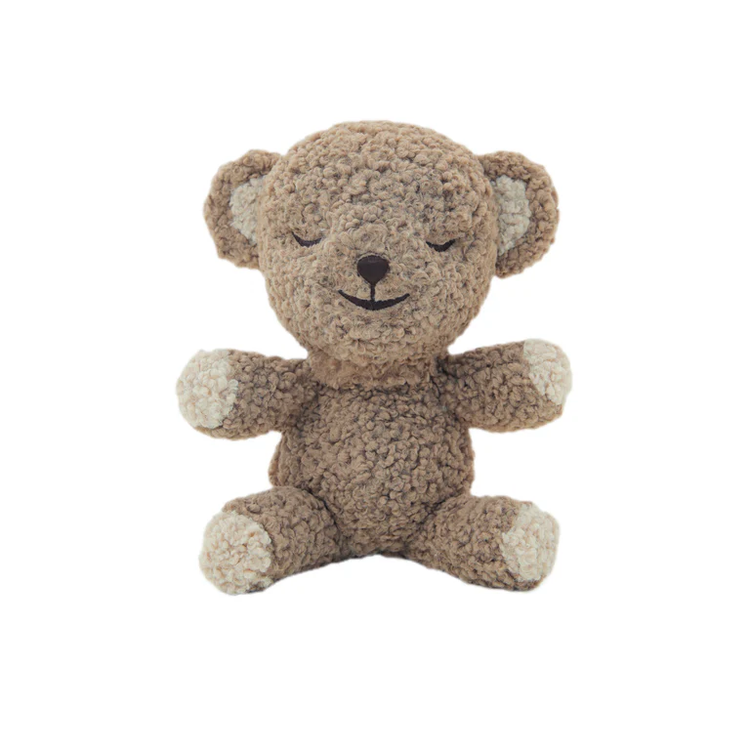
If you want a machine that offers safe sound, I think you might like SNOObear and SNOObie. Both white noise machines were created with sleep and safety top of mind. SNOObear automatically shuts off after 30 or 60 minutes to protect little ears. SNOObie allows parents to choose lower sound settings and its volume automatically lowers even further when off its charging dock.
Is SNOO safe for babies’ hearing?
SNOO’s white noise is perfectly safe for babies. It quietly shushes all night. And, when your baby is upset, the sound briefly bumps up, but never exceeds about 85 decibels...a level that is still significantly less intense than a baby’s own cries. It’s important to remember that SNOO only gets louder when your baby fusses—and it reduces its intensity after your baby calms. So, SNOO is never at max volume for more than 4 minutes! (PS: SNOO features different volume level options in our App, so if you would like to set the volume to the lowest level, you can.)
Common White Noise Mistakes
To use white noise safely—and effectively—avoid these common white noise mistakes…
White Noise Mistake #1: Skipping White Noise Because Baby Sleeps So Well
White noise can make good sleep better! As babies pass through infancy, white noise helps them sleep through outside distractions, such as a too-loud TV and inside distractions, such as mild teething pain. Within weeks of using white noise, your little one will connect white noise with the pleasure of sleep. "Oh yeah, I recognize that sound...now I’ll have a nice little snooze."
White Noise Mistake #2: Playing White Noise all Day Long
Hearing the normal hum of home for many hours a day helps children master the nuances of all the interesting sounds around them, such as speech, music, and so forth. That means, turn on white noise during your child’s bedtime routine—and throughout their sleep—but turn it off during the rest of the day.
White Noise Mistake #3: Buying the Wrong Sound Machine
While many machines and apps tout 20+ sounds, most of their sounds are not engineered to mimic the magical womb-like shushing that best lulls babies to dreamland. (Chirping birds, jungle sounds, crashing waves, and gentle lullabies are not white noise!) The sound that helps with sleep is low pitch, droning, and hypnotic, like the monotonous rumble of cars and planes or the drone of rain on the roof. For the real deal, use sound specifically designed to soothe fussiness and boost sleep, like SNOO, SNOObear, and SNOObie. And for responsive white noise, consider SNOO, which automatically and continuously plays white noise that gradually increases in response to your baby’s cries. SNOObear plays familiar SNOO white noise for 30 or 60 minutes, but then continues to “pay attention” to your baby for an additional three hours…and “wakes up” and plays more soothing white noise to help your little one settle back down if it “hears” your tot start fussing again.
White Noise Mistake #4: Worrying That White Noise is a “Sleep Crutch”
There’s no need to fear white noise might make your baby addicted to sound for sleep! Parents can confidently continue white noise with their kids—and themselves—to boost sleep with zero causing of a dependency. Think of white noise as just a sleep support, no more of a problem than an adult nightly reliance on using a pillow and warm blanket to help us get to Dreamland. Indeed, it is much easier to wean babies off white noise, than for an adult to stop using a pillow. Whenever you want to stop it, simply lower the sound, bit by bit, over a week or two until it’s finally off.
White Noise Mistake #5: Ditching White Noise in the Toddler Years
Proper sound (low, rumbling, and hypnotic) creates a kind of “blanket of sound” that masks disruptive outside noises (dogs barking, loud trucks passing by, etc.) or disturbing internal annoyances (mild hunger, teething, etc.) that can interrupt a toddler’s sleep. Tot’s love the super cute SNOObie—with its sounds, lullabies, nightlight, OK-to-wake sleep function, and calming breathing trainer—as a sleep helper. It will become your child’s sleep buddy from birth to middle school!
Final Thoughts on White Noise Safety
White noise is a super useful tool to help your baby sleep. When your baby cries, you can boost the sound for several minutes to the level of her cries (a hair drier 6 feet away often helps to soothe the fussies). After your little one has been asleep for 5 to 10 minutes, reduce the sound to the level of a soft shower, around 65 decibels. (Learn more about the benefits of white noise.)
Avvertenza: Le informazioni presenti sul nostro sito NON sono consigli medici per alcuna persona specifica o condizione. Sono solo intese come informazioni generali. Se avete domande o preoccupazioni mediche riguardo vostro figlio o voi stessi, si prega di contattare il vostro fornitore di assistenza sanitaria. Il latte materno è la migliore fonte di nutrizione per i neonati. È importante che, in preparazione e durante l'allattamento al seno, le madri seguano una dieta sana ed equilibrata. L'allattamento misto (seno e biberon) nelle prime settimane di vita può ridurre la produzione di latte materno e la decisione di non allattare al seno può essere difficile da invertire. Se decidete di utilizzare il latte artificiale per neonati, dovreste seguire attentamente le istruzioni.
Principali notizie






CONDIVIDI QUESTO ARTICOLO
SCELTE DEI GENITORI
Bestseller