BABY
Is Swaddling Safe? A Scientific Study
Dr. Karp reviews past research and the AAP's recommendations for snug wrapping.

Scritto da
Dr. Harvey Karp
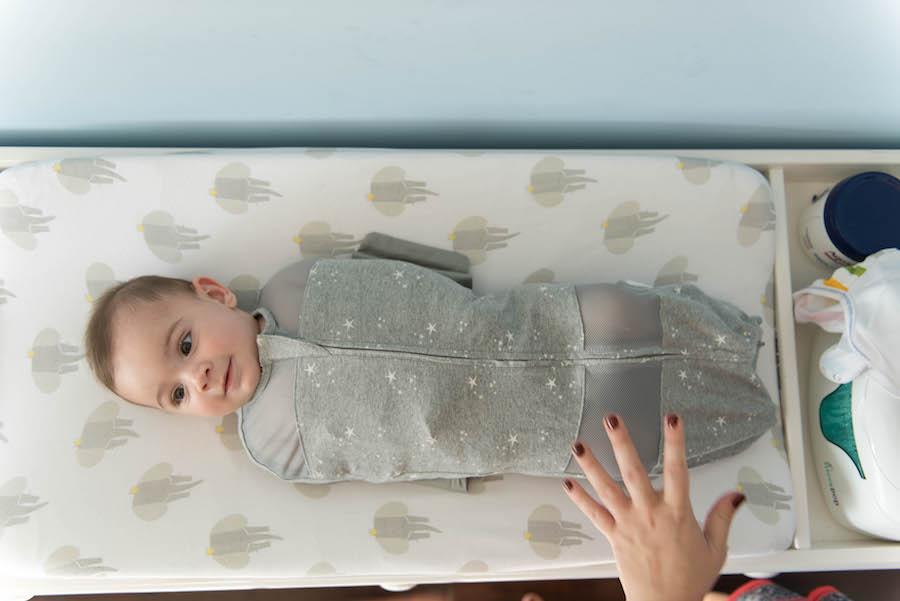
Is Swaddling Safe?
Sometimes, the magnifying lens of the press distorts good science to mislead rather than inform. I’m afraid that kind of distortion occurred with a rather modest study on swaddling and SIDS. The media pumps up the volume on stories to grab our attention (which in this case confused parents). News outlets announced this study with a storm of coverage, using provocative and sensational headlines like, “Is Swaddling Dangerous?” and “New Study Shows Swaddling May Be Linked to SIDS!” Doctors, in contrast, evaluate research with a skeptical eye, trying to find the flaws (all studies have them) and tease out the nuggets of truth. So, let’s cool down the hype for a minute and look at the key questions about swaddling and the health of babies:
What Did That Swaddling Study Actually Prove?
The study in question is a review of four older studies, most from 20+ years in the past. Its “big” finding simply confirmed the well-known fact that babies should only sleep on the back, whether swaddled or not. It also notes that stomach sleeping is riskier (known since 1993) when a baby is swaddled. And it adds that swaddling is definitely of increased risk for babies over 6 months of age, probably because of the increasing risk of rolling over.
Let’s get to the heart of what new parents want to know: Is swaddling safe or risky for healthy, back-sleeping babies? To that point, the authors said there were big flaws in the study. The researchers cautioned that their data is so thin that “...further studies are needed to quantify whether this practice [swaddling of back sleeping babies] poses any risk.” They warn that—because of study limitations—they are not telling parents to stop swaddling infants under 6 months, unless they can roll over.
What Critical Ideas Did the Swaddling Study Leave Out?
This study ignores important and powerful evidence supporting the safe use of swaddling (and the risks of not swaddling). In 2014, the Journal of Pediatrics published the most comprehensive study of swaddling-related sleep deaths ever done in the U.S. It reviewed eight years of all swaddle-related deaths reported to the federal Consumer Product Safety Commission (CPSC). Fewer than three deaths per year were reported among swaddled babies. Only one death was reported over that extensive period of a baby who was swaddled in a blanket and placed on the back. In fact, that study’s authors stressed the safety of swaddling by noting, “...reports of sudden unexpected death in swaddled infants are rare.” This low death rate is strong supportive evidence that swaddling reduces SIDS risk! Think of it this way: SIDS occurs in about 1 out of every 2,000 babies. So, with the hundreds of thousands of infants being swaddled each year, one would expect hundreds of reports of swaddled babies dying of SIDS... just by coincidence. And, even more deaths if wrapping truly increased SIDS. Another, critical issue that was totally overlooked in the study—and by the press—is the bigger public health question:
Does Swaddling Cause SIDS?
Swaddling reduces two common parent stressors: Persistent crying and poor infant sleep. Because of this benefit, swaddling is recommended in the American Academy of Pediatrics’ (AAP) parenting books and educational website. Reducing crying and mom exhaustion are key goals because these problems often trigger a terrible cascade of dysfunction and death, including postpartum depression (which can lead to life-long depression, suicide and even infanticide); child abuse/neglect; breastfeeding failure (which can increase SIDS); dangerous sleeping practices (which can increase SIDS and suffocation); marital stress; cigarette smoking (which can increase SIDS); car accidents; over treatment with medication; and perhaps even maternal and infant obesity.
These problems are not rare. In fact, they burden hundreds of thousands of families and cost our nation billions of dollars in health care and related expenses. For example, the AAP promotes swaddling to reduce shaken baby syndrome (which peaks at 3-5 months of age and is usually triggered by a baby’s persistent screaming). And although there were 22 deaths of swaddled babies reported to the CPSC from 2004-2012, during the same period, 1,024 infant deaths were reported to the CPSC from sofa sleeping (most under 3 months of age). Babies are usually brought to the sofa when crying, and then their poor exhausted moms just fall asleep while soothing/feeding them.
Is it Dangerous to Swaddle a Baby?
A study of 2,000 moms found that 44 percent of women reported falling sleep while nursing on a sofa or recliner. Many of these sleep-deprived moms might not have been tempted to head to the sofa in the middle of the night had their babies been swaddled, calm and sleeping better. It’s very unfortunate that the study authors chose to completely ignore the possibility that swaddling may actually prevent SIDS and suffocation by:
- Reducing infant rolling: Correct swaddling may make it harder for babies to flip to the more dangerous stomach position. In a scientific review of swaddling, the Dutch scientist, van Sleuwen, noted, “The physical restraint of swaddling presumably prevents infants from turning prone during sleep before they have gained experience in turning to prone and back again when awake.” That’s important because several studies show that unswaddled babies—who accidentally roll over—are 8 to 38 times more at risk of SIDS.
- Reducing unsafe sleeping: Infant death from accidental suffocation in sleep has quadrupled over the past 20 years. By improving sleep and calming crying, swaddling may reduce a mom’s temptation to put her baby to sleep on the stomach, bring the baby into her bed or fall asleep on a sofa.
- Reducing cigarette smoking: Researchers at George Mason University have shown that infant crying can push a mom to restart smoking, which is clearly tied to SIDS.
- Boosting breastfeeding: Crying and exhaustion leads some women to abandon nursing because they’re depressed or doubtful of the adequacy of their milk. Swaddling can reduce the crying and help mothers get the sleep they need to make more milk. This is important because nursing can reduce SIDS by up to 50 percent.
No wonder a review of swaddling concluded that back sleeping while swaddled was best, “Evidence clearly shows that being supine and swaddled decreases the SIDS risk more than being supine without swaddling.” And, another SIDS expert wrote, “All in all, it would appear that the advantages of swaddling supine-sleeping infants outweigh the risks, if any.”
Is Swaddling Safe? What Is the AAP Recommendation on Swaddling?
Finally, safe swaddling may reduce serious falls out of bassinets. Over a 15-month period (2012–2013), 16 bassinet incidents were reported to the CPSC. Almost 70% were attributed to falling. That’s important because all falls resulted in head injury. And, an alarming 45% of falls occurred among infants five months old or less.
Will this study change the current medical advice to swaddle babies to calm their crying and boost sleep? Nope! The AAP’s advice to swaddle to reduce crying, boost sleep—and improve a parent’s confidence and competence—is still compelling. However, we do need to help parents sidestep the risks from incorrect swaddling. So, just as we teach new parents how to correctly install car seats (to avoid serious injury), we need to show parents correct swaddling techniques (to avoid overheating, loose blankets, hip injury, stomach sleeping, etc.).
A scientist’s job is to analyze complex problems by fully evaluating all issues involved. In other words, we have to stay vigilant to not confuse the forest for the trees. When it comes to swaddling, the answer is as close to a medical slam dunk as you are ever going to see: Keep on swaddling!
Read More: How to Swaddle a Baby
Avvertenza: Le informazioni presenti sul nostro sito NON sono consigli medici per alcuna persona specifica o condizione. Sono solo intese come informazioni generali. Se avete domande o preoccupazioni mediche riguardo vostro figlio o voi stessi, si prega di contattare il vostro fornitore di assistenza sanitaria. Il latte materno è la migliore fonte di nutrizione per i neonati. È importante che, in preparazione e durante l'allattamento al seno, le madri seguano una dieta sana ed equilibrata. L'allattamento misto (seno e biberon) nelle prime settimane di vita può ridurre la produzione di latte materno e la decisione di non allattare al seno può essere difficile da invertire. Se decidete di utilizzare il latte artificiale per neonati, dovreste seguire attentamente le istruzioni.
Principali notizie






CONDIVIDI QUESTO ARTICOLO
SCELTE DEI GENITORI
Bestseller