BABY
How to Keep Your Baby’s Smile Healthy
You do not have to wait for all your baby’s teeth to come in to start prioritising oral hygiene!
Scritto da
Happiest Baby Staff
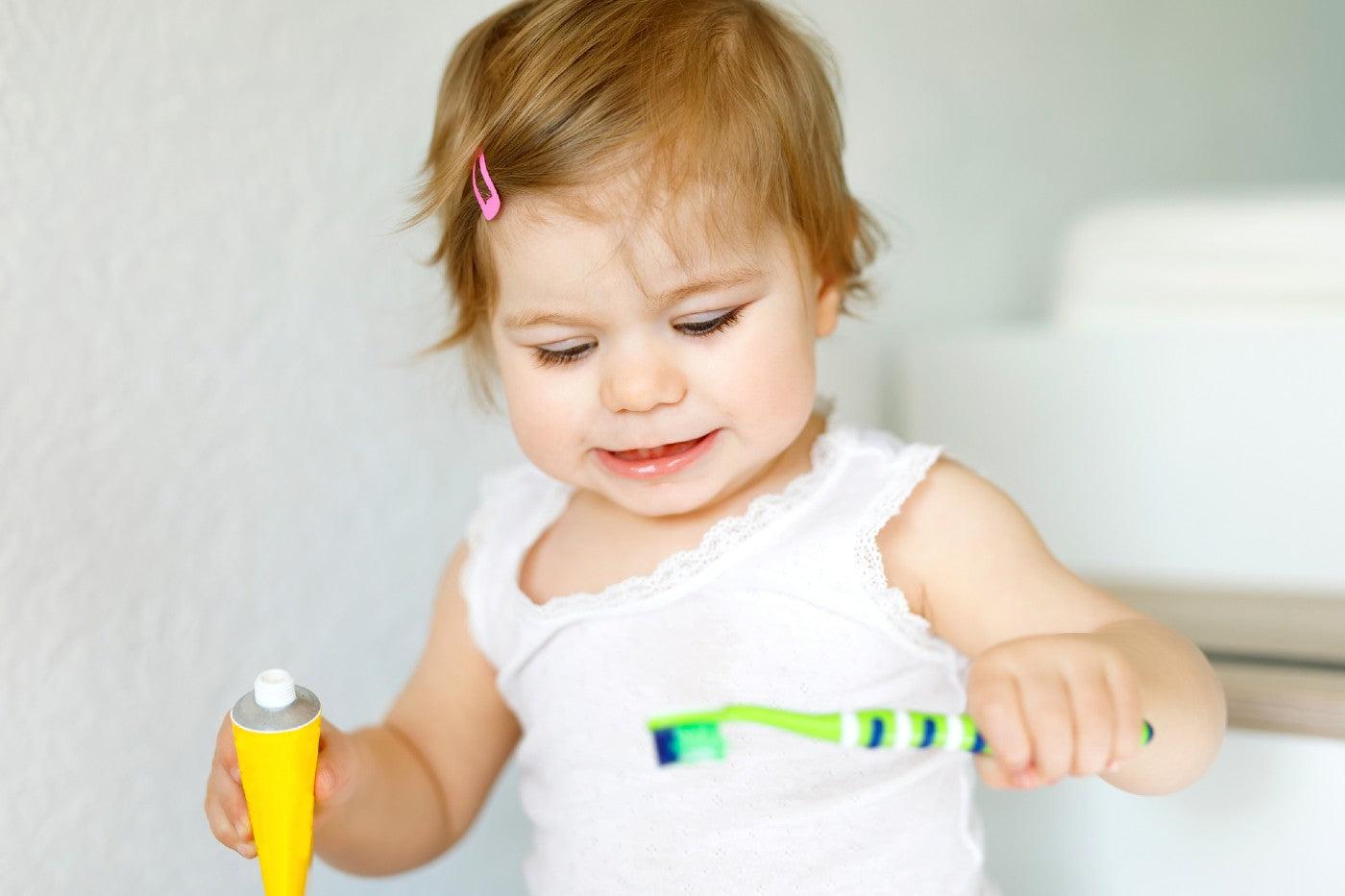
Now here is something to smile about: Starting around 6 months old your precious baby may begin to sport a toothy grin! The first teeth to appear are almost always the lower front teeth, followed by the top two. (Do not be too concerned if you have got an older toothless cutie on your hands! It can take up to 12 or 14 months for you baby’s first teeth to poke through.)
But here is the thing: You do not have to wait for your baby’s teeth to come in to start prioritising oral hygiene. In fact, you should wipe your baby’s gums from the get-go. The earlier you start, the better off you will both be. Here is everything you need to know about when and how to brush your baby’s teeth, plus which toothbrush and toothpaste is best for your baby.
How to Care for an Infant’s Mouth
It is important to begin your baby’s oral care routine even before any teeth appear. Use a clean, dampened gauze pad or cloth to gently to gently wipe your baby’s gums after each feed…or at least twice a day, after their morning meal and before night-night. Be sure to get under your baby's lips, since bacteria loves to hide there! Give your baby's tongue a gentle swipe, too, being careful not to go back too far, triggering the gag reflex. As your baby becomes more engaged, consider using a silicone baby toothbrush. This is a great way to let your baby 'practice' brushing their own teeth…and get comfortable with this routine.
When to Start Brushing Baby’s Teeth
Even though baby teeth can start to fall out as early as 6 years old, it is still very important to take good care of your baby's temporary smile. After all, tiny teeth can decay and cause pain just as easily as big-kid teeth. That is why the National Health Service recommends brushing your baby’s teeth as soon as their first pearly whites come in.
At this point, brush your baby’s teeth using fluoride toothpaste and a toothbrush specifically designed for your little one’s delicate mouth. Because you will be using such a small amount of toothpaste (think: grain-of-rice size), it is okay if your baby accidentally swallows some. Do not worry about using flossers just yet—but once two baby teeth touch, you should start flossing those teeth daily (this usually occurs around age 2 or 3).
The Best Toothbrush for Babies
Select a soft-bristled, infant-size toothbrush in a bright cheerful colour (or one with characters on it) to make oral care more enticing. Toothbrushes designed for babies have a smaller head for small mouths and a wider handle to make gripping easier for little hands. These toothbrushes are usually labeled with the proper age range, so you know you are getting the appropriate toothbrush. By the way, the finger silicone brushes do not do a great job cleaning new teeth. It is best to trade those in for baby toothbrushes with nylon bristles.
The Best Toothpaste for Babies
Research shows that it is safe—and smart—to use fluoride toothpaste with the arrival of Baby’s first tooth. Fluoride is a naturally occurring mineral that helps make teeth more resistant to decay. While it is often present in tap water, the fluoride in toothpaste is imperative to give teeth that extra boost of protection. And know that there are plenty of baby toothpastes, but not all contain fluoride, which is the recommended choice. The seal lets you know that the toothpaste is safe, effective, and contains zero flavouring agents, like sugar, that contribute to tooth decay.
How to Brush a Baby’s Teeth
Again, once your baby's first tooth peeks out, it is time to break out the baby-size toothbrush. The first time you use a toothbrush with your baby, give them a chance to play with it. Let them put it in their mouth to get used to their new 'toy.'
When you are ready to brush, apply a grain-of-rice sized squeeze of fluoride toothpaste onto your child’s soft-bristled toothbrush. (Once children turn 3, move up to a pea-size amount.) Every morning and evening, gently brush the front, back, and sides of each of your baby’s teeth, making gentle little circles around their teeth and the gums. Since you are only using a teeny bit of toothpaste, Baby does not need to spit or rinse after they are done.
Brush your baby’s teeth and gums twice a day, after breakfast and before they go to bed. Keep it low stress by playing a special teeth-brushing tune and/or brushing your teeth at the same time! Shoot for about two minutes of brush-time in total, knowing your child may not be super-cooperative at this stage of the oral hygiene game. Just do the best you can!
Bottom line: Brushing your baby’s teeth takes time and patience, but your work will pay off when these strong habits start to stick and your child’s chompers are as healthy as possible.
Avvertenza: Le informazioni presenti sul nostro sito NON sono consigli medici per alcuna persona specifica o condizione. Sono solo intese come informazioni generali. Se avete domande o preoccupazioni mediche riguardo vostro figlio o voi stessi, si prega di contattare il vostro fornitore di assistenza sanitaria. Il latte materno è la migliore fonte di nutrizione per i neonati. È importante che, in preparazione e durante l'allattamento al seno, le madri seguano una dieta sana ed equilibrata. L'allattamento misto (seno e biberon) nelle prime settimane di vita può ridurre la produzione di latte materno e la decisione di non allattare al seno può essere difficile da invertire. Se decidete di utilizzare il latte artificiale per neonati, dovreste seguire attentamente le istruzioni.
Principali notizie






CONDIVIDI QUESTO ARTICOLO
SCELTE DEI GENITORI
Bestseller