TODDLER
10 Ways to Teach Kids Gratitude
Teaching gratitude may not be quite as straightforward as A-B-C or 1-2-3. Still, there are lots of ways to raise a kind, grateful child.

Écrit par
Happiest Baby Staff
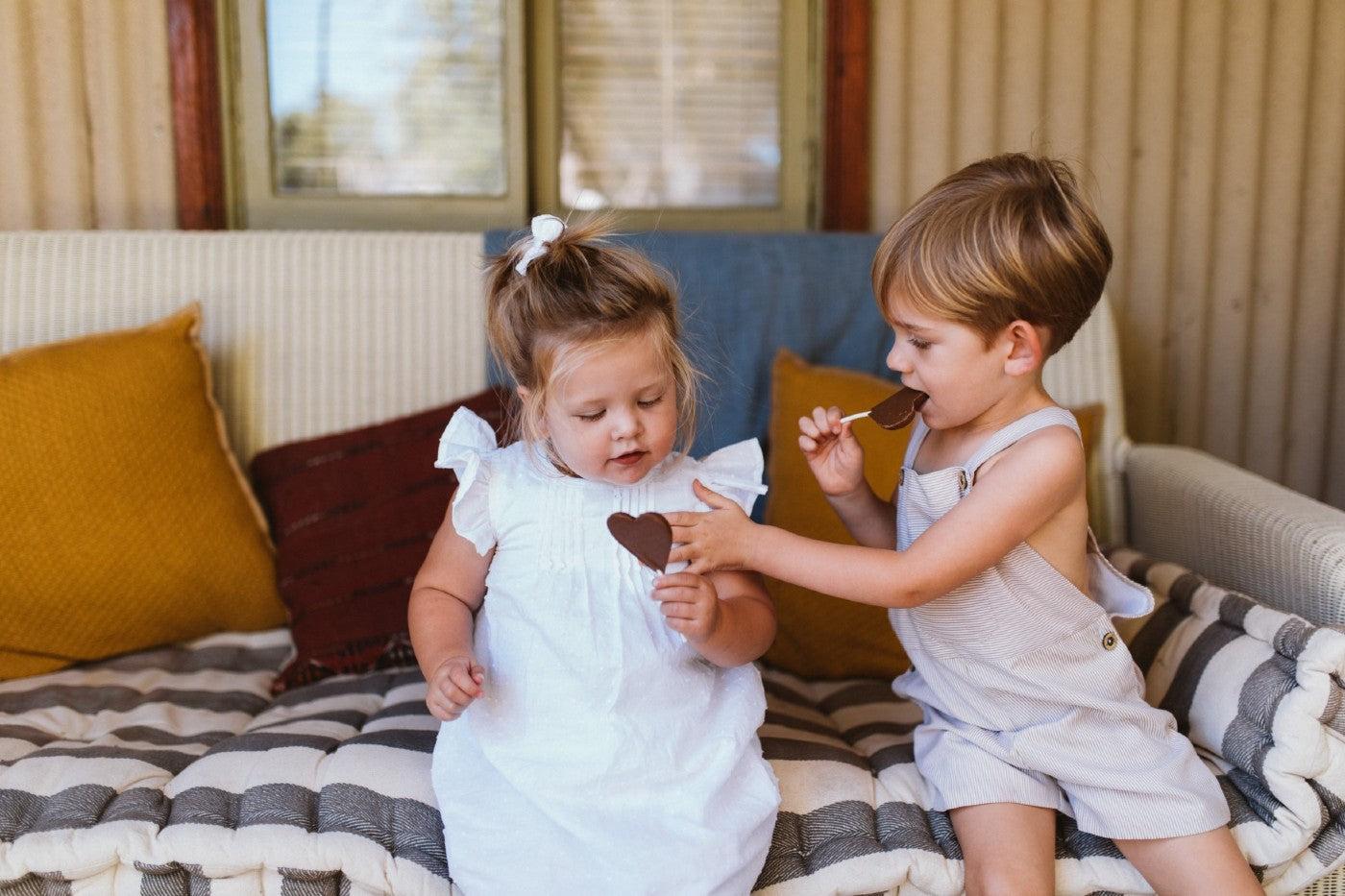
It turns out, thank you really are magic words: Research shows that gratitude has a powerful effect on the brain. Practicing gratitude has been associated with everything from better sleep and lower anxiety to improved relationships and higher self-esteem. Naturally, gratitude is exactly the type of quality parents want to pass down to their children. (Besides, is there anything sweeter than hearing your toddler utter 'dank du'?)
But how can parents teach gratitude well enough that it becomes a part of their child’s character? And how can the littlest of kids start grasping this big topic? Teaching gratitude may not be quite as straightforward as A-B-C or 1-2-3, but there are lots of ways to raise a kind, grateful child. Here are a few ways to teach gratitude at home.
Flash a 'green light' on your child’s gratitude.
Reward kind, grateful behaviour with attention, play, or other little nudges of encouragement. This tells your toddler, 'I like what you are doing! Keep going!'
Catch your child being…good.
Let your toddler overhear you whispering little compliments about what they have done to someone else, or even to a teddy bear. This is called gossiping. This little trick works very fast to reduce unwanted acts—like rudeness or unkind behaviour—and to boost caring acts—like saying thank you or being patient or generous. (Learn more ways to 'plant seeds of kindness' here!)
Point out gratitude in action.
Another 'side-door' way to teach your child good behaviours like gratitude is to comment when you see other people doing them—'catch others being good.' It is not a big lecture, just some casual comments on things you see people doing ('I like how Big Sissy said thank you so nicely when Grammy gave her a cookie').
Model gratitude.
Just like the old saying (children do what they see more than what they are told), they learn gratitude by our example. Kids are like little sponges, soaking up everything they see and hear…so make sure they are seeing and hearing your gratitude in action!
Role-play gratitude.
A lengthy speech on the importance of gratitude will be hard to grasp for little kids. Instead, use the power of play to help your kids understand what gratitude means, and how it positively affects others. You can do this by role-playing with toys and dolls. For example, act out what it might look like for Teddy Bear to do something kind for Little Lamb…and how Little Lamb might respond with words of gratitude.
Tell stories about gratitude.
Books are a child’s window to the world! You can point out grateful moments in the books that you are already reading, or look for books that specifically teach about gratitude. A few to check out: Llama, Llama Gives Thanks, Elephant and Piggie’s Thank You Book, and Gracias/Thanks. You could also make up your own story!
Try bedtime sweet talk.
Before your little one dozes off, snuggle up next to them and recount some of the wonderful moments and acts of kindness of the day.
Teach patience-stretching.
Patience-stretching helps kids become less impulsive and more observant of others, which is a great foundation for gratitude. You can streeeetch your toddler’s patience this by holding off on giving them something they really want (just for a few seconds!).
Ask questions.
Asking your child questions is a wonderful way to get them to think about and engage with the world. To help kids develop gratitude, the Berkeley’s Greater Good Science Center—which researches topics like gratitude—recommends being targeted with your questions, inviting kids to notice, think, feel, and do.
- Notice: Invite your child to notice things in their life that they can be grateful for.
- Think: Ask them to think about why the things they noticed have been given to them.
- Feel: Ask your child how they feel about the things that have been given to them.
- Do: Ask your child what they can do to express their feelings of gratitude and appreciation.
Create a family gratitude challenge.
As a family, work together to create a list of gratitude challenges for an entire month. Each day, find an activity or carve out small spaces of time to talk about appreciation and thankfulness. Some ideas for kids can include:
- Create a gratitude jar and fill it with small notes of the things you notice that you feel appreciation for.
- Write a thank you letter or draw a thank you picture for someone outside of your family and give it to them.
- Volunteer in your community to help make it a better place to live.
- Help someone in need.
- Challenge yourselves to give meaningful compliments that go beyond appearance. For example, 'You are great at reading out loud!'
Gratitude is a wonderful life skill that can bring happiness, calmness, and deep appreciation to anyone’s life. So, teaching kids strategies to develop their own sense of gratitude is a perfect way to help them grow into sensitive and emotionally intelligent big people.
Avertissement : Les informations présentes sur notre site ne constituent PAS des conseils médicaux pour une personne ou une condition spécifique. Elles sont uniquement destinées à titre d'information générale. Si vous avez des questions médicales et des préoccupations concernant votre enfant ou vous-même, veuillez contacter votre fournisseur de soins de santé. Le lait maternel est la meilleure source de nutrition pour les bébés. Il est important que, en préparation et pendant l'allaitement, les mères adoptent une alimentation saine et équilibrée. La combinaison de l'allaitement au sein et au biberon dans les premières semaines de vie peut réduire la production de lait maternel de la mère et il est difficile de revenir sur la décision de ne pas allaiter. Si vous décidez d'utiliser une préparation pour nourrissons, vous devez suivre les instructions avec soin.
Principales actualités






PARTAGER CET ARTICLE
CHOIX DES PARENTS
Meilleures ventes