TODDLER
10 Tips for Teaching Table Manners to Your Tot
Your little one can start learning these skills as soon as they’re old enough to eat solids.

Écrit par
Gabrielle McPherson, MS, RDN, LDN
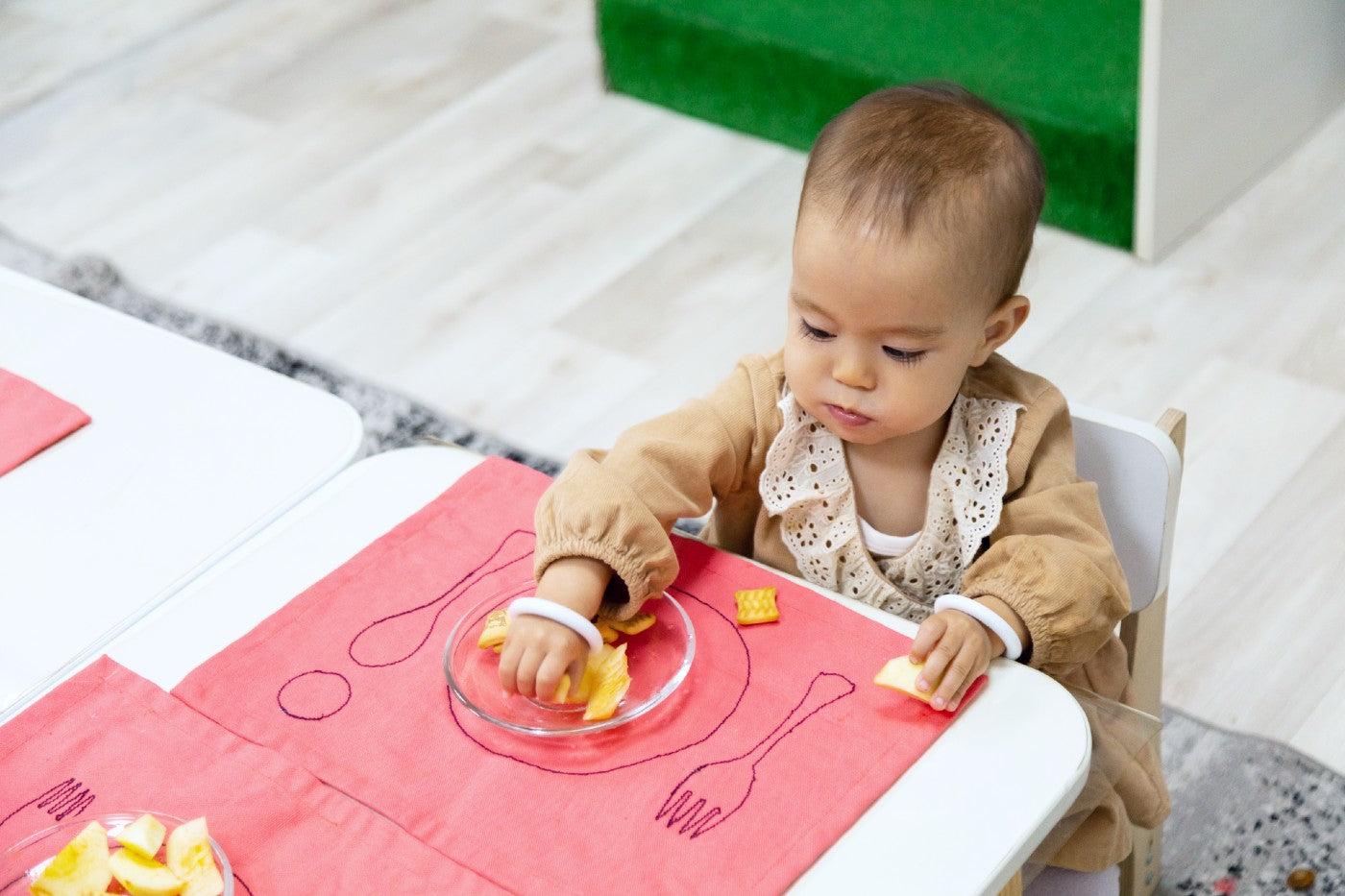
The phrase, “table manners” may sound a little old-fashioned, but the truth is, teaching them never goes out of style. Babies and toddlers aren’t born with table manners (though that would be nice!), so it’s up to us as parents to mold our kiddos into polite, respectful, and gracious people who help honour the sacredness of family meals. Science proves family meals are crucial to childhood development and the strength of a family. They reduce the risk of depression and substance abuse, help families eat healthier, increase self-esteem and resilience, and much more. Table manners can help make mealtimes more enjoyable, foster healthy relationships, build social skills, and establish household order and peace when chaos can easily be the norm. And implementing table manners early on will help your child understand behaviour expectations in social settings beyond the home. It can take a long time to build good table manners, so have patience with your little one and do them a solid by teaching these skills as soon as they’re ready to eat.
Here are 10 tips for teaching table manners to your mini munchers.
Table Manners for Babies (6-12 Months)
Teach highchair eating.
You might feel table manners don’t apply to this age group, but you can start teaching table manners in age-appropriate ways as soon as your little one starts eating. Sitting your baby in a highchair to eat is table manners 101 for this age. Your message to your infant is that there is a time and place for eating and that eating happens when sitting down.
Start a handwashing routine.
Handwashing is a vital mealtime behavior that you can begin early on. Clean your baby’s hands with a wipe while sitting in the highchair and repeat before all meals. You can wash your hands in the sink together as they grow.
Foster a positive feeding environment.
The most important thing right now is creating a positive environment for babies to learn to enjoy food. You can keep mealtimes positive by resisting the urge to make your baby to take more bites. At these ages, babies show they’ve had enough to eat by sealing their lips, turning their heads away, holding food inside their mouths, or spitting food out.
Introduce plates, bowls, cups, and spoons.
Six months is a good age to introduce a sippy cup or a small open cup of breastmilk or formula. You can also add small amounts of your baby’s food to a plate or bowl. Around eight months, babies show more interest in feeding themselves. While it's perfectly okay for your baby to pick up pieces of food like mashed peas, chopped boiled eggs, or avocado cubes, encourage them to use a spoon with foods like yogurt, cream of wheat, or purees. Expect lots of messes and spills because babies aren’t usually mastering their spoon skills until around 15 to 18 months.
Toddlers (12 months to 36 months)
Open your meal with prayer, blessing, or reflection.
No matter your religious beliefs, opening your dinnertime by saying a few words can set the tone of the meal. Moreover, it can encourage appreciation for those who helped prepare the food and set an example of what it means to show gratitude. The bonus is a few minutes of silence before eating. Your toddler may want to chime in as well!
Teach “please” and “thank you.”
While teaching a toddler to sit still instead of squirming and fidgeting is nearly impossible, teaching “please” and “thank you” is doable. But don’t expect them to say it every time! It helps to speak this way in everyday conversations, so it’s typical for the whole family to use kind words (adults, too!). Role modeling good table manners go far at this age.
Help your child keep food where it belongs (not on the floor!).
Some little ones may start flinging spaghetti everywhere around 12 months. Food throwing happens for multiple reasons: when babies are done eating, when they’re demanding attention, or simply out of curiosity and their desire for exploration. Toddlers love getting a rise out of you, so try to stay calm when they behave this way. It also helps to refrain from laughing at these behaviors, or your tot will want to do it more, seeking to please you. Instead of saying phrases like, “we don’t throw food on the floor,” tell them what behavior is acceptable. Try: “Our food stays on our plate.” At 12 months, toddlers can show they don’t like a particular food. Some parents may offer a small “no thank you” bowl on the tray for food kids don’t want to eat.
Eliminate distractions.
Toddlers are easily distracted by screens and toys when it’s time to eat. Help them focus on food and family at mealtimes by keeping the toys and screens out of sight. The rule should apply to the whole family, too! Engage in mealtime conversations and encourage discussions at the table. Lots of mealtime chatter is good for everyone and helps build your toddler’s language skills.
Praise good meal behaviors.
If you notice your child is doing well using a utensil, staying seated, or taking a bite of a new food, acknowledge it. You might consider saying something like, “ I noticed you tried a new food; you’re so brave, ” or “ you are doing a great job poking your green beans with your fork.” Not only will you be building their confidence and self-esteem, but they will also be more likely to repeat that good behaviour in the future. (You can supersize this praise by gossiping about your toddler’s good table manners!)
Show your toddler how to use a napkin.
There’s probably no use putting a napkin in your toddler’s lap; however, you can show them how to use it to keep their face and hands clean when eating! At first, they may smear marinara sauce around their face instead of truly wiping it off. What’s important is they’re learning, and the more they practise, the more of a habit it’ll become.
More Healthy Eating Tips:
- How to Include Your Baby at Family Meals
- How to Expand Your Picky Eater's Palate
- Healthy Toddler Snack Ideas
Avertissement : Les informations présentes sur notre site ne constituent PAS des conseils médicaux pour une personne ou une condition spécifique. Elles sont uniquement destinées à titre d'information générale. Si vous avez des questions médicales et des préoccupations concernant votre enfant ou vous-même, veuillez contacter votre fournisseur de soins de santé. Le lait maternel est la meilleure source de nutrition pour les bébés. Il est important que, en préparation et pendant l'allaitement, les mères adoptent une alimentation saine et équilibrée. La combinaison de l'allaitement au sein et au biberon dans les premières semaines de vie peut réduire la production de lait maternel de la mère et il est difficile de revenir sur la décision de ne pas allaiter. Si vous décidez d'utiliser une préparation pour nourrissons, vous devez suivre les instructions avec soin.
Principales actualités






PARTAGER CET ARTICLE
CHOIX DES PARENTS
Meilleures ventes












Plus sur Toddler
About Gabrielle McPherson, MS, RDN, LDN
Gabrielle McPherson, MS, RDN, LDN is registered dietitian in Missouri who specializes in community and pediatric nutrition. Gaby is passionate about encouraging families to eat well in simple, practical ways that are realistic...and delicious! When not working, Gaby loves cooking, baking, and making messes and memories with her sous-chef/preschooler Charlotte.