TODDLER
The Surprising Benefits of Letting Kids Play in Dirt and Mud
While good hygiene is important, so is getting dirty sometimes!

Écrit par
Happiest Baby Staff
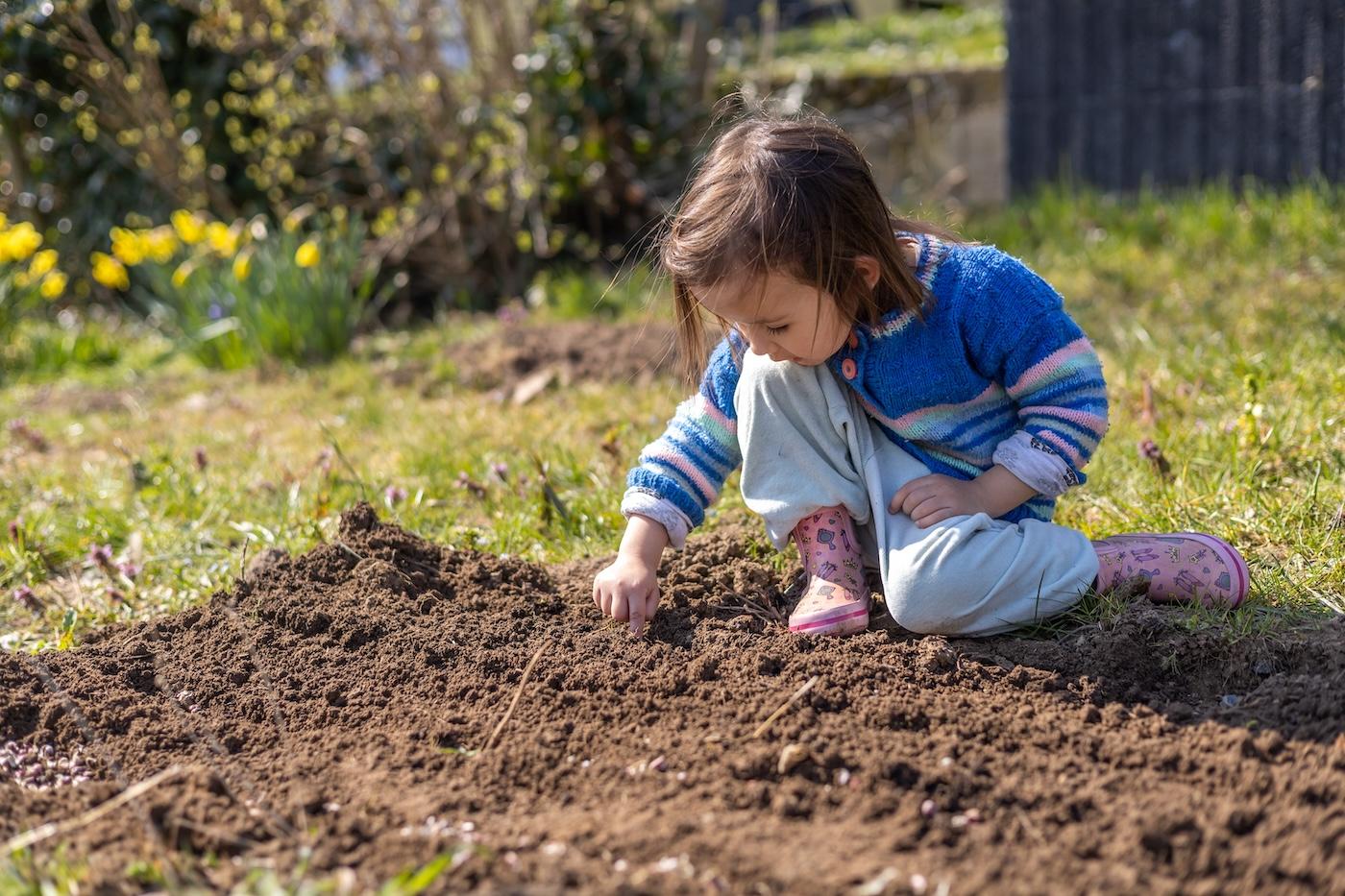
For generations, parents have told their little ones to “wash your hands” after playing outside. And while good hygiene matters, science shows that letting kids get a little dirty may actually be good for their health and development! From stronger immune systems to happier moods, outdoor play in dirt and mud is more than just fun—it’s foundational. Here’s why paediatricians and researchers say you might want to embrace the mess.
Dirt and the Developing Immune System
Today’s kids are growing up in cleaner environments than ever before. But research suggests that too much cleanliness may come with a cost. Exposure to microbes found in dirt, animals, and nature may help train the immune system, potentially lowering the risk of allergies and asthma.
- Lower allergy and asthma risk: A Johns Hopkins Medicine study found that babies exposed to household germs like dirt and dander early in life were less likely to develop allergies and asthma later on.
- Stronger immune regulation: Research published in PNAS shows that exposure to environmental microbes can help regulate the body’s immune responses, potentially protecting against autoimmune and inflammatory diseases.
- The “farm effect”: Children raised in rural settings with farm animal exposure tend to have fewer allergies and less asthma—a finding confirmed in large studies, including one published in the New England Journal of Medicine.
Dirt Play Helps Build Happier, More Resilient Kids
Beyond possible immune benefits, letting kids squish mud between their fingers or dig in the garden can lift spirits too.
Outdoor muddy play provides sensory-rich experiences that encourage curiosity, creativity, and joy—qualities shown to buffer stress and support resilience. And group play in natural spaces—like puddle jumping or building mud pies—encourages cooperation, empathy, and problem-solving skills.
Plus, the little boost you get from dirt play may be supported on a microscopic level too. Soil contains Mycobacterium vaccae, a naturally occurring bacteria shown to have antidepressant-like effects, boosting serotonin and reducing anxiety in mice models. Though human studies haven’t yet been published, researchers believe exposure to these mood-boosting microbes during childhood may support better mental health.
Physical Benefits of Muddy Play
Muddy play is more than immune and mood support, it’s a full-body workout for little ones! Outdoor active play is essential for preventing obesity and supporting healthy development, according to the American Academy of Pediatrics.
Climbing, digging, balancing, and running across uneven ground all strengthen muscles and coordination—which is key for strengthening gross motor skills. Meanwhile, scooping mud, picking up pebbles, or building with natural materials sharpens hand-eye coordination and fine-motor abilities.
Keeping Dirt Play Safe
Playing in dirt is generally safe, but a few precautions help keep it worry-free:
- Wash hands before eating or touching the face.
- Avoid areas treated with pesticides, fertilisers, or pet waste.
- Dress kids in play clothes that can get messy.
- Keep nails trimmed to minimize dirt buildup.
- Supervise young children to make sure they don’t eat dirt (though the occasional taste usually isn’t harmful).
From stronger immune systems to happier moods, science shows that dirt and mud are not the enemies of childhood—they’re allies. So, the next time your toddler begs to splash in puddles or dig in the garden, say yes! Messy play today could mean healthier, happier kids tomorrow.
REFERENCES
- Johns Hopkins University: Newborns Exposed to Dirt, Dander, Germs May Have Lower Allergy, Asthma Risk
- Regulation of the Immune System by Biodiversity from the Natural Environment: An Ecosystem Service Essential to Health, Proceedings of the National Academy of Sciences, November 2013
- Innate Immunity and Asthma Risk in Amish and Hutterite Farm Children, New England Journal of Medicine, August 2016
- Healthy Play, Better Coping: The Importance of Play for the Development of Children, Child: Care, Health & Development, 2018
- Role of Play in Child Development, International Journal of Technical Research & Science, 2020
- Play-Based Learning and Development: Multiple Perspectives, Science Advances, 2022
- American Academy of Paediatrics / Healthy Children: Playing Outside — Why It’s Important for Kids
Avertissement : Les informations présentes sur notre site ne constituent PAS des conseils médicaux pour une personne ou une condition spécifique. Elles sont uniquement destinées à titre d'information générale. Si vous avez des questions médicales et des préoccupations concernant votre enfant ou vous-même, veuillez contacter votre fournisseur de soins de santé. Le lait maternel est la meilleure source de nutrition pour les bébés. Il est important que, en préparation et pendant l'allaitement, les mères adoptent une alimentation saine et équilibrée. La combinaison de l'allaitement au sein et au biberon dans les premières semaines de vie peut réduire la production de lait maternel de la mère et il est difficile de revenir sur la décision de ne pas allaiter. Si vous décidez d'utiliser une préparation pour nourrissons, vous devez suivre les instructions avec soin.
Principales actualités
PARTAGER CET ARTICLE
CHOIX DES PARENTS
Meilleures ventes