TODDLER
9 Foods to Help Your Constipated Toddler Go!
The right diet tweaks can get things moving again!

Écrit par
Happiest Baby Staff
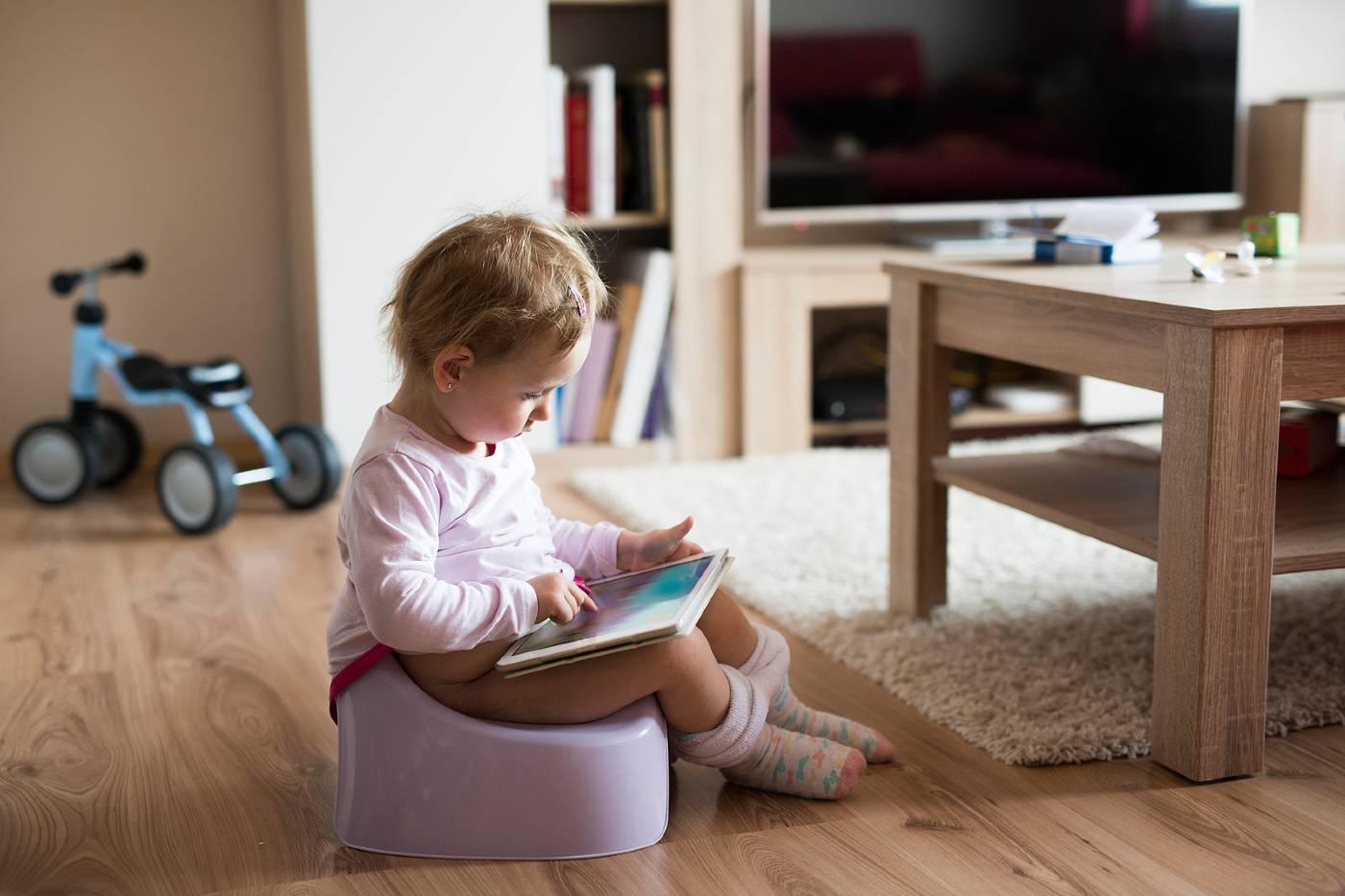
Poop frequency varies from kiddo to kiddo—with some going a few times a day and others going every two to three days. And this can make it difficult for parents to figure out if their toddler is truly constipated. If you need help deciphering your tot’s toilet troubles and easing their constipation—you’re in luck! Here’s your guide to toddler constipation:
Is my toddler constipated?
While every child’s poop schedule is a bit different, according to the American Academy of Pediatrics (AAP), most children have one or two bowel movements a day, while others have BMs every two to three days. That said, regularly using the toilet doesn’t necessarily mean your child is fully emptying their bowels. Here are some common signs your toddler may be constipated.
- Poops less than twice a week
- Struggles and strains on the toilet
- Has hard or painful stools
- Has some success pooping, but some stool won’t come out
- Bottom bleeds after using the toilet
- Experiences stomachaches, cramping, and/or nausea
- Has brownish wet spots in their underwear
Constipation is a common problem in children. Fortunately, most of the time it’s a short-lived issue. However, severe and chronic constipation does occur in 1 to 5% of children in the U.S. , according to a report in the journal BMJ Clinical Evidence.
What causes constipation?
There are few main constipation culprits, including withholding. That means your toddler ignores the urge to poop because they’re afraid—or they simply don’t want to stop playing—to use the toilet. Other common constipation causes include:
- Avoiding the toilet because it hurts to poop
- If potty training becomes a battle, a child may ignore their urge to poop
- Side effect of certain medications, like some antidepressants
- Stress and changes in routine, like travel and the start of school
- Lack of fiber
How do you treat toddler constipation?
Diet tweaks greatly influence your child’s popping habit. In addition, the following adjustments can help get your tot’s bowels moving again:
- Get active. Physical activity helps stimulate normal bowel function.
- Have toilet time. Designate specific times of day, like after meals and before naps and night-night, for your toddler to use the potty.
- Try a potty accessory. Offer a small step stool for your child’s feet while they’re on the toilet. This’ll make them more comfortable and offer a better position for BMs.
- Give bathroom reminders. Throughout the day, remind your kiddo to listen to their body and use the bathroom.
- Serve lots of water. Water helps to loosen hard stools so they can move more easily.
- Offer lots of high-fiber foods. Fiber helps to form soft, bulky stools that are easy to pass.
How much fiber does my child need?
The truth is, most children aren’t eating enough fiber-rich food. In fact, research shows that only 9% of 2- and 3-year-olds are meeting basic fiber intake requirements and that number dips to 7.5% for kiddos up to 4 years old. Yikes! So, the big question is: How much fiber should your toddler be eating? And the answer, thank goodness, is actually pretty simple: Just add five to your child’s age and that’s how many grams of fiber they need each day. Got a 3-year-old? Their age plus 5 grams means your tot needs 8 grams of fiber daily. Of course, knowing how much fiber your toddler needs is one thing, but putting those mysterious grams into real world/real food terms is another! Here’s help:
Toddler Foods to Ease Constipation
Fruits and vegetables are fiber-rich powerhouse…but so are whole grains. When putting together your toddler’s snacks and meals, be sure to offer up a mix of all these foods. And if your kiddo doesn’t love, say, pears or lentils…no worries! Simply shoot for two to three servings a day of fruit and two to three servings a day of veggies that contain at least 2 grams of fiber and make sure the majority of the grains you serve are 100% whole.
Foods to Help With Toddler Constipation #1: Pears
Not only are pears a good source of fiber, they contain sorbitol and fructose, too. Sorbitol is a natural sugar alcohol and fructose is a natural sugar…and both act as laxatives, which help stimulate poop.
Serving: Half medium pear
Fiber: 3 grams
How to offer to your toddler:
- Toss it into a blueberry smoothie with the peel.
- Cut pears into wedges for finger food.
- Blend into a puree.
- Sauté with cinnamon.
- Slice thin and add to a grilled cheese.
Pro tip: If your child refuses pear (or apple) peels, lay them on a cookie sheet, sprinkle with cinnamon, and bake at 250 degrees Fahrenheit for 2 ½ hours to get yummy and nutritious apple peel chips your tot will love!
Foods to Help With Toddler Constipation #2: Apples
An apple a day can help keep hard stools away! This water- and fiber-filled fruit is great at making pooping easier. And since apples have fiber in their flesh and their peel, it’s best to eat both.
Serving: Half medium apple
Fiber: 2 grams
How to offer to your toddler:
- Toss pieces into a spinach smoothie—with the peel.
- Cut apples into thin slices.
- Grate or shred apples to add into oatmeal.
- Dip apples in peanut butter, melted cheese, or yogurt.
- Saute or bake slices or cubes.
Pro tip: Applesauce and apple juice don’t contain the same amount of fiber as whole apples. But if you only have applesauce on hand, mix it with prune puree or oat bran to boost its fiber content. You can add apple juice to a berry smoothie so your child gets both sorbitol and fiber to help move their poo along.
Foods to Help With Toddler Constipation #3: Raspberries
Sweet, delicious raspberries are simply bursting with constipation-fighting fiber! They’re typically in season between July and September, so in the off-season consider buying frozen since they’re picked at the peak of freshness.
Serving: Quarter cup fresh or frozen
Fiber: 2 grams
How to offer to your toddler:
- Toss into a peach smoothie.
- Offer fresh, soft raspberries as finger foods.
- Blend into a puree and mix with yogurt to eat with a spoon.
- Puree and mix with yogurt and spread on 100% whole wheat toast.
- Add frozen raspberries to your overnight oats and store in the fridge for at least four hours.
Pro tip: Chop frozen raspberries into small pieces and mix into your child’s hot oatmeal to help cool it down and boost the fiber content.
Foods to Help With Toddler Constipation #4: Chia Seeds
Chia seeds are fiber-full and super easy for toddlers to eat since they’re practically taste-free! Simply toss them into a whole host of foods. Beyond fiber, the tiny black seeds offer calcium, magnesium, and phosphorus, too, which help support your little one’s bones and teeth.
Serving: 1 tablespoon
Fiber: 4.8 grams
How to offer to your toddler:
- Bake chia seeds into banana bread.
- Blend and toss them into spaghetti sauce.
- Grind and sprinkle inside a peanut butter and jelly sandwich.
- Add to overnight oats or hot cereal.
- Include in a yogurt parfait.
Pro tip: If your child has an egg allergy, you can use chia seeds as an egg substitute. To replace eggs, mix 1 tablespoon of chia seeds with 2.5 tablespoons of water.
Foods to Help With Toddler Constipation #5: Pitted Prunes
Prunes are fiber-packed and wonderful at helping to put an end to bowel struggles. The thing is, prunes aren’t exactly known to be a kid-favourite…but they should be! Pitted prunes—aka dehydrated plums—are really tasty!
Serving: Quarter cup or 4 prunes
Fiber: 3 grams
How to offer to your toddler:
- Toss prunes into a berry smoothie.
- Finely chop and mix them into a bowl of Cheerios.
- Thinly slice prunes and add them to a trail mix of dry cereal, shredded coconut, and mini dark chocolate chips.
- Sprinkle finely chopped prunes onto thinly-spread peanut butter toast (100% whole wheat).
- Spread nut butter onto apple or pear slices and top with cut prunes for a new take on “ants on a log."
Pro tip: To reduce the risk of choking, make sure prunes are pitted, moist, and soft before prepping for your toddler. You can also also give your toddler 2 to 4 ounces of prune juice a day. It’s laxative effect works way better at stimulating poop than other types of juice.
Foods to Help With Toddler Constipation #6: Green Peas
This easy-to-eat veggie contains lots of fiber and helps your tot reach their daily vegetables needs. Most children aren’t getting enough in their diets, according to the Academy of Nutrition and Dietetics—and can benefit from two to three servings a day. (One serving of cooked veggies is 1 tablespoon for 1-year-olds, 2 tablespoons for 2-year-olds, and so on.)
Serving: Quarter cup or 4 tablespoons for age 4
Fiber: 2 grams
How to offer to your toddler:
- Serve peas mixed with steamed rice.
- Add peas into a veggie and ground turkey soup.
- Stir into mac n cheese.
- Make a pea pesto sauce.
- Consider pea soup.
Pro tip: Green peas are a freezer must! They’re affordable and perfect for long-term storage…plus, toddlers love to eat them frozen. Simply dump these green dreams in a bowl and let your tot enjoy.
Foods to Help With Toddler Constipation #7: Oat Bran
Oat bran comes from the outer layer of the oat grain and has more fiber and protein than your average oats. Whole grains, like oat bran, keep their nutrient-packed parts like the bran, endosperm, and germ—all of which contain fiber. Meanwhile, processed grains, like white bread, offer little to zero fiber. You can buy oat bran in easy-to-mix powder forms that make fighting constipation a bit more convenient.
Serving: Quarter cup
Fiber: 3.6 grams
How to offer to your toddler:
- Blend oat bran into a smoothie.
- Mix with vanilla yogurt.
- Pour oat bran into muffin batter before baking.
- Replace your normal breadcrumbs with oat bran when cooking meat and fish.
Pro tip: When offering fiber-rich foods to your toddler, be sure to serve lots of water, too. Upping your kiddo’s fiber intake without upping their water intake can actually lead to more poop problems! Toddlers need between one and five cups of water daily, according to the AAP.
Foods to Help With Toddler Constipation #8: Lentils
Lentils are a versatile plant-based protein and a must-have in your toddler’s diet. These tiny legumes are loaded with fiber, iron, B vitamins, and copper—and help to get your little one’s digestive tract moving.
Serving: One-eighth cup
Fiber: 2 grams
How to offer to your toddler:
- Cook lentils into a chili.
- Use them as a delicious taco filling.
- Include lentils in a chocolate muffin recipe.
- Serve up some low-sodium lentil soup.
- Cook lentils into your pasta sauce.
Pro tip: Whether you choose red, green, or brown lentils, they’re all equally packed with fiber—and they all need to be rinsed before cooking to help remove any tiny debris that may have been picked up during harvesting.
Foods to Help With Toddler Constipation #9: Avocados
Avocados are a nutrition powerhouse thanks to their high fiber content, and richness in vitamin C, B vitamins, and protein. Not only are they simple to prep, they’re smooth, creamy, and tastebud-approved, so even the fussiest of toddlers adore avocados!
Serving: Half small avocado, without pit and skin
Fiber: 5 grams
How to offer to your toddler:
- Add avocados to a mango smoothie.
- Fork-mash and spread on a mini bagel.
- Cube and serve as finger food.
- Mash with a bit of salt and lemon juice for a mayo substitute in sandwiches.
- In a blender mix Parmesan cheese, avocados, lemon juice, olive oil, and garlic for a yummy pasta sauce.
Pro tip: You can whip up a quick toddler guacamole by fork-mashing half an avocado and mixing in 1 to 2 tablespoons of jarred salsa.
Bottom line: Diet changes can often work wonders on a child’s constipation. In addition to adding in fiber-rich fruit, vegetables, and whole grains, it’s also smart to limit low fiber foods like chips, white pasta, desserts, and crackers. But sometimes diet changes aren’t enough to fix constipation. The AAP recommends calling your child's doctor if your tot hasn’t pooped in two to three days—or if passing a stool hurts. If necessary, the pediatrician may prescribe medicine to soften your toddler’s stool. And be sure not to willy-nilly give your child laxatives or enemas! Always consult your doctor first.
More Toddler Tummy Help:
Avertissement : Les informations présentes sur notre site ne constituent PAS des conseils médicaux pour une personne ou une condition spécifique. Elles sont uniquement destinées à titre d'information générale. Si vous avez des questions médicales et des préoccupations concernant votre enfant ou vous-même, veuillez contacter votre fournisseur de soins de santé. Le lait maternel est la meilleure source de nutrition pour les bébés. Il est important que, en préparation et pendant l'allaitement, les mères adoptent une alimentation saine et équilibrée. La combinaison de l'allaitement au sein et au biberon dans les premières semaines de vie peut réduire la production de lait maternel de la mère et il est difficile de revenir sur la décision de ne pas allaiter. Si vous décidez d'utiliser une préparation pour nourrissons, vous devez suivre les instructions avec soin.
Principales actualités






PARTAGER CET ARTICLE
CHOIX DES PARENTS
Meilleures ventes