PREGNANCY
Labour Relaxation Techniques: Tips for an Easier Birth
These research-backed tips may take some of the stress and pain out of delivery.
Écrit par
Happiest Baby Staff

Fast forward to your delivery day: The room is dim, your support team is vibrating with anticipation, and your contractions are inching closer and closer together. The only problem? Every labour relaxation technique you learned in your prenatal classes has slipped right out of your head. Don’t panic! Instead, stash this Stay Calm cheat sheet in your hospital bag so the best, most effective labour relaxation techniques will be at your fingertips when you need them most!
Labour Relaxation Technique: Mindful Breathing
If you’ve ever seen a fictional character go through labour on television or in the movies, you’re likely already familiar with the popular “hee-hee-who” or “pant-pant-blow” breathing technique. Patterned breathing like this is sometimes called psychoprophylaxis. Research shows that practicing patterned breathing during labour not only quells anxiety, it can reduce pain and shorten the duration of labour, too. Bonus: Mindful breathing in labour helps the birthing parent and their partner feel “a sense of security and manageability” throughout the process, resulting in a more positive childbirth experience, according to a 2021 study in the Journal of Reproductive and Infant Psychology.
Why it works: Controlled breathing in labour activates the parasympathetic nervous system, which reduces stress hormones and promotes relaxation. This relaxation strategy also interferes with the transmission of pain signals from the uterus to the brain during labour.
How to do it: Get into the habit of mindful breathing daily well before your baby is readying for their debut. This way, you’ll know exactly what to do when labour kicks in. To get started, try Dr. Harvey Karp’s Magic Breathing relaxation technique.
- Sit in a comfy chair (legs uncrossed) or lay on your back.
- Put your hands in your lap, drop your shoulders, and relax the muscles around your mouth and eyes.
- Slowly inhale through your nose for a five-count while raising one hand.
- Exhale through your nose for another five count, letting your hand slowly drop.
- Continue until you feel the relaxation wash over you.
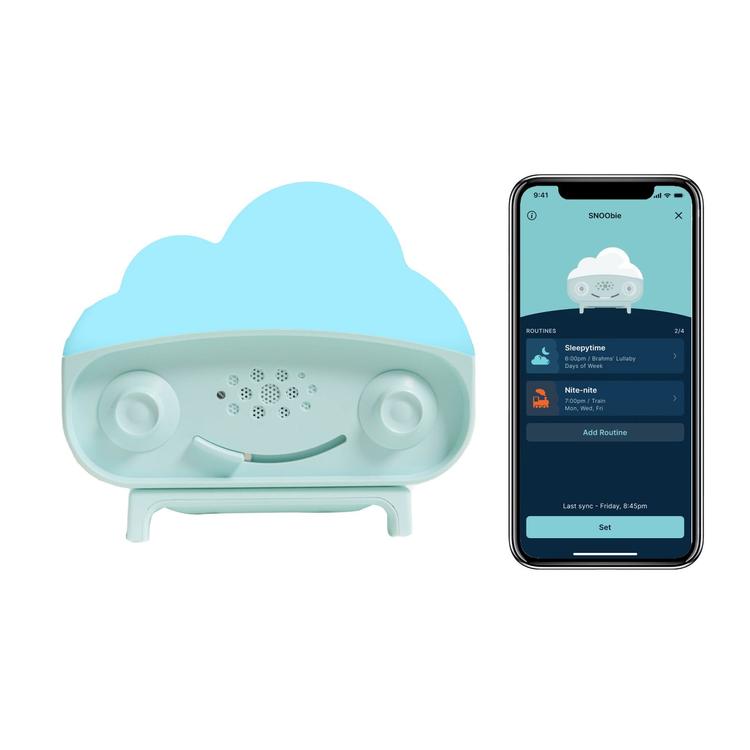
For help, consider SNOObie, Dr. Karp’s smart soother/sound machine noise, which features two Magic Breathing tracks that use pulsing light and sound to guide you through the exercise.
Labour Relaxation Technique: Progressive Muscle Relaxation
Methodically scanning your body to identify your muscles, then tightening them from head to toe is called progressive muscle relaxation (PMR). This calm-down technique has been shown to lower blood pressure, muscle tension, anxiety, fatigue—and assist with pain management and speed the process.
Why it works: Tensing and then releasing muscles helps you become more attuned to the sensations in your body. This actively promotes a state of deep relaxation, which can reduce pain perception.
How to do it: Get as comfy as you can and close your eyes. After taking a few deep belly breaths…
- Inhale and squeeze all the muscles in your toes.
- Hold for five seconds.
- While tensing your tootsies, focus on how the squeeze feels and visualise your tight muscles.
- Exhale and relax those muscles for five to 10 seconds.
- Repeat with the next muscle group in your feet, moving to calves, thighs, and rear.
- Work your way up from there, tensing your body in the following order: abdomen, fingers, hands, arms, shoulders, neck, jaw, and forehead.
- The entire process usually takes 10 to 20 minutes.
Labour Relaxation Technique: Visualisation
Visualisation, or guided imagery, is a labour relaxation technique that taps your imagination to create a calming, therapeutic experience. Research in the journal Health Care For Women International found that guided visualisation effectively reduces pain scores in pregnant folks. It can “significantly shorten” labour—and visualisation can lead to folks feeling more satisfied with their birth experience than those who did not use visualisation.
Why it works: By picturing a peaceful, enjoyable scene in your mind, you divert your attention from the stress of labour, which promotes a sense of relaxation and control. This technique doesn’t just serve as a distraction, though. It actually activates the same areas of the brain as if you were physically experiencing the relaxing activity you’re imagining!
How to do it: Use a sound machine or white noise machine to play the sounds you might hear at your Peaceful Place and perhaps look at a photograph or a painting of your ideal locale to prime your imagination for going there. Once you’ve done that:
- Breathe deeply and slowly, imagining all the muscles in your body relaxing.
- Think of a place that helps you feel safe and peaceful. (This could be the beach, the forest, your childhood bedroom, literally anywhere!)
- Now that you’re mentally in your sacred spot, tune into as many sensory details as you can: What do you hear? What aromas surround you? What does the sand, the breeze, or your down comforter feel like on your skin? How does the heat or coolness feel on your cheeks?
- Linger here for a while, letting your imagination guide your senses through the experience.
Labour Relaxation Technique: Hydrotherapy
Hydrotherapy is, quite simply, water therapy (but it’s not the same as a water birth, where the baby is delivered in the water!). Here, the expectant parent immerses themselves in warm water during any part of labour for relaxation and pain relief. In addition to relieving anxiety during labour, hydrotherapy may be more effective at relieving labour pain and discomfort than opioids, like morphine, according to a 2018 national survey. As an extra treat: Hydrotherapy during the first stage of labour has been associated with shorter labour.
Why it works: Being immersed in warm water stimulates the release of endorphins, your body’s feel-good chemicals, which spurs relaxation and blocks pain signals. Plus, the water’s buoyancy reduces muscle tension, another contributing factor to stress and labour pains.
How to do it: Check with your provider for guidance—you may be asked to wait until your labour is well-established before dipping into a tub. (For first-timers, this is usually 4 to 5 centimeters dilated with regular contractions.) When you get the thumbs up, lower yourself in a warm bath and try to relax. If you’re in a birthing tub, try moving in different positions to find the sweet spot of comfort.
Labour Relaxation Technique: Massage
Fingers crossed that you’re already well aware of the impact of this hands-on relaxation method! Massage involves applying pressure and movement to various parts of the body to reduce tension, promote relaxation, alleviate discomfort, and quell anxiety and stress. And, yes, it does all of that during labour, too! In fact, a 2019 report found that getting a massage during labour lowers anxiety, reduces labour pain, and leaves new parents feeling positive about their whole childbirth experience. Another study which focused on lower back massage during labour found that it has a “significant impact” on reducing labour pain and increasing the satisfaction with birth.
Why it works: Getting a massage can lower the amount of cortisol, a stress hormone, in your body all while spurring the release of feel-good chemical serotonin. This one-two punch boosts your body’s ability to fight off pain and anxiety. Beyond the chemical reaction, getting a relaxing rub down also improves blood circulation, which can help reduce muscle tension and promote overall relaxation.
How to do it: Massage requires a little practice before the big day. This way you can figure out what feels good. (Do you like a firm touch, stroking, kneading?) That said, experts recommend concentrating on the muscles in the upper back and shoulders to decrease tension and encourage relaxation during labour. Try a deeper or firm stroke over the lower back, pelvic area and thighs to take the edge off contractions. (Check out this handy illustrated guide to massage in labour.)
Labour Relaxation Techniques: Final Thoughts
While these are some of the most effective and research-backed labour relaxation techniques around, every labour experience is unique. What worked best for, your bestie, might not be what brings you calm during labour. That’s why having a few relaxation tricks up your sleeve (or hospital gown) can’t hurt. Feel free to experiment with the above, plus try listening to calming music, squeezing someone’s hand, or sniffing some calming aromatherapy scents, like lavender. Or maybe positive affirmations are more your vibe. No matter what you choose, trust your instincts, listen to your body, and don't hesitate to ask for support when you need it. You got this!
***
REFERENCES
- Dignity Health: Breathing Techniques That Work Best for You During Labor and Delivery.
- Maternal-infant bonding and postpartum depression. PLOS ONE, December 2022.
- The role of oxytocin in postpartum anxiety. Journal of Reproductive and Infant Psychology, February 2023.
- The effects of maternal stress on infant neurodevelopment. Journal of Psychosomatic Obstetrics & Gynecology, July 2020.
- Relaxation techniques for labor pain management. American Journal of Perinatology, March 2021.
- A systematic review of the effects of relaxation techniques on labor outcomes. Macedonian Journal of Medical Sciences, September 2019.
- Cleveland Clinic: Progressive Muscle Relaxation (PMR).
- The impact of prenatal relaxation exercises on labor outcomes. Clinical Medicine Insights: Women’s Health, April 2021.
- The effect of guided imagery and reflexology on pain intensity, duration of labor, and birth satisfaction in primiparas. Iranian Journal of Nursing and Midwifery Research, June 2022.
- Guided imagery for labor pain management. Journal of Obstetric, Gynecologic & Neonatal Nursing, May 2017.
- Beaumont Health: Guided Imagery.
- M Health Fairview: What Is Hydrotherapy and How Can It Help During Labor?
- Listening to Mothers CA: Maternal Health and Well-being Report.
- Cochrane Library: Hydrotherapy for Pain Management in Labor.
- Missouri Baptist Medical Center: Hydrotherapy for Labor.
- Beaumont Health: Massage During Labor.
- The effectiveness of massage therapy in reducing labor pain. Japan Journal of Nursing Science, September 2021.
- The role of massage therapy in managing labor pain. Midwifery, October 2017.
- Mayo Clinic: Massage for Depression, Anxiety, and Stress.
- South Australian Health: Massage in Labor—Consumer Health Information (Physiotherapy FMC).
Avertissement : Les informations présentes sur notre site ne constituent PAS des conseils médicaux pour une personne ou une condition spécifique. Elles sont uniquement destinées à titre d'information générale. Si vous avez des questions médicales et des préoccupations concernant votre enfant ou vous-même, veuillez contacter votre fournisseur de soins de santé. Le lait maternel est la meilleure source de nutrition pour les bébés. Il est important que, en préparation et pendant l'allaitement, les mères adoptent une alimentation saine et équilibrée. La combinaison de l'allaitement au sein et au biberon dans les premières semaines de vie peut réduire la production de lait maternel de la mère et il est difficile de revenir sur la décision de ne pas allaiter. Si vous décidez d'utiliser une préparation pour nourrissons, vous devez suivre les instructions avec soin.
Principales actualités



PARTAGER CET ARTICLE
CHOIX DES PARENTS
Meilleures ventes