PREGNANCY
25 Weeks Pregnant: Breathing for Two
Your baby’s fingernails and toenails are growing—don’t be surprised if they’re long when she’s born!

Écrit par
Dr. Harvey Karp
Your Baby at 25 Weeks
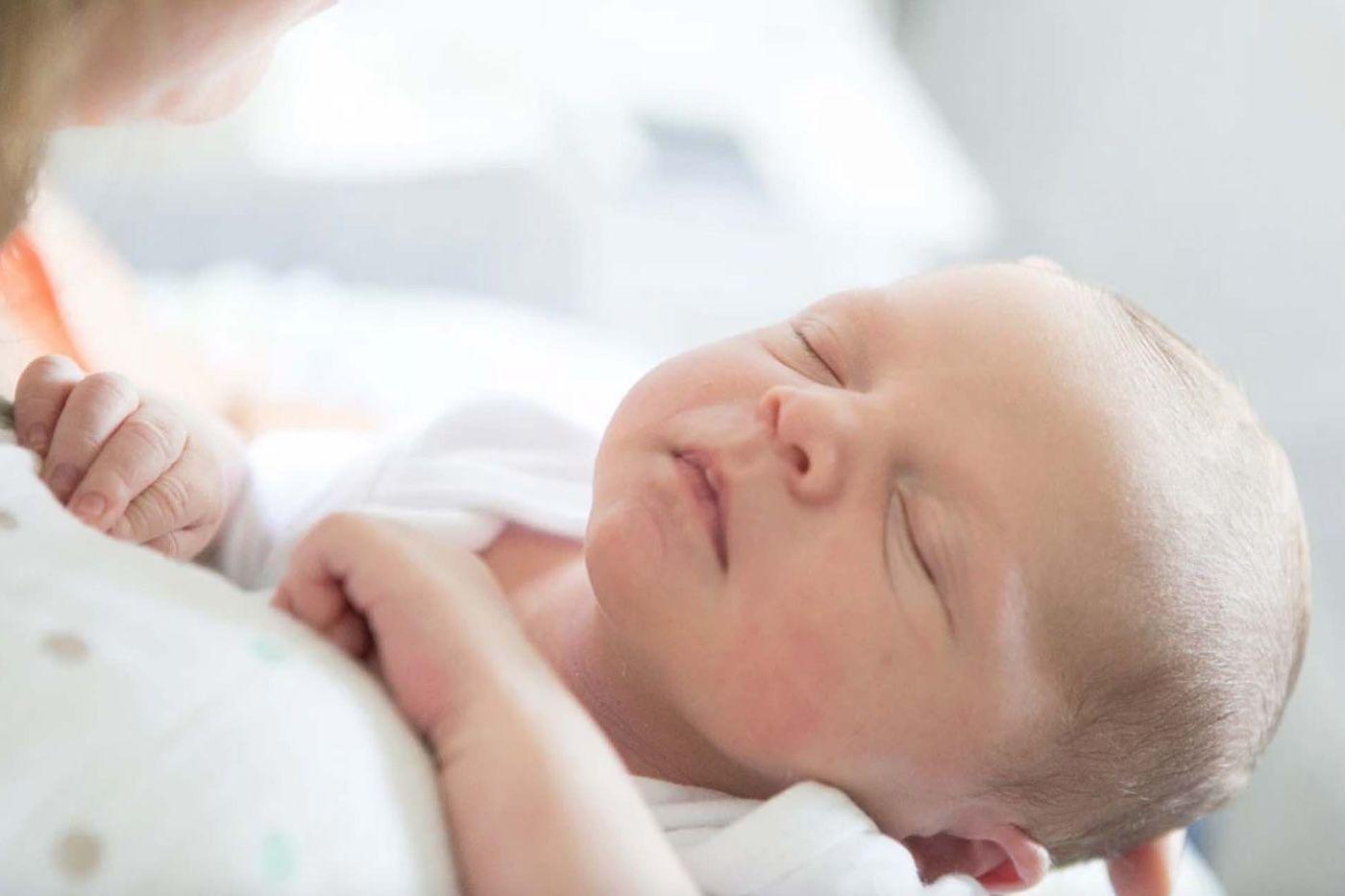
Eyes, nose, fingers and toes: By week 25, they’re all formed!
Your baby’s fingernails and toenails are growing throughout your pregnancy… so don’t be surprised if they’re a bit long when your little one is born. Even though they may be long, the nails are thin and soft. They can be trimmed, but it’s usually better just to file them (so you don’t leave a sharp edge or accidentally nick a finger).
Your little love is also busy getting their lungs ready for birth. One important step is producing surfactant, a substance that coats the thousands of tiny air sacs inside the lungs. Without it, the sacs want to stick closed—the way your lips can stick together when they’re dry. Surfactant acts like a natural moisturiser, making each sac a little slippery—like a dab of lip balm. After birth, it helps the sacs open easily with each breath and keeps them from sticking closed when your baby exhales.
Your baby’s eyes are undergoing rapid development, too. Within the next month and a half, all the layers of their retina will be in place. Their eyesight will keep improving after birth—at first babies are very short-sighted. What you see clearly from 6 metres away, they can only see sharply from about 30 centimetres… everything further is a blur.
25 Weeks Is How Many Months?
If you’re 25 weeks pregnant, you’re about 6 months pregnant!
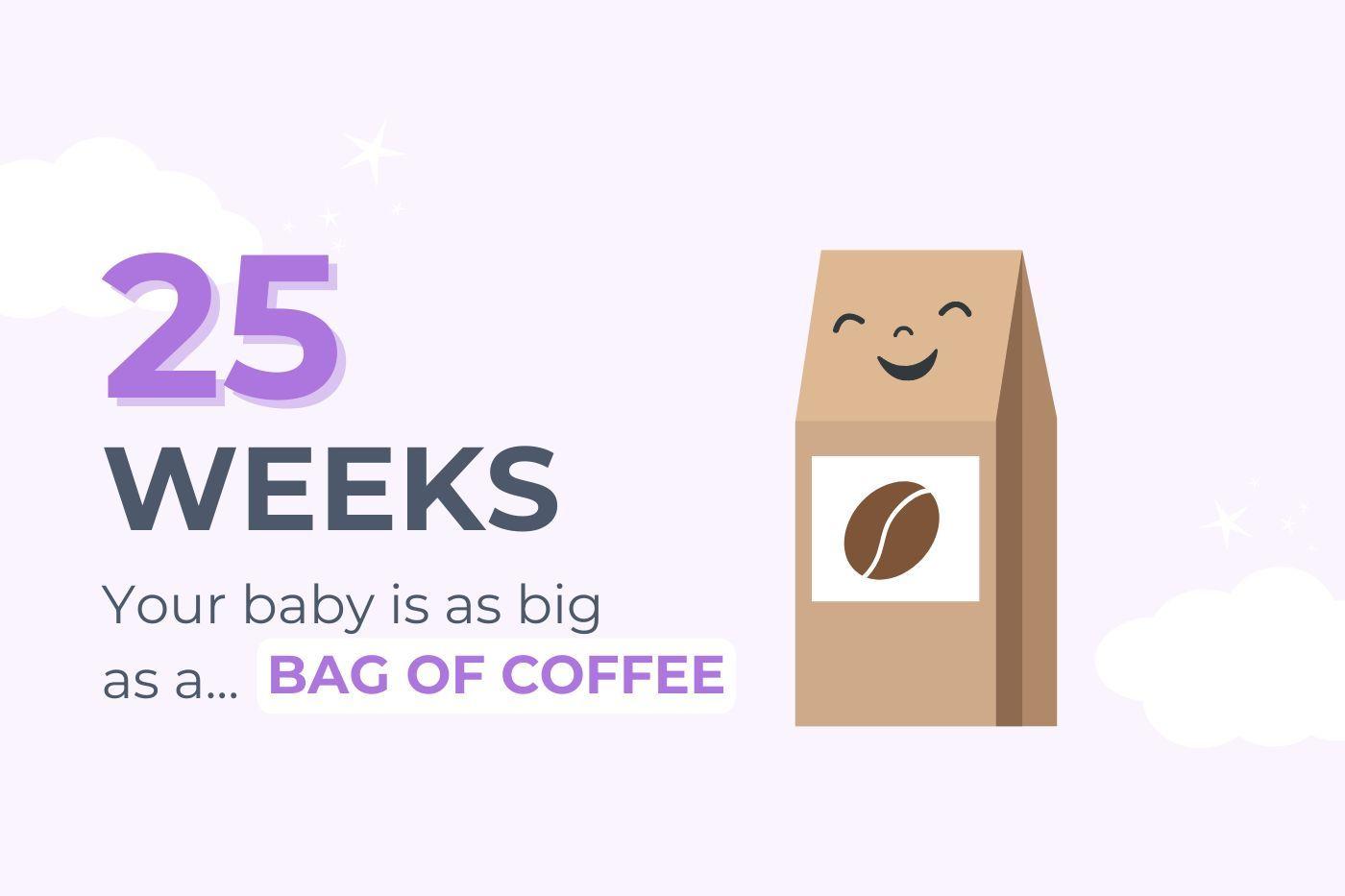
Size of Baby at 25 Weeks
Your baby at 25 weeks is about the size of a bag of coffee.
25 Weeks Pregnant: What to Expect
If you can’t quite catch your breath these days, you’re not imagining it! Feeling breathless happens for a couple of reasons:
- As your uterus grows, it presses up against your lungs. That means they can’t expand as far as they used to, so even deep breaths can feel shallow. You might free up a bit more space by raising your arms above your head and stretching.
- You’re breathing for two. There’s more carbon dioxide in your blood now, which makes you breathe more quickly than usual. [Read more about shortness of breath during pregnancy.]
25 Weeks Pregnant Symptoms
You may also be feeling the effects of relaxin, a hormone that softens (and, well… relaxes) your ligaments and joints! Your pelvis will widen slightly, which is helpful for birth, but it can cause odd aches and pains in the last few months.
If you’re experiencing pelvic pain, sit and rest when you can, and avoid heavy chores or carrying bulky items. Sleeping with a pillow between your knees may help. Swimming is another great option—being in water relieves pressure on your joints and boosts circulation.
Those pregnancy hormones can also interfere with digestion. Constipation is a common issue. The usual advice applies: drink plenty of water, eat fibre-rich foods, and go for a walk after meals. Supplements such as probiotics, aloe vera juice, and magnesium may help. Check with your midwife or doctor before trying these, and ask about your iron intake, since iron supplements are a common constipation culprit.
25 Weeks Pregnant To-Do List
- Check your place of birth’s policies: Does your hospital or birth centre require continuous fetal monitoring and an IV? Can your partner, family, or friends stay with you? Do they welcome doulas? Will a lactation consultant be available after birth? Are you allowed to eat and drink during labour? How often do they perform caesarean sections? Knowing this can guide your birth plan and even influence where you choose to give birth.
- Explore pain relief options: What types of pain management are available? Do they have anaesthetists on hand for epidurals? Do they support drug-free births? Are there birthing tables that allow you to change positions (like squatting)? Do they encourage hypnobirthing, or labouring in water? [Read more about relaxation techniques for labour.]
- Put your feet up: Swollen feet and ankles are common now, thanks to the 50% extra blood volume in your body. Standing or walking for long stretches can make swelling worse, so take breaks and elevate your legs when possible. Many mums-to-be also find it worth investing in comfortable, supportive shoes—perhaps a half size larger than usual. [Read more about swollen feet and ankles in pregnancy.]
Pregnancy Quote of the Week
The phrase “working mother” is redundant. — Jane Sellman
Avertissement : Les informations présentes sur notre site ne constituent PAS des conseils médicaux pour une personne ou une condition spécifique. Elles sont uniquement destinées à titre d'information générale. Si vous avez des questions médicales et des préoccupations concernant votre enfant ou vous-même, veuillez contacter votre fournisseur de soins de santé. Le lait maternel est la meilleure source de nutrition pour les bébés. Il est important que, en préparation et pendant l'allaitement, les mères adoptent une alimentation saine et équilibrée. La combinaison de l'allaitement au sein et au biberon dans les premières semaines de vie peut réduire la production de lait maternel de la mère et il est difficile de revenir sur la décision de ne pas allaiter. Si vous décidez d'utiliser une préparation pour nourrissons, vous devez suivre les instructions avec soin.
Principales actualités



PARTAGER CET ARTICLE
CHOIX DES PARENTS
Meilleures ventes