PREGNANCY
12 Weeks Pregnant: On Your Way to the First Trimester Finish Line
Your belly may begin showing this week…announcing your pregnancy to the world. Start looking into comfortable clothing options that can adapt to your ever-changing body.

Écrit par
Dr. Harvey Karp
12 Weeks Pregnant: Baby Update
Your baby’s umbilical cord is now fully formed—working hard to carry oxygen-rich blood and nutrients from the placenta while whisking away waste products.
At this stage, your baby may look a bit like a bobblehead, with a head that’s proportionally large compared to their body. Their arms, legs, and trunk will soon catch up. A fine layer of hair, called lanugo, is starting to cover their delicate skin, protecting it from the amniotic fluid. Most babies shed it in the third trimester, though some are born with a coating of it!
If you could peek inside, you’d see your baby’s little face taking shape. Their eyes are moving closer together, their ears are forming lobes, and their mouth can open and close. They can even make a tiny fist—and will reflexively move if you press on your belly (though you won’t feel it just yet).
How Many Months Is 12 Weeks Pregnant?
Twelve weeks pregnant is almost three months along.
Baby’s Size at 12 Weeks
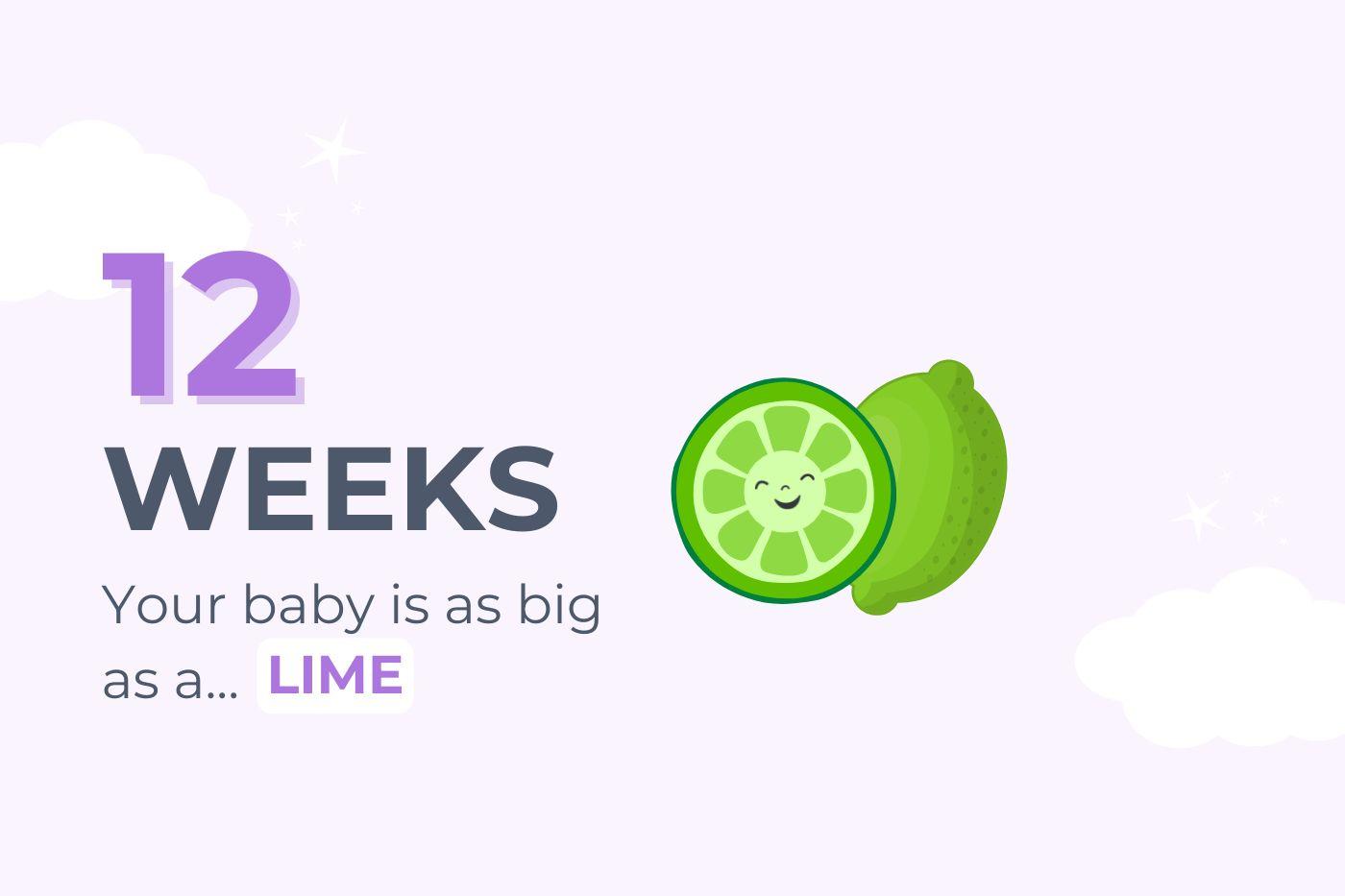
At 12 weeks, your baby is about the size of a lime.
12 Weeks Pregnant: What to Expect
Your bump may be starting to show—time to think about comfortable clothing that will stretch with you over the months ahead.
You may also notice an increase in vaginal discharge, which is very common. However, if it becomes clumpy, yellow, or greenish, it could signal an infection. Yeast and bacterial infections are both more likely in pregnancy, but they require different treatment—so don’t self-diagnose. Your midwife or GP can do a simple swab and prescribe the right treatment.
12 Weeks Pregnant To-Do List
- Think before you shop: Before starting a baby list or registry, ask yourself: From there, separate essentials (like a car seat) from nice-to-haves. Research carefully and aim for practical, safe, and sustainable choices rather than clutter. (One essential worth considering is SNOO Smart Sleeper. It keeps babies safely on their backs and has been shown to aid sleep.)
- Will I be offered hand-me-downs?
- How important is safety to me?
- Do I have space to store larger items?
- Will I be travelling often?
- Cut back on sugar: Many expectant mums notice a stronger sweet tooth. Try swapping processed foods and simple carbs (like white bread, pasta, and potatoes) for whole grains, pulses, and veggies. If cravings are tough to resist, some find the amino acid L-Glutamine helps ease sugar urges—chat with your care provider first.
- Do your Kegels: Strengthening your pelvic floor helps during labour and can aid recovery afterwards. Bonus: strong pelvic floor muscles also reduce the risk of incontinence and haemorrhoids during pregnancy.
- Soak in an Epsom salt bath: Epsom salts (magnesium sulphate) can ease swelling and relax sore muscles. Keep the water warm, not hot (below 38°C) to stay safe. Baths are also a great way to unwind.
Pregnancy Myth or Fact?
You shouldn’t sleep on your back past the first trimester.
Fact. Sleeping on your back is fine through the first trimester. After 12 weeks, it’s safer to sleep on your side—either side is fine. Don’t panic if you wake up on your back; just roll over and get comfy on your side again.
Avertissement : Les informations présentes sur notre site ne constituent PAS des conseils médicaux pour une personne ou une condition spécifique. Elles sont uniquement destinées à titre d'information générale. Si vous avez des questions médicales et des préoccupations concernant votre enfant ou vous-même, veuillez contacter votre fournisseur de soins de santé. Le lait maternel est la meilleure source de nutrition pour les bébés. Il est important que, en préparation et pendant l'allaitement, les mères adoptent une alimentation saine et équilibrée. La combinaison de l'allaitement au sein et au biberon dans les premières semaines de vie peut réduire la production de lait maternel de la mère et il est difficile de revenir sur la décision de ne pas allaiter. Si vous décidez d'utiliser une préparation pour nourrissons, vous devez suivre les instructions avec soin.
Principales actualités






PARTAGER CET ARTICLE
CHOIX DES PARENTS
Meilleures ventes