PARENTS
How to Protect Kids From Wildfire Smoke
Wildfire smoke is especially risky for children. Here’s how to keep their little lungs safe!

Écrit par
Happiest Baby Staff
Every year, there’s an average of 32,000 wildfire incidents in the UK. And data shows that the situation is just getting worse. For example, in the summer of 2022, wildfires in the UK increased by 118%. With that, more families are faced with the immediate and long-term fallout, including exposure to dangerous wildfire smoke. That is why paediatrics experts note that wildfire smoke is a “growing threat to vulnerable children.” Here is what you need to know to help keep your children safe from wildfire smoke.
What makes wildfire smoke so dangerous for children?
The smoke from wildfires contains teeny particles from the plants, trees, vehicles, homes, buildings, and everything else they burn. This adds up to a whole lot of unsavory and unhealthy material floating in the air, waiting to be inhaled. In fact, it is thought that wildfire smoke might be 10 times as toxic as air pollution from burning fossil fuels! Short-term exposure to wildfire smoke can trigger coughing and asthma attacks in children. And repeated exposure may even reduce a child’s lung function.
Here is why wildfire smoke is especially dangerous for kids:
Microscopic particles: Wildfire smoke consists of what is called particulate matter, which is a microscopic mix of solid and liquid droplets, containing hundreds of different chemicals that can travel deep into the lungs and bloodstream.- Vulnerable lungs: Children’s lungs are still developing, which means poor air quality can have a long-term impact on their growth. Children’s airways are small, so it does not take much wildfire-induced inflammation to cause damage.
- Subpar filtration: It is thought that children’s noses are unable to filter dangerous particles in wildfires as effectively as grownups’ noses, which allows more particles can get into their lungs.
- Increased air intake: Children breathe faster than adults, they take in more air for their body size than adults, and they tend to be more active outdoors—all of which leads to more exposure to dangerous wildfire smoke.
Is wildfire smoke dangerous to babies and toddlers?
Yes! Wildfires particles are roughly 10 times more harmful on children’s respiratory health than particles from other sources—and this is especially true for children aged 0 to 5 years old, according to a 2021 study in the journal Pediatrics. Plus, earlier studies in America found there was a 70% increase in ER visits for respiratory issues during wildfire season for children aged 0 to 4.
Researchers note that even limited exposure to wildfire smoke could lead to chronic health issues.
How can wildfire smoke affect children?
Even short-term exposure to wildfire smoke can cause irritation and swelling in a child’s airways, which can impact their breathing and cause other distressing respiratory symptoms, like coughing and asthma attacks.
Here are some common signs and symptoms of wildfire smoke inhalation in children:
Bobbing head (Babies might do this to help keep airways open.)- Burning or stinging of the nose, throat, and eyes
- Chest tightness or pain
- Coughing
- Congestion
- Decreased activity
- Exacerbating asthma symptoms
- Dizziness
- Fast or laboured breathing
- Fatigue
- Grunting (Babies might do this to help keep airways open.)
- Flaring asthma symptoms
- Pallor of skin (pale)
- Retraction (when a baby pulls their chest in at the ribs)
- Runny nose
- Sneezing
- Using rescue meds more than about every four hours (for kids with asthma)
- Wheezing
In addition, research shows that rerepeated and/or early exposure to wildfire smoke can negatively affect a child’s heart, lung, and immune system health over their lifetime.
Is wildfire smoke harmful when pregnant?
Yes! All pregnant individuals should actively avoid—or at the very least, limit exposure to—wildfire smoke as much as possible. During pregnancy, you naturally breathe more air in and out (aka increased respiration) and have a reduced lung capacity, which makes you especially vulnerable to the adverse effects of wildfire smoke. Research has shown that exposure to heavy metals and industrial solvents found in wildfire smoke can be harmful to foetal development and put you at an elevated risk of low birth weight and preterm birth. For example, over a five-year span in California, as many as 7,000 preterm births were likely linked to wildfire smoke exposure, according to a 2022 report in the journal Environmental Research. The study went on to note that as little as one day of wildfire smoke exposure in pregnancy may raise the risk of preterm birth.
Protecting Children from Wildfire Smoke
If you live in an area where there is a history of wildfires, then your family needs a disaster plan that includes having a wildfire disaster kit at the ready at all times. (Here is some info on how to prep your kit.) Of course, if a wildfire is burning near you, evacuate as soon as authorities recommend you do so.
In the meantime, here are some ways to help keep your child safe from wildfire smoke:
Stay inside. When the outdoor air is dangerous, stay in as much as possible.- Filter your air. If possible, clean your indoor air with a portable air purifier with a high-efficiency particulate air (HEPA) filter. (Make sure your purifier does not produce ozone.) Another option: If you have central air, make sure you are using a filter rated MERV13 or higher. (Minimum Efficiency Reporting Values, or MERVs, illustrates an air filter’s ability to capture particles.)
- Use fans. If a wildfire occurs during a heat wave, keep those windows closed and use fans or air conditioning on “recirculate air” setting to cool off. If neither are an option, find a local heat refuge.
- Do not do these activities. Avoid cooking on the stove, hoovering, smoking, vaping, burning candles, spraying aerosol products, all of which can worsen your indoor air.
- Dust. According to the Environmental Protection Agency (EPA), wiping up dust with a damp cloth can help keep particles out of the air.
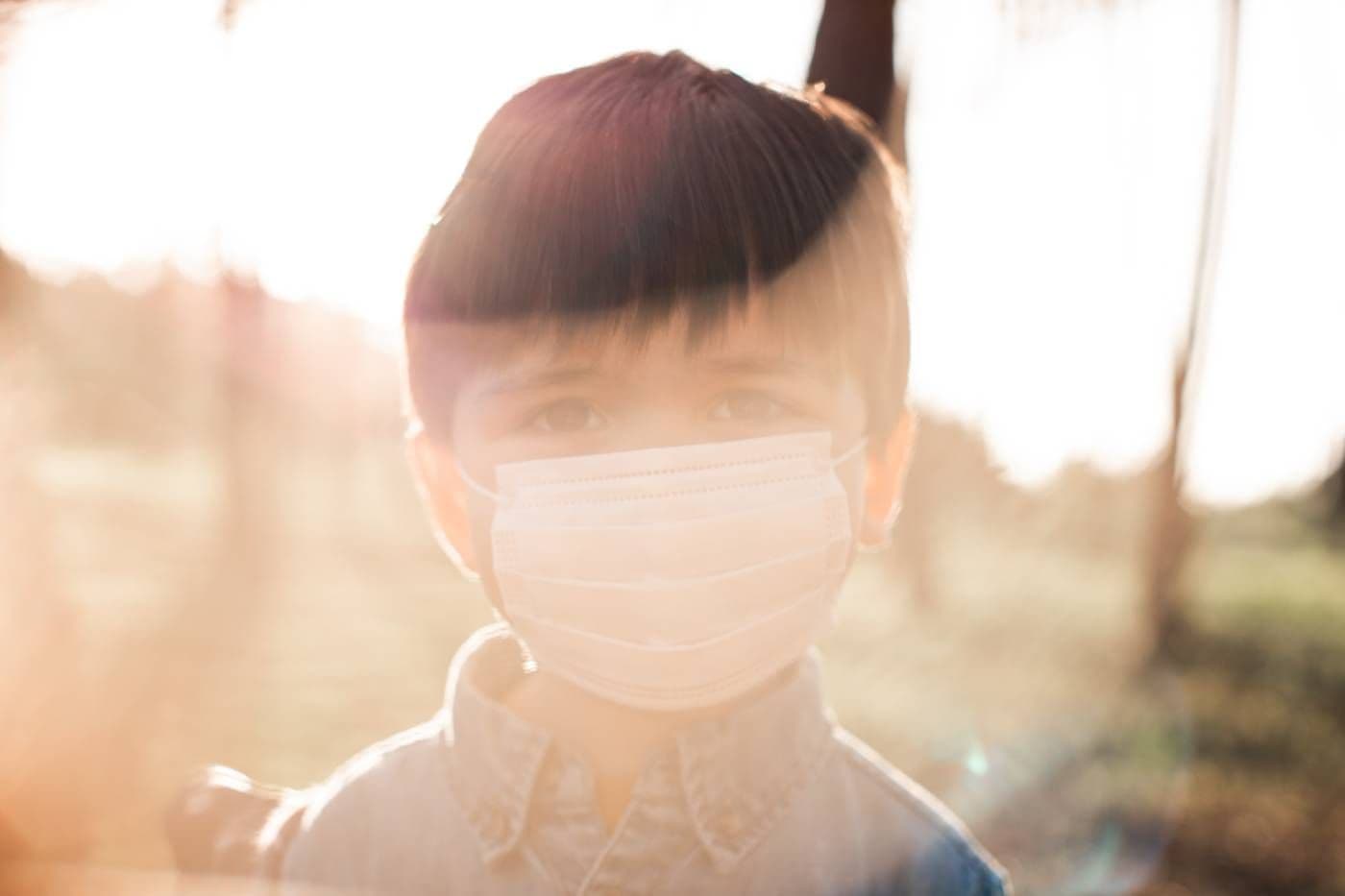
- Wear the right mask. If you need to venture out, know that cloth masks are ineffective when it comes to protecting children from wildfire smoke. However, well-fitted medical masks—or N95 respirators—can help protect children over the age of 2.
- Turn on this car feature. If you are driving to a safe location, keep windows closed and use the “recirculate air” setting in your car.
- Keep an eye on the Air Quality Index (AQI). When the AQI is greater than 150, kids need to remain indoors whenever possible.
- Wash clothes. If you have been outdoors, change into something clean when you get home. That is because smoky air particles can cling to clothing.
When to Call Yout Healthcare Provider About Wildfire Smoke Exposure
If you are worried about wildfire smoke exposure, do not hesitate to call your child’s paediatrician at any time! But make sure you reach out to a healthcare professional if your child…
Has trouble breathing- Is very sleepy
- Will not eat or drink
- Experiences shortness of breath
- Has a persistent cough
- Experiences other symptoms that do not go away
Avertissement : Les informations présentes sur notre site ne constituent PAS des conseils médicaux pour une personne ou une condition spécifique. Elles sont uniquement destinées à titre d'information générale. Si vous avez des questions médicales et des préoccupations concernant votre enfant ou vous-même, veuillez contacter votre fournisseur de soins de santé. Le lait maternel est la meilleure source de nutrition pour les bébés. Il est important que, en préparation et pendant l'allaitement, les mères adoptent une alimentation saine et équilibrée. La combinaison de l'allaitement au sein et au biberon dans les premières semaines de vie peut réduire la production de lait maternel de la mère et il est difficile de revenir sur la décision de ne pas allaiter. Si vous décidez d'utiliser une préparation pour nourrissons, vous devez suivre les instructions avec soin.
Principales actualités


PARTAGER CET ARTICLE
CHOIX DES PARENTS
Meilleures ventes