PARENTS
How Motherhood Changes Your Brain
It turns out that 'mum brain' has major benefits!

Écrit par
Happiest Baby Staff

Did you ever hear that joke about ‘mummy brain’? If I could remember it, then I would tell you. The phenomenon of ‘mum brain’ has been endlessly used as a punchline. The gist of the joke is usually that mums become forgetful or moody. And, it turns out that the mental changes you feel during pregnancy and motherhood aren’t all in your head. Researchers have found that a mother’s brain undergoes significant changes as a woman becomes a mum. But contrary to all of the wisecracks, mum brain is not a bad thing! All of those neural developments actually serve some pretty amazing purposes.
Mum brains get smaller…and bigger.
The brains of pregnant women undergo a radical transformation thanks to hormone surges. In fact, mums’ brains change more during pregnancy and postpartum than they do at any other point in life—including puberty! Part of the reason for this is a process of synaptic pruning where the brain essentially cuts off function to areas that it no longer needs in order to build up the areas that are now crucial. For mothers, it appears that the outer layers of gray matter that help control muscle movement, memories, emotions, and decision making are reduced. Some researchers think this is why mums become moody and forgetful. In one study, researchers were able to clearly see that the brains of mothers were actively pruning gray matter to make way for newer synaptic connections that would help her protect and take care of her baby.
Mum brains become more protective.
You know how mums joke about their 'inner mama bear'? That ferocious, mind-dwelling creature that gnashes its teeth when our kids are threatened actually serves a purpose! During pregnancy, a mother’s brain partially rewires itself to better detect danger with a particular sensitivity toward angry or fearful facial expressions. Researchers have found this to occur in stages that appear to correspond with pregnancy trimesters. The strongest vigilance toward threats seems to happen during the second and third trimesters, and some researchers believe this is because mum brains are building up new synapses to help her adapt to motherhood. In other words, Mama Bear is wired to be fiercely protective of her cubs!
Mum brains are built for empathy.
Mum brains are incredibly loving by design. Studies have found that all that synaptic pruning and neural building that fundamentally alters the physical structure of a mother’s brain serves another critical purpose: empathy building. Researchers have unearthed strong evidence that mums respond to infant cues like crying, snuggling, sleeping, etc., with an increase in brain activity that governs empathy, self-monitoring, and reflection. In other words, when a mother bonds with her baby by tending to their needs, the part of her brain that manages empathy actually grows. Awww!
Mum brain doesn’t go away.
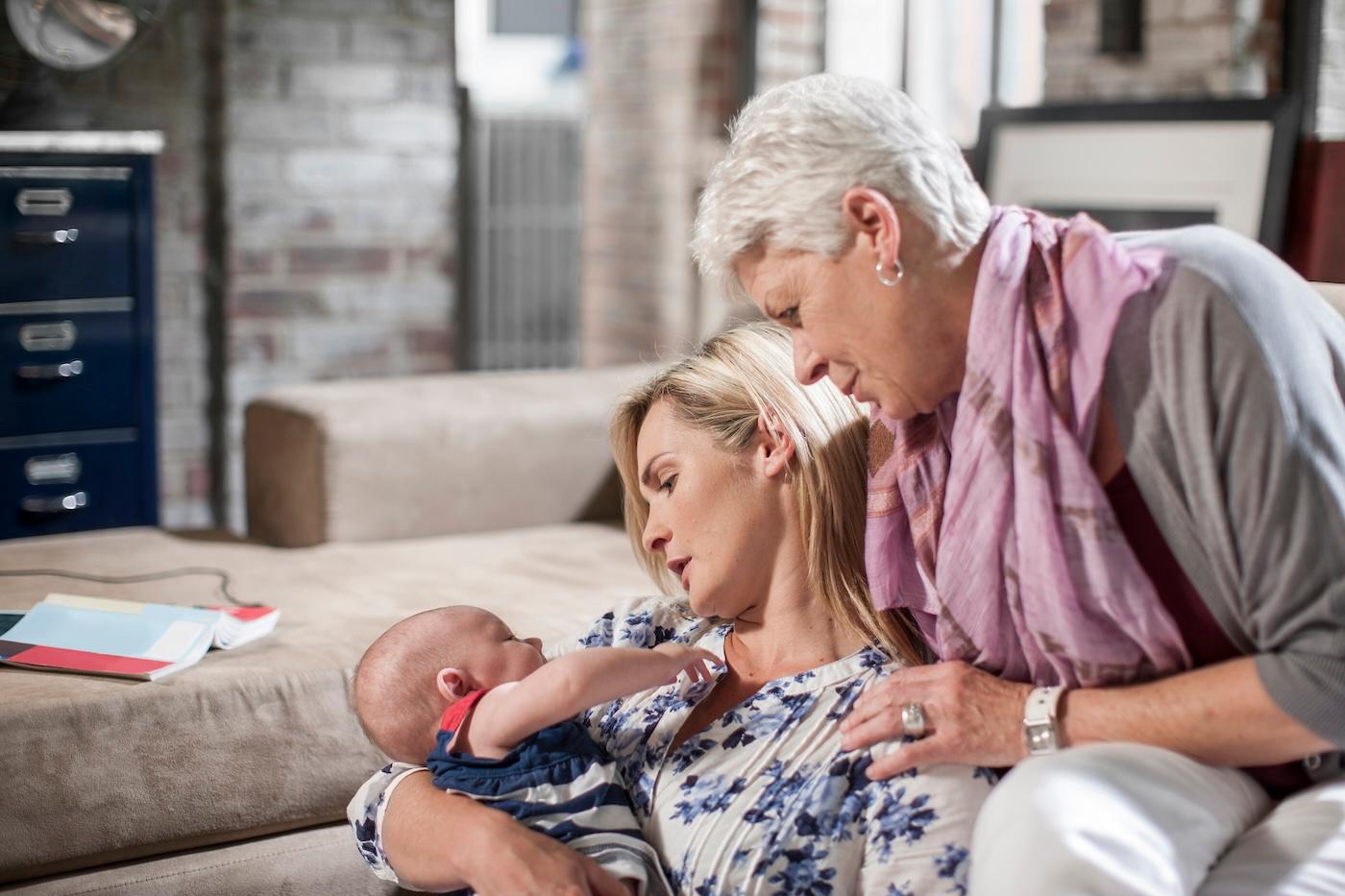
It turns out that mum brain does not vanish once your little one is no longer a baby—but that is actually not a bad thing. In some studies, like this one, researchers found that even after two years postpartum, mums did not gain back the gray matter they lost during pregnancy. And while that might seem a bit alarming, rest assured that Mother Nature has another trick up her sleeve. It is believed that one reason mum brain sticks around is because it helps mothers turn into amazing grandmas later in life. The same protective, empathetic, hyper-focused attention around tending to children seen in brain scans of new mothers appears to help grandmothers lend a hand in raising the next generation.
Avertissement : Les informations présentes sur notre site ne constituent PAS des conseils médicaux pour une personne ou une condition spécifique. Elles sont uniquement destinées à titre d'information générale. Si vous avez des questions médicales et des préoccupations concernant votre enfant ou vous-même, veuillez contacter votre fournisseur de soins de santé. Le lait maternel est la meilleure source de nutrition pour les bébés. Il est important que, en préparation et pendant l'allaitement, les mères adoptent une alimentation saine et équilibrée. La combinaison de l'allaitement au sein et au biberon dans les premières semaines de vie peut réduire la production de lait maternel de la mère et il est difficile de revenir sur la décision de ne pas allaiter. Si vous décidez d'utiliser une préparation pour nourrissons, vous devez suivre les instructions avec soin.
Principales actualités






PARTAGER CET ARTICLE
CHOIX DES PARENTS
Meilleures ventes