TROUVEZ-NOUS SUR LES RÉSEAUX SOCIAUX

Facebook linkYoutube linkInstagram linkTwitter link
View post on Instagram
 
View post on Instagram
 
View post on Instagram
 
View post on Instagram
 
View post on Instagram
 
View post on Instagram
 
View post on Instagram
 
View post on Instagram
 
View post on Instagram
 
View post on Instagram
 

Rejoignez la Famille,

Restez informé

REJOIGNEZ NOTRE COMMUNAUTÉ

Inscrivez-vous pour recevoir des conseils utiles, des offres et plus encore !

À PROPOS

Mission et FondateursLes 5 SBlog

SOUTIEN

FAQEnregistrement du produitFrais, livraison et retoursPortail de RetourContactez-nous

COMMUNAUTÉ

AffiliésPartenaires Agréés

LÉGAL

Conditions de ventePolitique de confidentialitéPolitique des cookiesConditions de servicesCLUFGarantie commerciale SNOOMentions légalesDroit de rétractationPréférences de cookiesTous les termes juridiques

MAGASIN

SNOO Berceau IntelligentGigoteuse SleepeaDoudou SNOObear avec bruit blancSNOObie Berceuse Intelligente

© 2026 Happiest Baby, Inc. | Tous droits réservés

Toutes les marques de tiers (y compris les noms, logos et icônes) référencées par Happiest Baby restent la propriété de leurs propriétaires respectifs. Sauf indication contraire, l'utilisation de marques de tiers par Happiest Baby n'indique aucune relation, parrainage ou approbation entre Happiest Baby et les propriétaires de ces marques. Toute référence par Happiest Baby à des marques de tiers vise à identifier les biens et/ou services correspondants et doit être considérée comme une utilisation nominative équitable en vertu de la loi sur les marques.

    Happiest Baby
    BLOG
    FAQ

    PARENTS

    Real Parents, Real Talk… On Breastfeeding: Natasha Brown

    Natasha opens up about her black breastfeeding journey with five kids.

    Happiest Baby Staff

    Écrit par

    Happiest Baby Staff

    PARTAGER CET ARTICLE

    Partager sur FacebookPartager sur TwitterPartager sur LinkedinPartager sur PinterestPartager par e-mailCopier le lien dans le presse-papiers
    black-breastfeeding-natasha

    PARTAGER CET ARTICLE

    Partager sur FacebookPartager sur TwitterPartager sur LinkedinPartager sur PinterestPartager par e-mailCopier le lien dans le presse-papiers

    CHOIX DES PARENTS

    Meilleures ventes

    Berceau intelligent SNOO

    SNOO Smart Sleeper Baby Cot

    1 395,00 €

    Slepea enveloppe pour bébé en 5 secondes arc-en-ciel

    Sleepea® 5-Second Baby Swaddle

    32,95 €

     de sommeil SNOO 100 % bio tie-dye bleu

    100% Organic SNOO Sleep Sack

    34,95 €

    SNOObie® Smart Soother

    69,95 €

    SNOObear en couleur cacao laineux

    SNOObear® 3-in-1 White Noise Lovey

    54,95 €

    Berceau intelligent SNOO avec filet anti-moustiques attaché

    Shoo Mosquito Net

    88,00 €

    Nuages de Sky Mobile

    Sky Mobile

    89,95 €

    Drap de lit pour bébé SNOO en coton 100 % bio, couleur tie-dye bleu dans la boîte

    100% Organic Cotton SNOO Baby Cot Fitted Sheet

    19,95 €

    Ensemble de 3 draps de lit pour bébé SNOO en 3 couleurs différentes

    SNOO Organic Baby Cot Sheets 3 Pack

    €59.85

    38,90 €

    Sleepea® couette enveloppante en couleur rose

    Sleepea® Comforter Swaddle

    42,95 €

    Sac de couchage SNOO en confort 100 % bio de couleur graphite

    100% Organic SNOO Sleep Comforter Sack

    44,95 €

    Ensemble de 3 sacs de couchage Sleepea® en couleur teal planètes

    Sleepea® Swaddle Sack 3 Pack Bundle

    €98.85

    69,20 €

    Plus sur Parents

    PARENTS

    Comment parler du sommeil sécuritaire aux personnes qui gardent votre bébé

    Nous sommes là pour vous aider à avoir ces conversations parfois gênantes, mais essentielles.

    PARENTS

    Understanding Attachment Styles

    From the first sleepy snuggles to the fifteenth diaper change of the day, your baby is learning one big lesson: “When I signal, does someone come?”

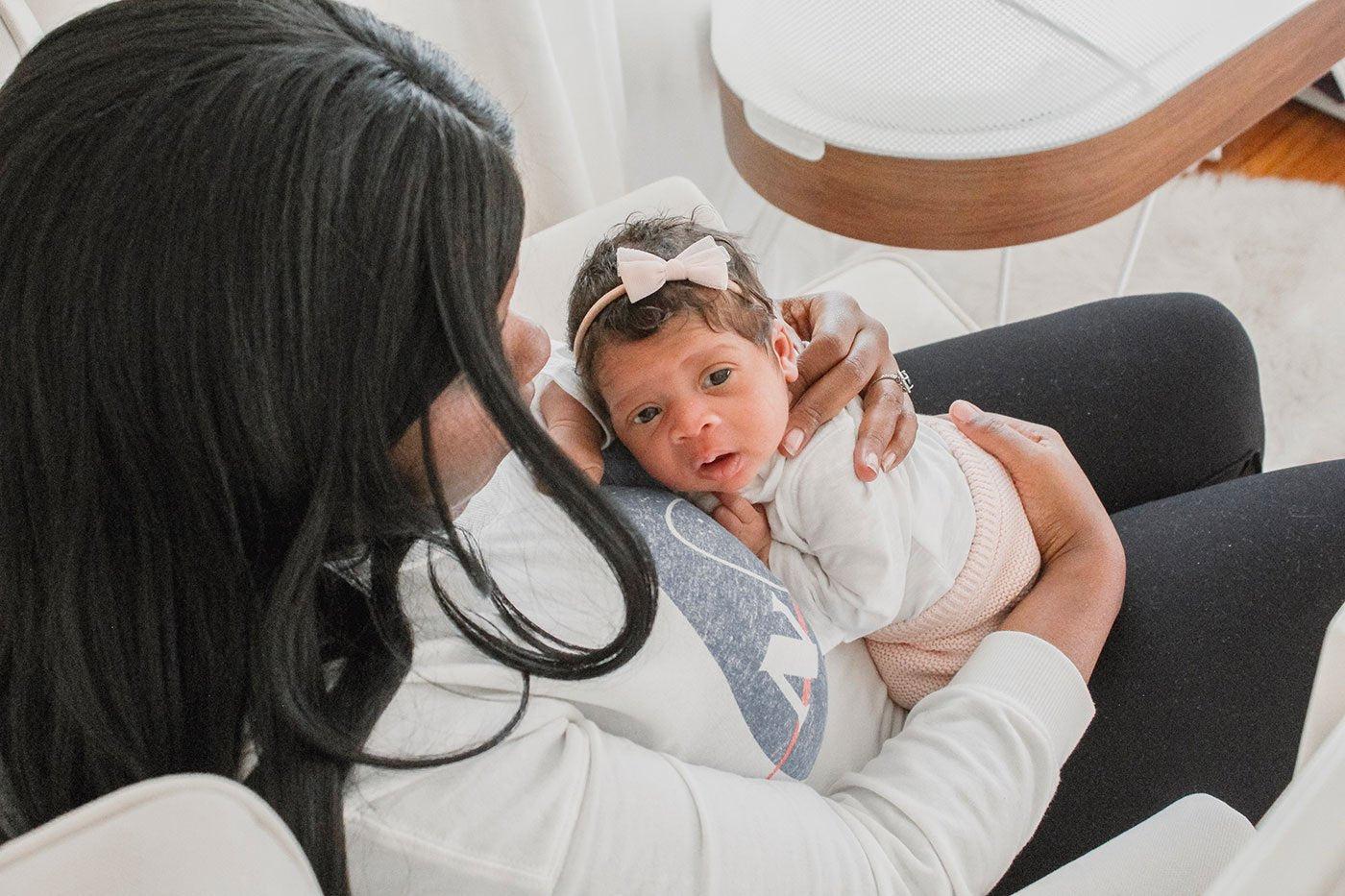
    Natasha Brown has a lot of experience with breastfeeding…since 2004, she's been breastfeeding one of her 5 children who range from the ages of 10 months to 15 years old.

    When she had her first child, Natasha was a college student who was making ends meet and was on WIC (the Special Supplemental Nutrition Program for Women, Infants, and Children). When her daughter was 6 weeks old, WIC workers told Natasha that she should stop breastfeeding because "the baby didn't need it anymore."

    Natasha had spent a lot of time during her pregnancy reading on the benefits of breastfeeding—which include lower rates of asthma and childhood obesity—and she knew she wanted to continue breastfeeding.

    "I ignored their advice and breastfed until my daughter was two," Natasha said.

    Four years later when she had her son, a similar situation happened. When he was 7 months old, a nurse at her pediatrician's office told her she needed to stop breastfeeding…even calling it "nasty" to continue.

    Again, Natasha ignored the comments and kept breastfeeding. But she says that both the WIC worker and the nurse who told her to stop breastfeeding were black women, and their ideas about breastfeeding are pervasive in the black community.

    "A lot of us look to older relatives to provide us with guidance and they're anti-breastfeeding," Natasha said. "I never understood it… but until we can change their minds, it's going to be hard for black women to really want to breastfeed."

    Natasha says that the tradition of asking older relatives for advice in the black community is a double-edged sword—on one hand, it's great to get family input but on the other hand, it can discourage mothers from breastfeeding.

    Her advice to other black moms?

    "Research it and try to block out the negative opinions on it," she said. "We need to put our needs and wants above what everybody else says. Ultimately, it's the mother's decision."

    Natasha is glad she made the decision to breastfeed her children—she's currently breastfeeding her youngest, who is 10 months old. Even though Natasha wasn't breastfed herself, her mother was supportive of Natasha breastfeeding her own kids.

    Looking back, she isn't totally sure what pushed her to make the decision to breastfeed but she thinks it was a mix of "the cost of formula" and "the benefits of breastfeeding."

    "I thought if I breastfeed, I'm going to have a baby genius," she said with a laugh.

    She plans to continue until her daughter is 2-years-old, just like she did with her other children. And she loves seeing the impact her choice has made in her community.

    "I'm pretty sure my breastfeeding led my twin sister to breastfeed her kids," she said. "And several of my friends all came to ask me about my experience."

    Being open about her journey breastfeeding five kids is one way she hopes the trends will change for black women, who historically have the lowest rate of breastfeeding.

    "I hope we get to a point soon where black women are at the same level as white and Hispanic women," she said.

    Avertissement : Les informations présentes sur notre site ne constituent PAS des conseils médicaux pour une personne ou une condition spécifique. Elles sont uniquement destinées à titre d'information générale. Si vous avez des questions médicales et des préoccupations concernant votre enfant ou vous-même, veuillez contacter votre fournisseur de soins de santé. Le lait maternel est la meilleure source de nutrition pour les bébés. Il est important que, en préparation et pendant l'allaitement, les mères adoptent une alimentation saine et équilibrée. La combinaison de l'allaitement au sein et au biberon dans les premières semaines de vie peut réduire la production de lait maternel de la mère et il est difficile de revenir sur la décision de ne pas allaiter. Si vous décidez d'utiliser une préparation pour nourrissons, vous devez suivre les instructions avec soin.

    Principales actualités

    Le Dr Harvey Karp utilise les 5 S pour apaiser un bébé agité

    BÉBÉ

    La méthode des 5 S’s pour calmer bébé

    Un bébé au quatrième trimestre

    BÉBÉ

    Qu'est-ce que le quatrième trimestre ?

    Nouveau-né endormi

    BÉBÉ

    Bienfaits du bruit blanc pour les nouveau-nés

    A baby with a pacifier

    BAMBIN

    Comment et quand arrêter l'utilisation de la sucette

    La mère tient le bébé pendant la régression du sommeil de 3 à 4 mois

    BÉBÉ

    Ne soyez pas pris au dépourvu par la régression du sommeil des 3 à 4 mois

    Une mère donne à son nouveau-né un biberon de rêve

    BÉBÉ

    Qu'est-ce que l'alimentation de rêve ?... Et comment la pratiquer ?