BABY
Baby Grunting in Sleep and Other Sleep Sounds, Explained
Who knew 'sleeping like a baby' would be so noisy! We explain why your newborn makes so many weird noises while snoozing.
Écrit par
Happiest Baby Staff
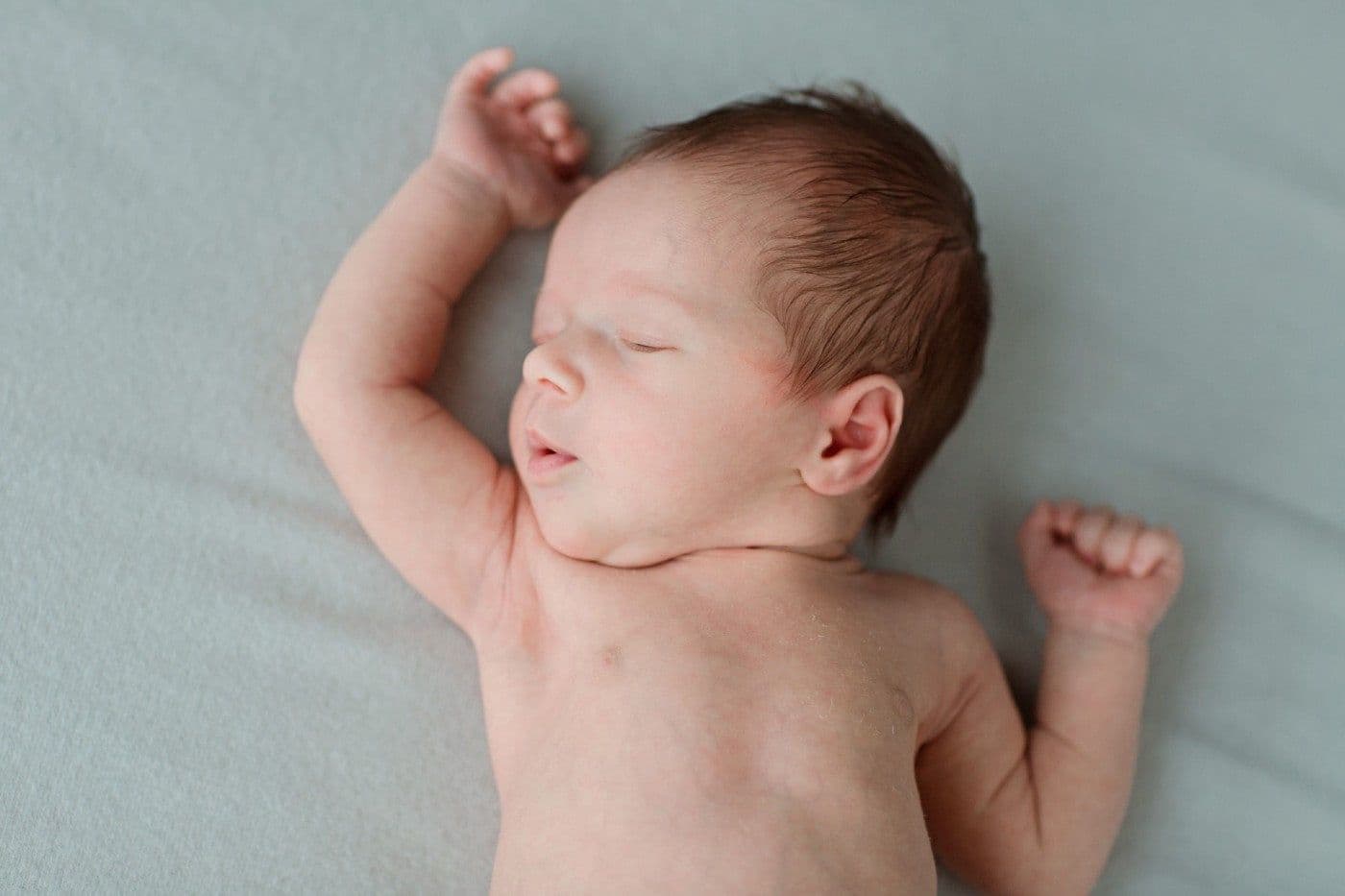
Surprise: 'Sleeping like a baby' sounds a lot like a stuffed-up grandpa taking a noisy midday snooze in the recliner! The truth is, babies make lots of weird noises while sleeping. In fact, experts confirm that newborn sleep is, indeed, not at all quiet. And while there are many totally normal baby sleep sounds that require not an ounce of worry...some baby grunting, whistling, and gurgling noises can be cause for concern. The trick? Knowing which baby sleep sounds and grunts are which. Here is help!
Why is my baby making sounds while sleeping?
A few nights of snoozing next to your baby might leave you wondering: Why is my newborn such a noisy sleeper? It turns out, there is a lot of biology to blame.
- Babies breathe out their noses. Up until your baby reaches 3 to 4 months old, they only breathe through their nose. And since their nasal passages are so teeny, it only takes small bits of mucus, breastmilk, or formula to migrate to the back of your baby’s small nasal passages, causing all sorts of congested-related sleep noises. (PS: This is why newborn congestion is common even when your baby does not have a cold.)
- They are still developing. Since your newborn’s respiratory and digestive systems are not fully developed yet, they are both working extra hard to get their jobs done. And with all that extra work, comes extra sleep sounds, too. For instance, since babies are just learning how to regulate their breathing, you will likely overhear brief periods when their breathing speeds up or slows down when they are snoozing.
- Babies’ sleep cycles are wonky. Your little one’s sleep cycle—the full circuit from light to deep to light NREM sleep, plus a bit of REM—lasts only 60 minutes. So that means about every hour your sweet pea will enter a light sleep, making them more prone to moving around, briefly waking, and making short moans or squawks.
Baby Grunting and Other Typical Newborn Sleep Sounds
Some typical sounds that baby will make while sleeping you might hear—and the reasons behind them—include:
- Whistling and rattling: Thanks to your newborn’s narrow nasal passage, whistling can go hand-in-hand with each inhale.
- Snorting: This is also associated with congestion and tends to occur when your newborn is in deep sleep. (Snorting, whistling, and rattling sleep sounds often calm down by the time your baby reaches about 6 months old.)
- Gurgling: Babies do not yet reflexively swallow all of their saliva, so when it pools at the back of their mouth and air passes through, you will hear gurgling sounds while your baby sleeps.
- Hiccuping: It is thought that newborns and infants are especially prone to hiccuping in their sleep thanks to gulping air during their last feed before bedtime.
- Whimpering, crying, groaning: If your little one momentarily cries or whimpers while sleeping, it’s likely just a sign that they’re transitioning from light sleep to deep sleep.
- Rumbling, burping, passing gas: Your infant’s only jobs right now are eating, pooping, and sleeping, which means that their developing digestive system is getting an around-the-clock workout—including during sleepy time.
- Baby grunting: When your baby grunts while sleeping, it often means that they’re adjusting to having bowel movements. Newbies are still getting used to using their abdominal muscles to move poop and gas through their system. (There are times, however, when newborn grunting during sleep could be worrisome. More on that below.)
- Lip-smacking: Is your newborn dreaming of a feed? Maybe! It is quite common to hear lip-smacking and rooting noises from your wee one while they sleep. Be prepared: They will likely wake soon looking for the real deal.
Breathing Sounds: Typical Sounds Newborns Make
Since your baby’s airway is softer and narrower than yours, they’re more prone to loud breathing noises...especially when snoozing. Plus, babies naturally breathe faster than older children and grownups. In fact, your newborn’s breathing rate is about 40 to 60 breaths per minute, slowing to a still-fast 30 to 40 times a minute when sleeping. (For context, your at-rest respiration rate is likely between 12 and 16 breaths a minute.)
Beyond being fast, your newborn’s breathing is often irregular, too. While this not-quite-consistent breathing pattern might be startling, for most babies, it’s completely normal. Here is what is going on:
- Periodic Breathing. During active REM sleep, babies twitch and jerk their teeny arms legs...and their breathing can get a little jerky, too. This is called normal periodic breathing of infancy and it’s when your baby breathes fast several times, then has a brief rest for up to 10 seconds, then starts up again. Scary, right?! But know that these brief pauses in breathing are normal and something your baby will outgrow by about 6 months. That said, if your baby’s skin colour changes during the pauses—or if you are worried—contact your child’s healthcare provider ASAP.
- Transient Rapid Breathing. When fluid builds up in your newborn’s lungs it can make it difficult for the lung’s air sacs to stay open. The result: Rapid breathing followed by progressively deeper breaths. The good news is that normal breathing usually returns within a minute or so...and your baby most often will stop experiencing this in 48 hours or less. This condition, called transient tachypnea of the newborn, is most common in boys, early-term babies, those delivered by c-section, and babies whose moms have diabetes or asthma.
- Laryngomalacia. When babies are born with floppy larynx tissue, it can fall toward their airway, causing partial obstruction, which makes for noisy breathing...especially when tots are laying on their back, which is the safest sleep position. This is the most common cause of noisy breathing in infants and generally, laryngomalacia resolves on its own.
When to Worry About Baby Grunting and Other Sleep Sounds
Most of the time your squeaking, gurgling, burping snoozer is A-okay! But there are times when baby sleep sounds signal something bigger is going on. Listen up for these noises:
- Fast breathing of over 40 breaths a minute
- Rhythmic grunting during breathing...especially when paired with flared nostrils
- An extra-long exhale sound
- Whistling sound each time your baby breathes out
These scary sleep sounds could indicate that your baby has respiratory syncytial virus (RSV), bronchiolitis, or respiratory distress syndrome. It is important that you contact your healthcare provider immediately for guidance.
When Typical Baby Grunting and Other Sleep Sounds Keep You Awake
It is hard not to tune into every little noise that emerges from your precious new baby! But if every wayward toot and gurgle wakes you from a solid slumber, consider turning on some white noise. Not only will white noise lull your baby to a calming sleep, but white noise acts as a 'blanket of sound' for you, drowning out baby’s sleep sounds. (Do not worry: You will still hear your baby cry.) While it may be tempting to relocate your noisy newborn to their nursery, the Lullaby Trust urges parents to room-share with their little one for at least 6 months. This practice alone can decrease the risk of SIDS.
For more advice on how to set your baby up for sleep success, check out “The Happiest Baby Guide to Great Sleep."
Avertissement : Les informations présentes sur notre site ne constituent PAS des conseils médicaux pour une personne ou une condition spécifique. Elles sont uniquement destinées à titre d'information générale. Si vous avez des questions médicales et des préoccupations concernant votre enfant ou vous-même, veuillez contacter votre fournisseur de soins de santé. Le lait maternel est la meilleure source de nutrition pour les bébés. Il est important que, en préparation et pendant l'allaitement, les mères adoptent une alimentation saine et équilibrée. La combinaison de l'allaitement au sein et au biberon dans les premières semaines de vie peut réduire la production de lait maternel de la mère et il est difficile de revenir sur la décision de ne pas allaiter. Si vous décidez d'utiliser une préparation pour nourrissons, vous devez suivre les instructions avec soin.
Principales actualités

PARTAGER CET ARTICLE
CHOIX DES PARENTS
Meilleures ventes