TODDLER
How to Address Frights, Fears, and Scary Events With Your Toddler
Here’s a guide to help you have tough conversations about scary events with your toddler.

Escrito por
Dr. Harvey Karp
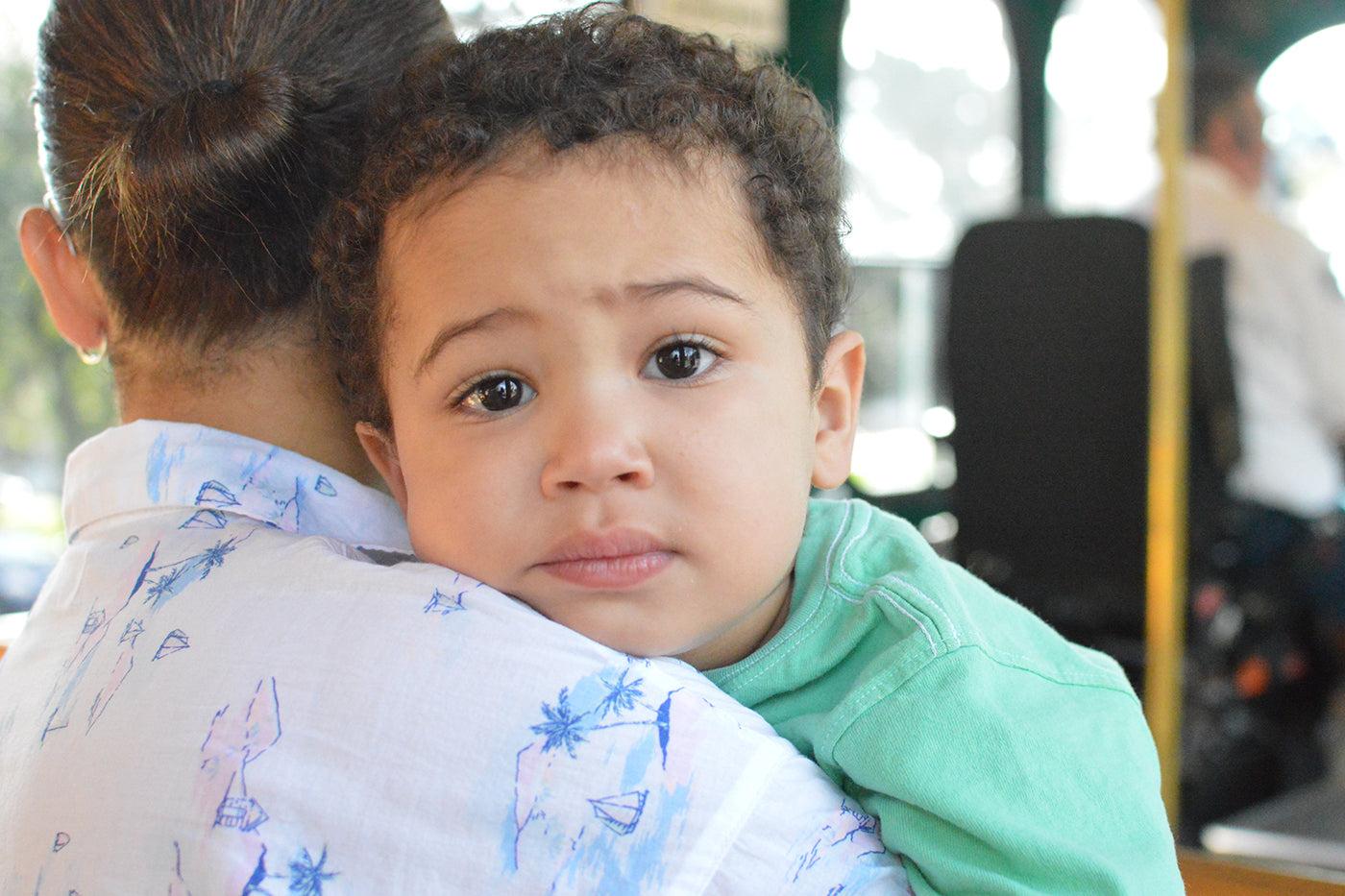
The world can be a frightening place…even for adults! We are constantly witnessing events beyond our control. Death, a global pandemic, natural disasters, and acts of violence can be super scary for little ones. And just as you need to have a physical emergency kit on hand to use when a natural disaster strikes, it is helpful to have an emotional toolkit ready when it a psychological storm buffets your child. So, here is a little guide to help you with some of those big fears and tough conversations.
When kids (and adults) are very upset, a good rule of thumb is to be empathic and kind. You may have the urge to meet your toddler’s troubled feelings with candor and earnest advice, but…hold that thought! When talking to a child filled with scary feelings, it is usually better not to immediately try to interrogate or reassure. Start by just, well, being there.
Your young child lives in a magical world! He is used to stories where the good guys win and everybody has a happy ending. A child’s magical thinking is a boon for parents (for example, your toddler will think of you as a powerful superhero!), but it is also bane, in that your child may think that if they think something frightening will happen…it will happen.
Use a door-opener.
So what to do? Start by listening…perhaps using a 'door-opener.' Door openers are small gestures or comments made in response to someone telling you what is bothering them. They encourage that person to share their true feelings. You might furrow or raise your eyebrows in response to their words, nod along with what they say, or say something like 'I see,' 'wow,' or 'tell me more…' as they speak.
This gives your child a safe space to speak up about worries that are simmering beneath the surface: 'Hmmm…I can see you are really worried. Your face is showing me some worry wrinkles.' 'Did you see something that you did not like or looked yucky?'
Go slowly.
Once you have a sense of what your child thinks and feels, do not feel like you have to rush to solve the problem or answer all of their questions. Take your time and listen a little more. Perhaps, notice some obvious things, and then pause to give your child a chance to share. 'Hmmm, that is an interesting question. I see you have been listening and thinking a bit about this stuff.' And, then, when you ask a question, try to keep it open-ended, like, 'I am not 100% sure. What do you think?'
When you respond, use simple, straightforward language. Of course, you should not lie…but, you do not have to blind your child with the bold light of the adult truth, either! Remember, you can always say, 'That is a really good question. I am not sure, but I am sure of one thing, Mama loves you and will protect you. Let us think on that a little more and see if we can figure it out together, tomorrow.' Not every question needs to be answered in that moment.
Mind your body language.
It is not just your words that have power though. Little kids are really good at picking up on what we feel. They can see it in our eyes and the tenseness in our faces. This is not to say that you should hide your feelings, but you may want to compose yourself a bit before you go into the room. When your child asks if you were crying or if you are upset, you can acknowledge if you are sort of worried or sad, but it is usually best not to say you are scared or frightened. You might say, 'Yes, Mummy is sad. Sometimes you feel sad, too, don’t you?' This way, you can invite your child to express how she is feeling.
Reassure your toddler.
As you discuss what is going on, take some little steps to calm her fears. You might reassure her that you are doing lots of smart things to keep her safe (like, showing her that you locked the strong doors and the windows, or pointing out how sturdy your home is). After acknowledging feelings with time, caring, and empathy, you might casually notice some good things, too. For example, when talking about a natural disaster, you can point out all of the people helping each other to clean up or rebuild. Or, when talking about injustice in the world, you can point out the peaceful people bravely working together for change.
Control the environment.
Of course, an ounce of prevention is worth a pound of cure. Though you cannot protect your child from all of the harsh realities the world, you do want to be a guardian. For example, turn off the telly if it is violent or upsetting. In the eyes—and ears—of little kids, your telly seems 30 feet bigger and two times louder than it does to you. Seeing violence is disturbing for all adults, but it is majorly magnified in the impressionable minds of children. If you do have the news on at home, make sure you are around so that you can understand what your child is seeing, answer questions, or turn it off.
Be flexible.
As with all of parenting, there is no one-size-fits-all solution. When approaching tough conversations, I tell parents to remember the metaphor of shooting an arrow at a target. Of course, you have to aim for the target…BUT, you also have to consider how hard the wind is blowing and adjust your aim accordingly. If the wind is blowing hard, you might aim far to the left or right. Similarly, when talking to very upset children, consider your child’s emotional level and temperament and think of the circumstances—in other words, modify your tone and words to moderate what you’re saying if the emotional 'winds' are blowing really hard.
Talking about scary stuff with your toddler can be a bit scary to us, too. However, by listening to your child and having these uncomfortable talks, you will immediately help make her feel heard, respected, and understood. And, that will make her feel safer and loved…even in the face of really monster-sized fears.
Descargo de responsabilidad: La información en nuestro sitio NO es un consejo médico para ninguna persona o condición específica. Solo se proporciona como información general. Si tiene alguna pregunta o preocupación médica sobre su hijo o sobre usted mismo, por favor contacte a su proveedor de salud. La leche materna es la mejor fuente de nutrición para los bebés. Es importante que, en preparación para la lactancia y durante la misma, las madres lleven una dieta saludable y equilibrada. La combinación de lactancia materna y alimentación con biberón en las primeras semanas de vida puede reducir la producción de leche materna y es difícil revertir la decisión de no amamantar. Si decide utilizar fórmula infantil, debe seguir las instrucciones cuidadosamente.
Principales noticias






COMPARTIR ESTE ARTÍCULO
ELECCIONES DE LOS PADRES
Más vendidos