TODDLER
How to Stop Your Toddler's Biting Habit
Here’s how to stop this dangerous behavior fast.

Escrito por
Dr. Harvey Karp

Is it Normal for Toddlers to Bite?
Biting is a common behaviour for children. But if this behaviour is not discouraged, promptly and powerfully, it can turn into a dangerous habit (like biting other kids’ faces or biting babies).
Just as Monica finished tying her 16-month-old’s shoe, he bit her shoulder—hard! ‘Owww!’ Monica yelped. Then, struggling to compose herself, she scolded him lovingly, mildly, ‘Please, Lukie! That is not nice. Mommy does not like biting.’
Do you think Lucas stopped? Nope! In fact, he soon began biting whenever he got mad.
Why do toddlers bite?
Toddlers typically chomp during teething or when frustrated.
Toddler Biting Self vs Others
The reason toddlers bite themselves—or engage in other acts of self-harm, such as head-banging—is similar to why they bite others. They might be frustrated or have other big emotions they cannot express.
How to Stop a Toddler from Biting
Here is how to stop this dangerous behaviour fast:
1. Consequences
If the chomper bites before you can stop him, he needs a consequence. With a young toddler, start with a mild consequence.
2. Clap-Growl
In the example above, Monica’s message, ‘Mommy does not like biting,’ failed to work because it was way too sweet. Remember, in emotional situations, what you say is much less important than the way you say it. Be firm and wear a serious expression to match.
If you happen to see your child open his mouth right as he is about to nip, give some fast, hard claps, make a deep, menacing growl, do a double take and with a warning finger held up, bark, ‘Hey…hey! No bite. No bite!!’
Do not stare at your child after the warning. Staring may make a defiant kid disobey even more!
3. Kind Ignoring
Immediately remove your little biter from the situation. Give him a ‘cold shoulder’ for 20-30 seconds and lavish some sympathy on the child who was nipped. (Let the biter overhear you gossip to his victim, ‘I say, ‘No, no, no!’ I do not like it when Lukie bites. Kids have to use their words when they are mad. I like it when kids who are really angry say, “No, no! I do not like it!”) After a minute or two of kind ignoring, reengage your child with a little friendly talking or play.
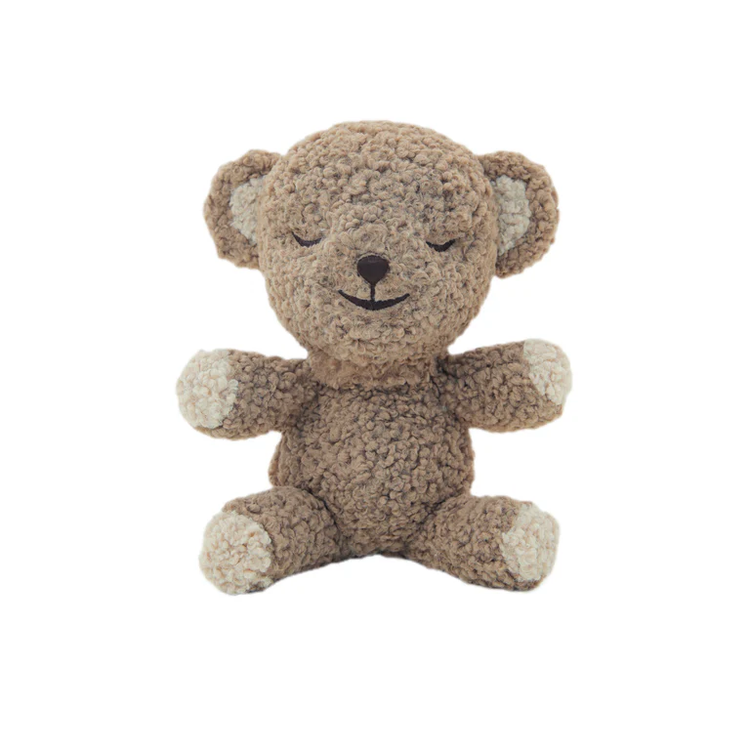
Later in the day, gossip to his teddy about how you do not like biting. Role-play the incident and ask your child what the ‘biter’ could do to make the bitten doll feel better. You might also tell a fairy tale. Perhaps a little story about the girl bunny who was sad because she would bite so much that the other bunnies did not want to play with her. So her mum taught her a special trick: Every time she wanted to bite, she should show her teeth and click them together 3 times…but never bite. The other little bunnies thought this was funny and then they all wanted to play with her! This made her smile and she lived happily ever after. The end!
4. ‘Take-Charge’ Consequence
Children who bite hard or are ‘repeat offenders’ get an immediate consequence, like a mini timeout, timeout or a fine.
Descargo de responsabilidad: La información en nuestro sitio NO es un consejo médico para ninguna persona o condición específica. Solo se proporciona como información general. Si tiene alguna pregunta o preocupación médica sobre su hijo o sobre usted mismo, por favor contacte a su proveedor de salud. La leche materna es la mejor fuente de nutrición para los bebés. Es importante que, en preparación para la lactancia y durante la misma, las madres lleven una dieta saludable y equilibrada. La combinación de lactancia materna y alimentación con biberón en las primeras semanas de vida puede reducir la producción de leche materna y es difícil revertir la decisión de no amamantar. Si decide utilizar fórmula infantil, debe seguir las instrucciones cuidadosamente.
Principales noticias
COMPARTIR ESTE ARTÍCULO
ELECCIONES DE LOS PADRES
Más vendidos