TODDLER
How to Teach Your Child to Be More Patient
Learn Dr. Karp's clever 'patience-stretching' technique.

Escrito por
Dr. Harvey Karp
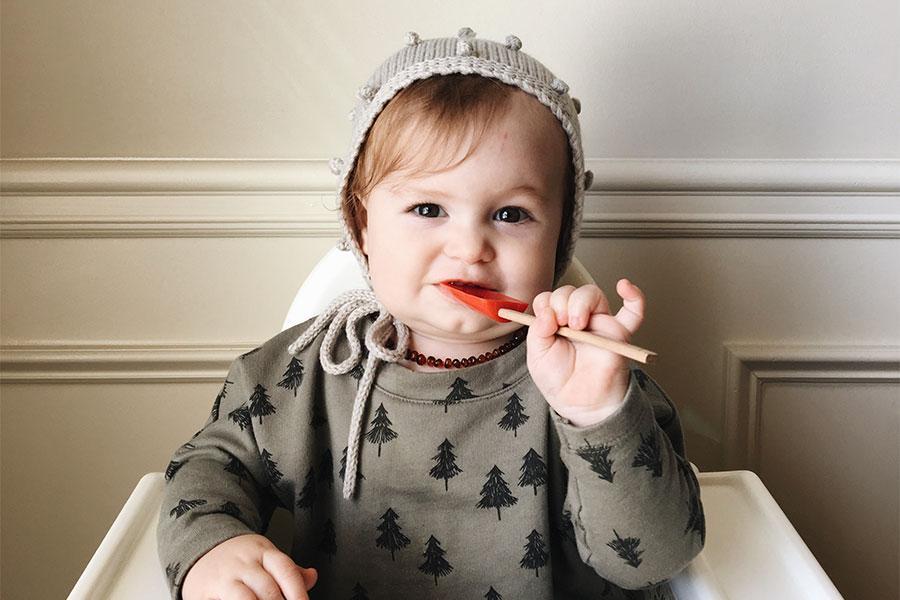
How Do I Teach My Child Patience?
All children start out impulsive. But, amazingly, you can s-t-r-e-t-c-h your toddler’s patience in just days…if you do it right.
Patience-stretching is a quick way to help grabby toddlers learn to be patient by expecting them to wait a teensy, tiny bit…then a bit more…and then even more.
Believe it or not, most parents teach children patience in exactly the opposite way from the method that works the best.
For example, say you are busy and your 2-year-old pulls at your skirt for attention. Most of us lovingly respond, ‘Just a second, sweetheart,’ and finish what we are doing. Trouble is, this often makes your child bug you even more!
This technique is best used for all toddlers (even under 1 year of age).
How to Use the Patience-Stretching Technique
Very important: To teach patience-stretching you must have something your child wants (food, a toy, etc.). Once you have that, follow these simple steps:
First, almost give her what she wants. Let us say your 1-year-old interrupts you, asking for juice. Stop what you are doing and repeat back, “Juice! You want juice!” Start to hand her the juice…BUT…then suddenly hold up one finger and exclaim, “Wait! Wait! Just one second!” as if you just remembered something important. Turn away and pretend to look for something.
Next, the ‘payoff.’ After just a few seconds, turn back and immediately give your child the juice, praising her, saying, ‘Good waiting! Good waiting!’ Quickly rewarding your child’s patience teaches her that waiting is not so bad and that Mum always keeps her word.
Little by little, stretch the waiting time more and more (5 seconds, then 10…30…60, etc.). If you practise this every day, your child will be able to wait a minute or two (or more) within a week. Patience-stretching will build your toddler’s self-control…one step at a time.
Timers help toddlers practise patience. During a calm period, show your toddler how the timer works: “See! And when Mr. Dinger says ding! (make it chime) then Mum comes back fast!”
Later, when your 3-year-old starts bugging you for something, say, ‘Sure!’ and almost give it to him, but then suddenly announce, ‘Wait, wait! Just a second, sweetheart! I have to go see Daddy. As soon as Mr. Dinger rings I can give you the ____!’ (You might suggest that your child play or look at a book until the timer dings, but do not insist on it.)
Initially, set the timer for 20 seconds. When it rings, come right back, give your child a little praise (‘Hey, good waiting!’) and a check on the hand, and immediately keep your promise. Gradually increase the waiting period to a minute or two. But every once in a while, surprise him by: 1) setting the timer for just 10 seconds (he will think, Wow, that minute goes by really fast). 2) Giving a double reward (‘Hey, you waited so well…here are 2 cookies!’). He will think, Wow, waiting is cool…Sometimes I get even more than I expected! Later in the day, gossip to his teddy bear about his ‘great waiting’ at bedtime, remind him what a good job he did being patient that day.
How Is Patience Stretching Not Teasing Your Child?
There is a huge difference between patience-stretching and teasing. Teasing is when you taunt a child by offering the thing he wants with no intention of giving it. ‘You want this, but you cannot have it!’
But with patience-stretching, you will give your child what he wants, you are just delaying it a bit. Toddlers find this totally reasonable.
Think of it from the adult point of view: Imagine you are approved for a $1,000,000 loan and just as the banker starts to hand you the check, he gets a phone call. So, he pulls back the check and says, ‘Sorry, I will be right back.’
Are you angry? Probably not. You do not yell, ‘Where is my money!’ because the banker might change his mind. And besides, you have every reason to believe that you will get the check in a minute. So, what do you do? You sit patiently, hands in your lap, and wait. And when you get it, you feel very appreciative and offer a heartfelt ‘Thank you.’
How I Teach Patience in Less Than 5 Minutes
At checkups, I love demonstrating how easy it is to teach patience-stretching. First, I warm up the child by playing the boob (for example, by repeatedly allowing him ‘slap me five’ and yelping in pretend pain).
Once he is having fun, I say, ‘Give me five again,’ and I put out my hand, but right before he whacks me, I remove the hand and hold up one finger, saying, ‘Wait! Wait!’ Next, I turn away and make him wait for a few seconds as I pretend to look at something, Then I turn back, I praise them (‘Good waiting!’), and perhaps I reinforce the praise by gossiping to his mum (‘Bobby’s a good waiter!’). Finally, I allow the child ‘give me five’ again and repay his patience by hopping around yelping, ‘Ouch! Ouch!’
Usually in just a few minutes, I can teach even a 1-year-old to patiently wait for 10 seconds.
Descargo de responsabilidad: La información en nuestro sitio NO es un consejo médico para ninguna persona o condición específica. Solo se proporciona como información general. Si tiene alguna pregunta o preocupación médica sobre su hijo o sobre usted mismo, por favor contacte a su proveedor de salud. La leche materna es la mejor fuente de nutrición para los bebés. Es importante que, en preparación para la lactancia y durante la misma, las madres lleven una dieta saludable y equilibrada. La combinación de lactancia materna y alimentación con biberón en las primeras semanas de vida puede reducir la producción de leche materna y es difícil revertir la decisión de no amamantar. Si decide utilizar fórmula infantil, debe seguir las instrucciones cuidadosamente.
Principales noticias






COMPARTIR ESTE ARTÍCULO
ELECCIONES DE LOS PADRES
Más vendidos