TODDLER
Why Babies and Toddlers Love Their Loveys—And You Should Too!
The great sleep cue for older babies and toddlers.

Escrito por
Dr. Harvey Karp
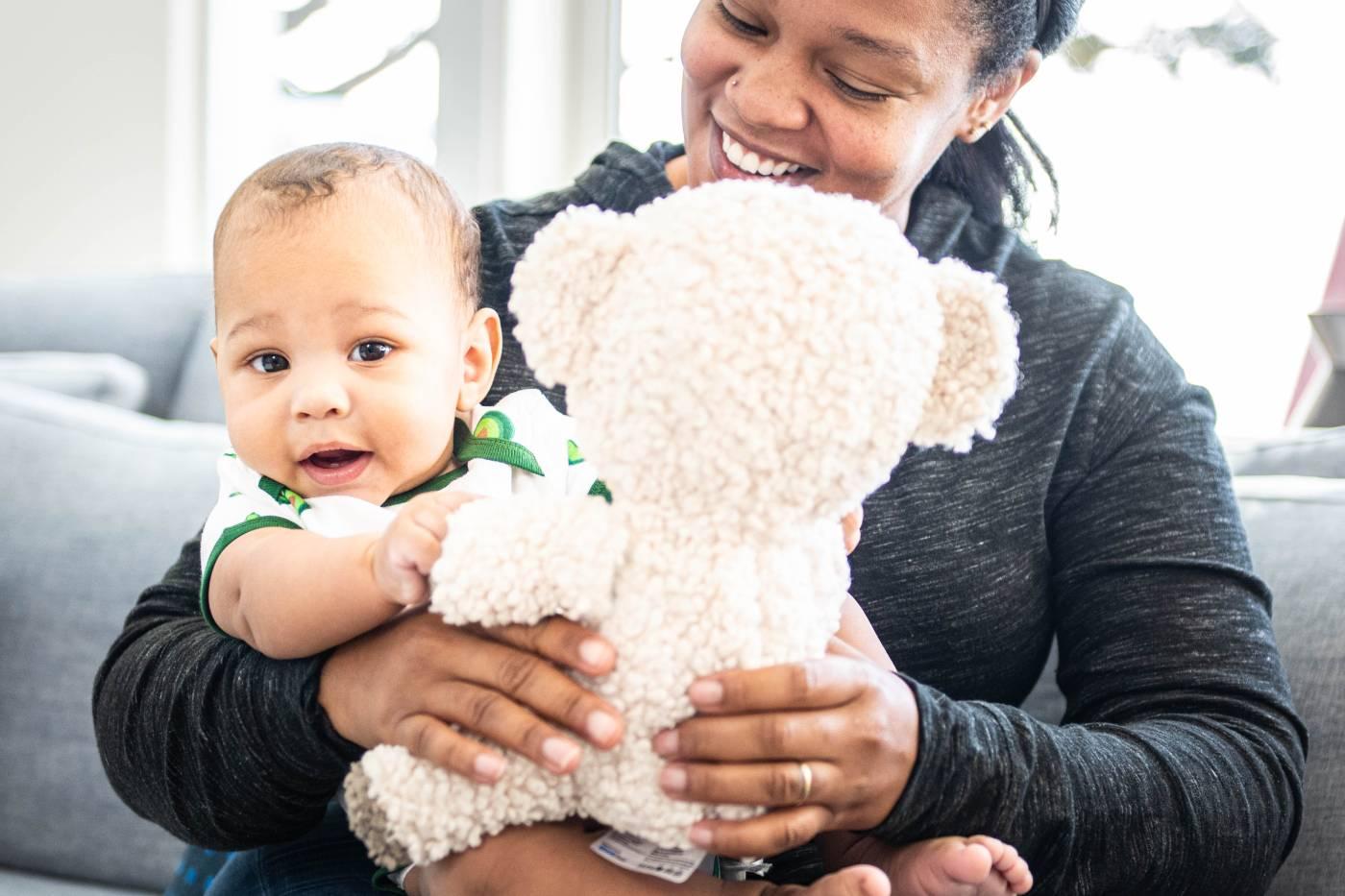
A cherished lovey (think: a cosy blankie or a soft teddy bear) can give little children much-needed comfort, confidence, and security. And, the best part, loveys are available day or night…even when Mum or Dad might not be nearby.
What is a Lovey?
A lovey, also called a comfort object or transitional object, is any object that a baby or toddler bonds with in order to feel comforted and secure. We all remember Linus in the Peanuts cartoon dragging his beloved blankie behind him. And then there is Calvin had Hobbes the tiger...and Christopher Robin loved Winnie-the-Pooh, of course. These are just a few examples of loveys that children adore…but loveys are not always what you would expect. I have seen children cling to nappies, silk scarves, and all sorts of toys as their loveys. For years, my little patient Alex was 'hooked' on sleeping with his Captain Hook’s hook!
Loveys can be anything your child connects with. The only real lovey rules: Keep it out of the cot of babies for the first year of life and make sure it does not have any little pieces, like button eyes or beads in the stuffing that can be a choking risk…or get stuck up your child's nose. No matter what your little one gravitates to, the universal truth is this: Children love their loveys! And a cosy, cuddly lovey is a great sleep cue for older babies and toddlers.
How should parents introduce a lovey to help Baby sleep?
The best time to introduce a lovey like a blankie or sweet stuffed bear is when your little one is around 6 months old. You will not leave the lovey in your child’s cot before their first birthday, but by introducing the lovey at 6 months, your little one will soon start to recognise it as a friend. Here are a couple of tips to help your little baby bond with their lovey:
- Make it smell like a loved one. Parents should wear or hold the lovey for at least an hour prior to handing it to Baby. Scent can be soothing for your child, and it creates the illusion that their parent is right there.
- Keep the lovey around all day long. Make your baby’s lovey a regular member of the family! Bring it on walks, have it on the changing table, in your arms, so your little one begins to recognise it and connect it with comfort and security.
Why do parents worry about using loveys?
For the first 12 months of Baby’s life, the safest sleepytime 'loveys' are dummies and anything that makes white noise, aka the 'teddy bear of sound.' But once your little one has passed the one-year mark, you can—and should—introduce a handkerchief-sized silky blanket or cuddly stuffed animal during naps and nights…but lots of parents are resistant. In fact, one medical study found that only 10.5% of families take advantage of the wonderful help that a lovey can give to their 12-month-olds. I think that may be because many parents have been intimidated by experts who warn that loveys create an 'unhealthy dependency.' So wrong!
Parents who turn their backs on loveys are missing a huge opportunity! These cuddly friends are a wonderful sleep aid, they help babies and toddlers build confidence and security, and they work wonders for easing separation anxiety, too. Loveys are also especially comforting amid times of stress, like during travel, an illness, or a parent’s absence—and for babies and toddlers with cautious, sensitive temperaments. Loveys can even help children make the emotional transition from dependence to independence. And your toddler's favourite lovey is available anytime—day or night. So, a lovey is a first friend….and a very, very good habit.
Do babies get addicted to loveys?
Well, babies do get attached to their lovies. In fact, research shows that young children believe their lovey possesses a special essence—meaning they love it like a beloved member of the family. But addiction makes that attachment sound negative. It is not! Many little ones rely on their loveys for help getting to sleep, but that is no different from you relying on your favourite pillow and cosy blanket for sleep. Because of this, it would be smart to always have an identical backup lovey. Losing a lovey can be traumatic for a child. Every couple of weeks, rotate your baby’s two loveys. This allows you to keep them clean and to have them both develop the same comforting feel and smell.
What is more helpful: A lovey or a white noise machine?
There is no need to choose! Both loveys and white noise are powerful sleep cues for babies and toddlers—and I recommend using both. That is why I created SNOObear, a snuggly lovey that also plays soothing and sleep-inducing white noise sounds. SNOObear plays shushing rhythms for 30- to 60-minutes to lull little ones off to sleep and settle scaries. And SNOObear goes the extra mile and 'pays attention' to your toddler, automatically turning back on with more soothing sounds if your sweet pea cries or fusses…helping parents and toddlers sleep better!
Descargo de responsabilidad: La información en nuestro sitio NO es un consejo médico para ninguna persona o condición específica. Solo se proporciona como información general. Si tiene alguna pregunta o preocupación médica sobre su hijo o sobre usted mismo, por favor contacte a su proveedor de salud. La leche materna es la mejor fuente de nutrición para los bebés. Es importante que, en preparación para la lactancia y durante la misma, las madres lleven una dieta saludable y equilibrada. La combinación de lactancia materna y alimentación con biberón en las primeras semanas de vida puede reducir la producción de leche materna y es difícil revertir la decisión de no amamantar. Si decide utilizar fórmula infantil, debe seguir las instrucciones cuidadosamente.
Principales noticias






COMPARTIR ESTE ARTÍCULO
ELECCIONES DE LOS PADRES
Más vendidos