PREGNANCY
8 Weeks Pregnant: Hang that Ultrasound Up!
Your baby is growing by leaps and bounds, and...so are you!

Escrito por
Dr. Harvey Karp
8 Weeks Pregnant: Baby Update
Your baby is growing quickly…and so are you! Right now, your uterus is about the size of a grapefruit. It’s still tucked low in your pelvis, but it will keep expanding upwards—eventually reaching your belly button and beyond.
Safely nestled in this strong muscle, your baby is beginning to make tiny movements. They may even kick or startle—but you won’t feel those flutters just yet.
They’re starting to look more recognisably like a little baby, too. Their knees, elbows, and ears are forming, and their fingers and toes are no longer webbed. They’ve even developed eyelids, though their eyes will stay shut for another 20 weeks or so.
How Many Months Is 8 Weeks Pregnant?
At 8 weeks, you’re about 2 months along.
Baby’s Size at 8 Weeks
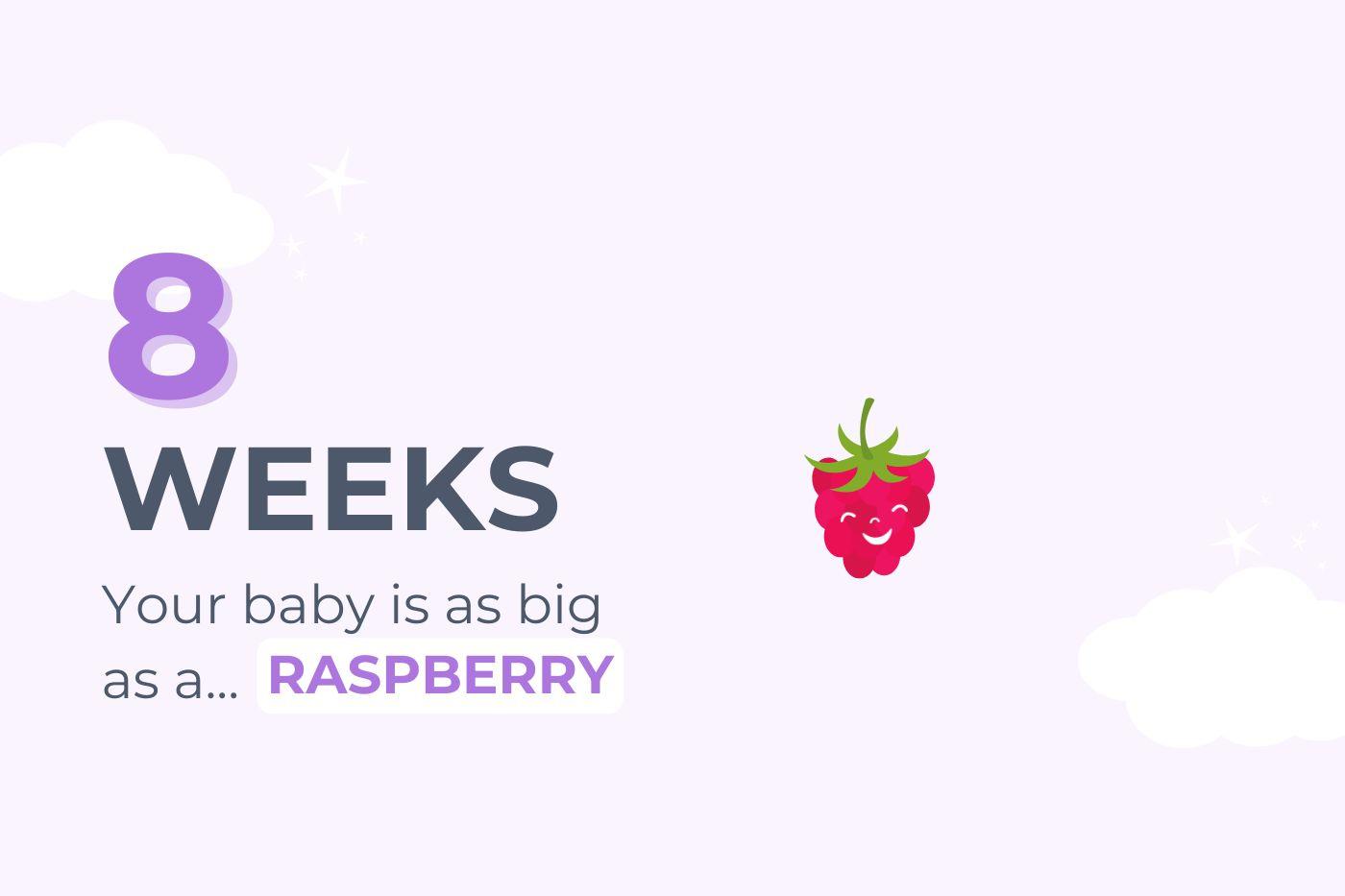
Your baby is about the size of a raspberry.
8 Weeks Pregnant: What to Expect
Congratulations—you’re finishing your second month of pregnancy! Things may feel more real now, especially if you’re heading to your first antenatal appointment. This is often when you’ll see your “gummy bear” baby on an ultrasound and hear the whoosh-whoosh of their tiny heartbeat.
Bring along a list of questions—no concern is too small or silly. This is the time to get answers.
Good topics to discuss with your midwife or doctor:
- Which over-the-counter medicines are safe (and which to avoid)
- Foods to steer clear of during pregnancy (like soft cheeses, certain fish, and deli meats)
- Any symptoms or changes you’ve noticed in your body
Pregnancy Symptoms at 8 Weeks
By now, you may be noticing:
- Morning sickness: Nausea and vomiting are common thanks to hormone changes. Food and smell aversions may also kick in. To ease nausea, try nibbling on plain crackers (keep some beside your bed), sip ginger tea, chew crystallised ginger, or try ginger lozenges. Staying hydrated is also key. If it’s severe, or you can’t keep fluids down, talk to your midwife or GP—medication may help.
- Digestive changes: Bloating, diarrhoea, or an unsettled tummy can also appear, thanks to the same hormones. These usually improve by the second trimester.
- Fatigue: Even though your baby is still tiny, your body is working overtime. Listen to your body, slow down when you need to, and rest often.
8 Weeks Pregnant To-Do List
- Write down questions for your first antenatal visit.
- Discuss when to share your news. Many parents wait until the second trimester, when miscarriage risk drops, but it’s a personal choice.
- Take care of yourself and your baby. Eat well, drink plenty of water, and keep up gentle exercise if your care provider says it’s safe.
Myth or Fact?
Mosquitoes prefer pregnant people.
True! Studies suggest pregnant people are about twice as attractive to mozzies, possibly due to higher body temperature or increased carbon dioxide from heavier breathing. Mosquitoes also seem to prefer type O blood over A or B.
To keep them at bay, try oil of lemon eucalyptus for a natural repellent. DEET-based repellents are considered safe in pregnancy—just avoid spraying directly on large areas of bare skin. Instead, dab a little on clothing like socks, cuffs, or collars.
Descargo de responsabilidad: La información en nuestro sitio NO es un consejo médico para ninguna persona o condición específica. Solo se proporciona como información general. Si tiene alguna pregunta o preocupación médica sobre su hijo o sobre usted mismo, por favor contacte a su proveedor de salud. La leche materna es la mejor fuente de nutrición para los bebés. Es importante que, en preparación para la lactancia y durante la misma, las madres lleven una dieta saludable y equilibrada. La combinación de lactancia materna y alimentación con biberón en las primeras semanas de vida puede reducir la producción de leche materna y es difícil revertir la decisión de no amamantar. Si decide utilizar fórmula infantil, debe seguir las instrucciones cuidadosamente.
Principales noticias






COMPARTIR ESTE ARTÍCULO
ELECCIONES DE LOS PADRES
Más vendidos