PREGNANCY
33 Weeks Pregnant: Oy! Breathlessness + Heartburn
Your baby's immune system has matured plenty and she's readying her lungs for their big debut.

Escrito por
Dr. Harvey Karp
Your Baby at 33 Weeks
Your little one is extra thirsty these days—drinking around 450 millilitres (about 16 ounces) of amniotic fluid each day. It sounds a bit icky, especially since your baby wees into the fluid and then drinks it again!
But here’s the amazing bit: that very same fluid is helping prepare your baby’s lungs for their big debut. In the womb, oxygen comes through the placenta and umbilical cord, so lungs full of liquid are just fine. Astonishingly, within moments of being born, your bub will replace that liquid with air, and begin breathing on their own—the start of a lifetime of breaths.
Meanwhile, your baby’s immune system is maturing nicely. You’re still passing protective antibodies through the placenta, and breastfeeding will continue to provide your little one with extra immune protection after birth.
Size of Baby at 33 Weeks
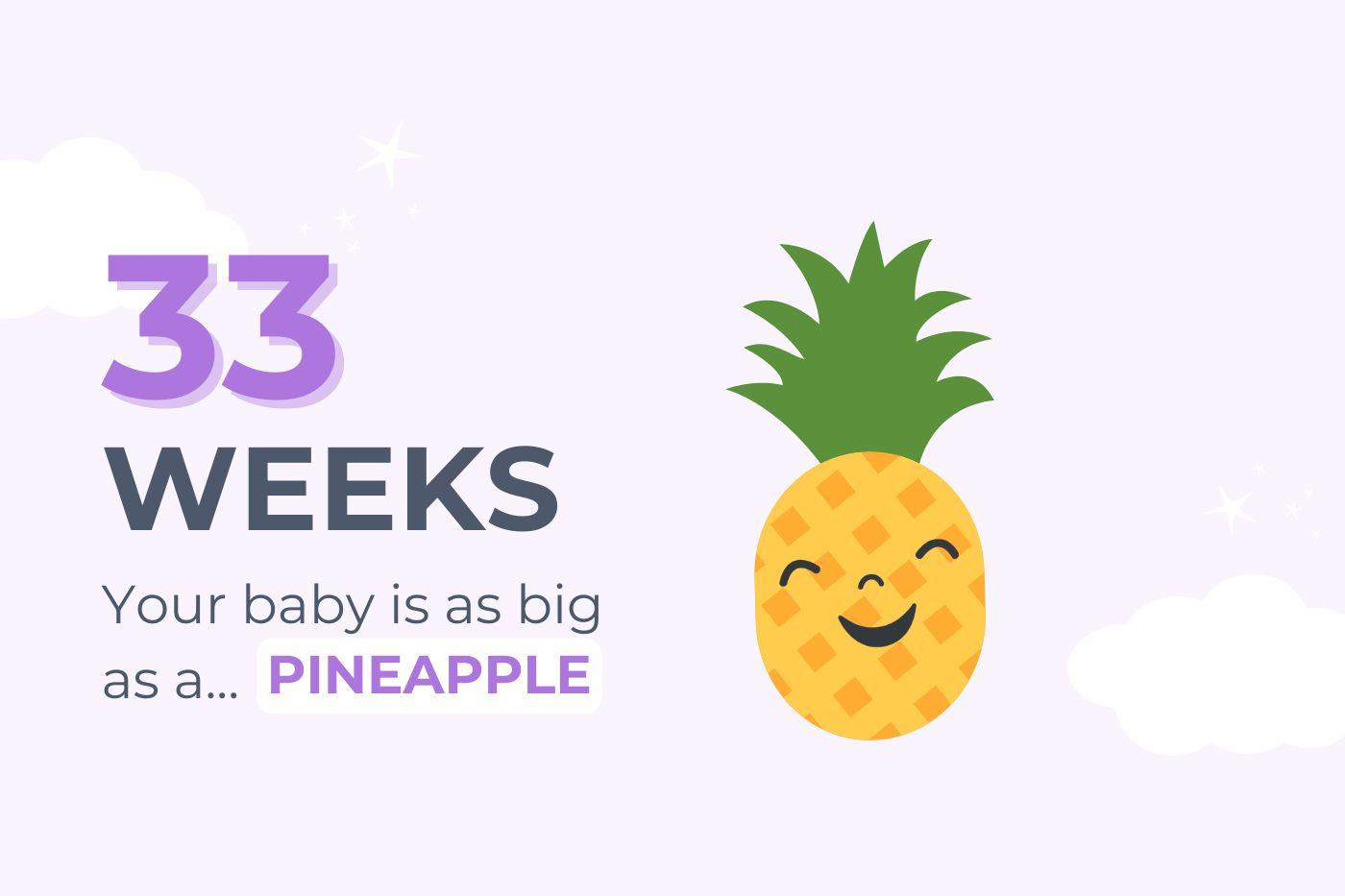
Your baby is about the size of a pineapple (but far less prickly!).
33 Weeks Pregnant Is How Many Months?
At 33 weeks, you’re around 7 months and 1 week pregnant.
33 Weeks Pregnant: What to Expect
Fatigue, breathlessness, heartburn—you may be ticking all of these off the list right now. Your body is working overtime to support your baby, so it’s a good time to ease up where you can. Get help lifting heavy things, ask your partner to pitch in more, take couch breaks whenever possible, and invite friends over if they’ll bring the food along.
You might feel like sleeping around the clock—or you might hardly sleep at all thanks to endless loo trips.
Your expanding womb is pressing on your lungs, leaving less room for deep breaths. While it can feel unsettling, it’s completely normal—and you and your baby are still getting all the oxygen you need.
Your digestive system is also squished, which is why smaller meals can feel better than big ones. Heartburn is common, too, as stomach acid is pushed upwards. Drinking plenty of water can help food move along. Peppermint tea, a peppermint sweet, or even fennel seeds may also ease the burn.
33 Weeks Pregnant Symptoms
Common third-trimester symptoms at 33 weeks include:
- Backache
- Swollen feet and ankles
- Heartburn
- Difficulty sleeping
- Shortness of breath
- Braxton Hicks contractions
33 Weeks Pregnant To-Do List
- Install the car seat: Research your options, fit the seat, and if possible, get it checked for safety. In the UK and Australia, many hospitals, fire stations, or parenting organisations can provide car seat safety checks.
- Create your birth announcement: You probably won’t want to draft a long message right after giving birth—and your partner will be busy, too. Write a short, sweet note now, along with a list of people you’d like to share the news with.
- Pack your hospital bag: Think about what will make your stay more comfortable—like a dressing gown, warm socks, toiletries, or thongs/flip flops for the shower. If your hospital or birth centre allows food during labour, pack some snacks and drinks. Don’t forget a change of clothes for you and your partner.
- If planning a home birth: Your midwife will provide a list of supplies to have ready. Gather everything ahead of time so your midwife can check during a home visit.
Pregnancy Quote of the Week
“Women’s bodies have near-perfect knowledge of childbirth; it’s when their brains get involved that things can go wrong.” — Peggy Vincent
Descargo de responsabilidad: La información en nuestro sitio NO es un consejo médico para ninguna persona o condición específica. Solo se proporciona como información general. Si tiene alguna pregunta o preocupación médica sobre su hijo o sobre usted mismo, por favor contacte a su proveedor de salud. La leche materna es la mejor fuente de nutrición para los bebés. Es importante que, en preparación para la lactancia y durante la misma, las madres lleven una dieta saludable y equilibrada. La combinación de lactancia materna y alimentación con biberón en las primeras semanas de vida puede reducir la producción de leche materna y es difícil revertir la decisión de no amamantar. Si decide utilizar fórmula infantil, debe seguir las instrucciones cuidadosamente.
Principales noticias






COMPARTIR ESTE ARTÍCULO
ELECCIONES DE LOS PADRES
Más vendidos